Latest Stories
Most recently published stories in History.
The Cultural Significance of Zulu Traditional Attire and Adornments
In the vibrant tapestry of South African culture, the Zulu people stand out for their captivating traditional attire and adornments. With a rich heritage dating back centuries, Zulu clothing reflects the essence of their identity, history, and societal values. In this article, we delve into the cultural significance of Zulu traditional attire, exploring the intricate details, symbolic meanings, and the pride with which the Zulu people embrace their traditional dress. Join us on this enlightening journey as we uncover the beauty and depth behind Zulu clothing and adornments.
By Ingrid Maibelo3 years ago in History
The Allure of Chocolate: A Journey into the Sweet World of Temptation
Introduction: Chocolate. The word alone evokes a myriad of emotions and sensations. It's a universal language, spoken by people of all ages and backgrounds. Whether it's a rich, velvety bar of dark chocolate or a delicate truffle with a surprise filling, chocolate holds a special place in our hearts. In this article, we embark on a delectable journey into the world of chocolate, exploring its history, the secrets of its creation, and the undeniable pleasure it brings to our lives.
By Muhammad Adil Yousafzai3 years ago in History
Strength of the Zulu Nation: Revealing the Military Organization and Tactics
During the reign of Shaka and his successors, the growth and resilience of the Zulu nation can be attributed to its remarkable military organization and skills. The military structure revolved around the concept of ukubuthwa, which eliminated traditional initiation ceremonies. Under this system, each age-set, a group of young men of the same age, was incorporated into a specific regiment known as ibutho (singular) or amabutho (plural). The practice of ukubuthwa also extended to girls, who generally belonged to age-sets rather than regiments. Military barracks called ikhanda (singular) or amakhanda (plural) were established throughout the kingdom and were under the authority of a close relative of the king or a designated individual.
By Ingrid Maibelo3 years ago in History
Why Ancient Structures Are Always Found Underground
For centuries, the world has been fascinated by the remnants of ancient structures. The pyramids of Egypt, the terracotta warriors of China, and the Minoan palace of Knossos in Greece, are just a few examples of the wonders of the ancient world that continue to captivate our imagination. Many of these structures, however, are found underground, leading to the question of why they were buried and what factors lead to their subterranean existence. This article will explore the different reasons behind the burial of ancient structures and the impact of natural disasters, human development, and other factors that have contributed to their underground existence.
By Alex Williams3 years ago in History
Chasing a Cold Fortune
Anton Chandler, an accomplished economist of his time, was caught in a moment of reflection. Sitting in his office while working on consulting projects from home in the bustling city, his mind wandered to an alternate reality that transported him back nearly 200 years ago!
By Anthony Chan3 years ago in History
TRADITIONAL CHINESE MEDICINE
Traditional Chinese medicine (TCM) is a system of medicine that has been used in China for thousands of years. It is based on the principles of Yin and Yang, the Five Elements, and Qi (pronounced "chee"), which is the energy that flows through the body. TCM aims to balance these elements and improve the flow of Qi in the body to promote health and well-being.
By Alicea Ellis 3 years ago in History
The Bhopal Gas Tragedy
In the vibrant city of Bhopal, India, a cloud of darkness descended upon its unsuspecting residents. It was the fateful night of December 2, 1984, when tragedy struck in the form of a deadly gas leak. Union Carbide India Limited, a pesticide plant that had been a source of employment and hope for many, became the epicenter of a catastrophe that would forever scar the lives of thousands.
By YoungCreate TV3 years ago in History
The Cultural Revolution in China
In the heartland of China, a country that had once been a cradle of ancient civilization and cultural heritage, a storm was brewing. It was the mid-1960s, and the Cultural Revolution was about to engulf the nation in a maelstrom of chaos and destruction.
By YoungCreate TV3 years ago in History
The Spanish Inquisition
In the heart of Spain, the land once known for its vibrant culture and rich heritage, darkness descended upon the innocent souls who dared to question the prevailing religious beliefs. The Spanish Inquisition had taken hold, and with it came a wave of fear and despair that engulfed the land.
By YoungCreate TV3 years ago in History
Word War I
World War I, also known as the Great War, was a global conflict that lasted from 1914 to 1918. It involved many of the world's major powers, primarily divided into two opposing alliances: the Allies (comprised of countries such as France, Russia, and the United Kingdom) and the Central Powers (which included Germany, Austria-Hungary, and the Ottoman Empire).
By Abner James Goc-ong3 years ago in History
The Atlantic Slave Trade
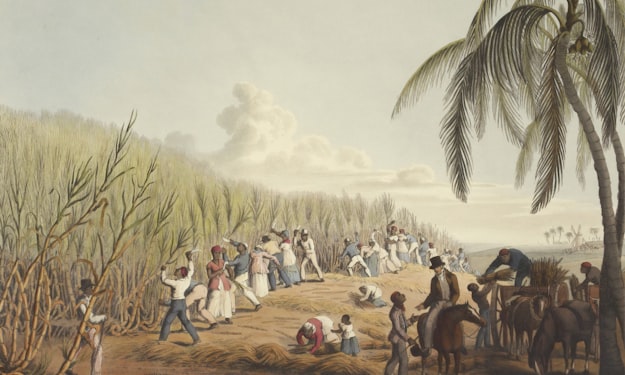
The sun dipped below the horizon, casting long shadows over the African village. The air was heavy with a mixture of anticipation and dread as families huddled together, their hearts heavy with an impending sense of loss. The traders had arrived, and with them came the promise of a fate far worse than death.
By YoungCreate TV3 years ago in History