Latest Stories
Most recently published stories on Vocal.
“180 Rupees That Killed a Man”. AI-Generated.
Nobody knew exactly when Master Ilyas came to this neighborhood and when he rented this room, but everyone knew that Master Ilyas was a migrant and belonged to an area in Ambala because he spoke the dialect that is spoken in Ambala. Master Ilyas lived in a rented room and the neighborhood boys would come to him to learn counting, recite multiplication tables, and write on slates. He had a pair of partridges and a purebred rooster. The partridges remained in cages, but the purebred rooster would stand a little distance from the door of his room. Master Ilyas had put a brass anklet on one leg of the rooster and tied a strong string to it, and tied the other end of the string to a nail hammered into the threshold of his room. All the people of the neighborhood respected Master Ilyas and would pass by his door saying 'Assalam-o-Alaikum'. Master Ji also did some other work, but nobody knew what it was. Perhaps he worked as a clerk in the vegetable market, or set up a stall in a distant neighborhood, or worked as a daily wage laborer painting and varnishing in a factory. Nobody knew about him very well, but everyone knew that Master Ilyas's livelihood was just barely sufficient. Actually, Master Sahib was a simple man and did not know how to keep up with the times. For some reason, his face was such that seeing it did not generate a feeling of love or sympathy in people's hearts, and for some reason, his conversation style was such that nobody would believe him. He did not lie. He did not cheat. He did not exaggerate. He did not boast. He did not scare anyone. Because of this People did not believe him. His conversation contained many grammatical and rhetorical errors, and the listener would get frustrated and leave his company. He was so simple and innocent that he didn't seem human. He seemed like a burden on the whole neighborhood and society, and since no one liked to associate with such people, he had no friends. That is why the neighbors respected him and would say "peace be upon you" as they passed his door. One winter evening, the landlord scolded Master Ilyas in harsh words and threatened that if he did not pay the past six months' rent of 180 rupees within three days, he would throw his belongings out. Master Ji was struck dumb with fear because he did not have one hundred and eighty rupees in a lump sum. He only had forty rupees, which he had made fifty by stringing a ten-rupee note with them. Earlier, the landlord used to take forty or fifty rupees and give a future date, but this time he became stubborn and threw the fifty rupees strung on a thread in front of the purebred rooster and said, "Go away! I will not take it. Give me the full one hundred and eighty." When he said this and left, Master Ilyas picked up the fifty rupees from the floor and put them in his waistcoat pocket. Then he went into his room, sat sadly on the cot, and due to severe grief, his voice was choked, and this was the first time someone's voice was choked without crying! Ghagha (choked voice) also means loss of voice in the throat. As promised, the landlord threw his belongings out. He placed Master Sahib's cot behind the two transformer poles and arranged the rest of his belongings around it. He put a new Chinese padlock on the room and rode his scooter home. His house was quite far from this neighborhood, and he used to come monthly to collect the rent for his rooms.
By Muhammad Haris khan 18 days ago in Fiction
Valentine's Encounter: A Cross-Cultural Love Story Part 10 (the end)
Valentine Forever Marriage did not arrive in Luca and Sakura’s life like a final chapter closing a book. It arrived like a new language—one they had to learn together, word by word, silence by silence. The world did not suddenly become easier after the wedding, but it became clearer. They were no longer navigating love as a possibility; they were living it as a responsibility, a commitment renewed each morning.
By Ahmed aldeabella18 days ago in Humans
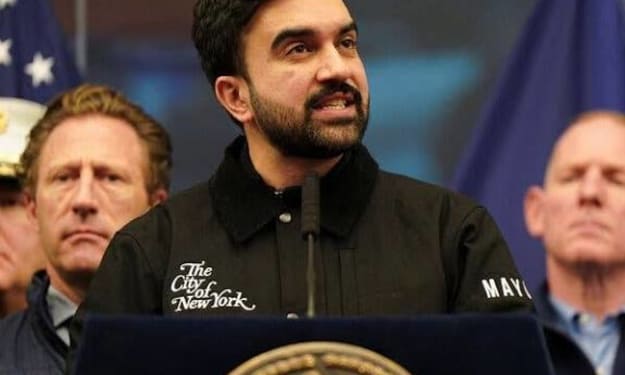
For a New Winter Coat, New York’s Mayor Consulted His Wife. AI-Generated.
When New York City Mayor Eric Adams stepped out this winter wearing a sharply tailored new coat, it was more than just a fashion statement—it was a carefully considered decision shaped by personal advice and public responsibility. Adams recently revealed that he consulted his wife before selecting the coat he would wear through one of the city’s coldest and most politically demanding seasons, highlighting the unusual intersection of personal life, image, and leadership in public office. The mayor’s comment, made during a lighthearted exchange with reporters, quickly drew attention. While seemingly trivial, it offered insight into how public figures increasingly recognize the importance of appearance as part of their communication strategy. For Adams, the coat was not just about warmth; it was about representing New York with confidence, professionalism, and approachability. Image and Leadership in a Media Age In today’s hyper-visible political environment, every detail of a leader’s appearance can become a talking point. Clothing choices are often interpreted as symbols of values, priorities, and connection to ordinary citizens. Adams, a former police captain known for his polished style, has long paid attention to how he presents himself in public. By consulting his wife, he acknowledged a trusted personal perspective rather than relying solely on staff or stylists. “She knows me better than anyone,” Adams reportedly said, adding that he wanted a coat that reflected both practicality and dignity. The result was a classic, dark-colored winter coat suitable for official events, street appearances, and press briefings alike. Political analysts say this reflects a growing awareness among leaders that authenticity matters. Rather than projecting an image crafted only by consultants, Adams appeared to show that family input and personal taste still shape his decisions. A Symbol in a Difficult Winter The new coat also arrived at a time when New York faces serious challenges. Rising housing costs, concerns about public safety, and debates over migrant housing have kept the mayor under intense scrutiny. Winter, traditionally the most demanding season for city services, places additional pressure on leadership. In this context, the coat became symbolic of resilience and steadiness. The mayor has been seen wearing it while visiting shelters, inspecting transit stations, and speaking at outdoor events in freezing temperatures. For many New Yorkers, it signaled that he was physically present and engaged with the city’s struggles. Some supporters praised the decision as relatable. “It’s normal to ask your spouse for advice on clothes,” said one community organizer. “It makes him seem more human.” Public Reaction and Humor Social media quickly reacted to the story, with some users joking that the mayor’s wife deserved a role as New York’s unofficial fashion adviser. Others noted that such moments provide brief relief from the city’s more serious political debates. Not all reactions were positive. Critics argued that attention to clothing distracts from urgent policy matters such as crime, homelessness, and education. They questioned why a mayor’s wardrobe should make headlines at all. Still, communication experts say small personal stories often resonate more deeply than formal speeches. “People connect to leaders through everyday details,” said one political branding consultant. “It creates familiarity and softens authority.” Fashion and Politics: A Long Tradition The relationship between clothing and political image is not new. From Abraham Lincoln’s tall hat to Barack Obama’s rolled-up sleeves, fashion has long been used to send messages of strength, humility, or modernity. In New York, a city known for its style and diversity, the mayor’s appearance carries extra symbolic weight. Adams has previously drawn attention for wearing custom suits and promoting Black-owned designers. His winter coat choice continues that trend of intentional presentation. Though he did not publicly disclose the brand, aides suggested that durability and local craftsmanship were factors in the selection. A Private Decision in a Public Life What makes this episode noteworthy is its simplicity. Rather than a carefully choreographed campaign move, it was a domestic conversation brought into the public eye. It showed that behind the authority of City Hall is a man who still values his partner’s opinion on something as ordinary as a coat. For many observers, this moment offered a reminder that leadership does not erase personal relationships. The mayor’s reliance on his wife’s judgment reflects trust and partnership—qualities that voters often appreciate but rarely see so clearly. Broader Implications While the story itself may appear lighthearted, it underscores a deeper reality of modern politics: image and message are inseparable. Leaders are judged not only by what they do but by how they appear while doing it. A winter coat can become a visual shorthand for preparedness, seriousness, and connection to everyday life. In an era where political trust is fragile, even small gestures of normalcy can matter. Consulting a spouse about clothing is something millions of people do each day. Seeing a mayor do the same can bridge the emotional distance between government and the governed. Conclusion For New York’s mayor, choosing a winter coat was not just a practical necessity but a personal decision shaped by family advice and public role. By turning to his wife, Eric Adams blended private life with political image in a way that resonated widely. Though the city’s challenges remain complex and urgent, this small story reminds the public that leadership is not only about policies and power but also about human moments that reveal character. In the cold streets of New York, one coat—and one conversation—became a symbol of how personal choices still echo in public life.
By Fiaz Ahmed 18 days ago in The Swamp
Lately, I'm empty. Top Story - February 2026.
Lately, I feel an emptiness inside of me that doesn’t make any sense. I was fine a week ago and now I’m numb to the pain that I’ve been carrying around. Numb to the idea of me existing. I wish I could go to a place where I can hear happy positive thoughts and surround myself with joy. The medication I’m on doesn’t seem to work anymore. I still feel pain from existing, why am I here anyways? Merely to exist. I don’t feel like I’m making any differences being here.
By Cerina Galvan18 days ago in Confessions
Valentine's Encounter: A Cross-Cultural Love Story Part 9
The Day Love Spoke Every Language The morning of the wedding dawned quietly, as if the world itself was holding its breath. Sunlight filtered gently over the Italian countryside, casting a warm glow on stone walls and olive trees that had stood for centuries. The venue—a restored villa overlooking rolling hills—waited in still anticipation, adorned not with excess, but with intention.
By Ahmed aldeabella18 days ago in Humans
Musk’s SpaceX and xAI Merge to Make World’s Most Valuable Private Company. AI-Generated.
Elon Musk has announced a landmark merger between two of his most ambitious ventures—SpaceX and xAI—creating what is now considered the world’s most valuable privately held company. The deal brings together SpaceX’s dominance in aerospace and satellite technology with xAI’s rapidly growing artificial intelligence platform, signaling a bold step toward Musk’s long-stated vision of uniting advanced AI with space exploration. The combined entity is valued at an estimated $200 billion or more, based on recent private funding rounds and market comparisons. While both companies will continue to operate under their existing brands, the merger establishes a unified corporate structure aimed at accelerating innovation in artificial intelligence, satellite communications, and deep-space missions. A Strategic Union of Technology Giants SpaceX, founded in 2002, has transformed the global space industry through reusable rockets, commercial satellite launches, and NASA partnerships. Its Starlink satellite constellation already serves millions of users worldwide, providing internet access to remote and underserved regions. xAI, launched in 2023, was created to compete with major AI developers such as OpenAI, Google DeepMind, and Anthropic. Its flagship product, the Grok AI system, has been integrated into Musk’s social media platform X (formerly Twitter), where it provides conversational assistance and data analysis. By merging these two companies, Musk is combining space infrastructure with artificial intelligence capabilities—two technologies that are increasingly intertwined. Industry analysts say the move positions the new company at the intersection of aerospace, communications, and machine intelligence. “This is not just a financial merger,” said one technology analyst. “It’s a strategic convergence of data, computing power, and physical systems in orbit.” Why the Merger Matters One of the primary motivations behind the merger is efficiency. SpaceX generates enormous volumes of data from satellite operations, rocket telemetry, and space missions. xAI’s systems can process and analyze this information in real time, improving navigation, predictive maintenance, and mission planning. Starlink, in particular, stands to benefit. AI-driven optimization could make satellite networks more resilient to outages, cyber threats, and congestion as demand for global internet service continues to grow. Autonomous decision-making systems may eventually allow satellites to adjust their positions and communications routes without human intervention. The merger also strengthens Musk’s broader technological ecosystem, which already includes Tesla, Neuralink, and X. Together, these companies form an interconnected web of transportation, communications, and intelligence platforms. Financial and Market Impact The newly merged company immediately becomes the most valuable private enterprise in the world, surpassing companies like ByteDance and Stripe. Investors see enormous potential in a business that controls launch services, satellite networks, and proprietary AI systems. Private equity firms and venture capital groups have reportedly shown strong interest in participating in future funding rounds. Analysts believe the company could eventually pursue a public offering, though Musk has not indicated any immediate plans to do so. However, the scale of the merger also raises questions about market concentration and corporate influence. Combining aerospace and AI under one corporate umbrella creates a powerful entity with access to sensitive data and strategic technologies. “This is a company with both digital intelligence and physical reach in space,” said a former U.S. regulator. “That brings both opportunity and responsibility.” Regulatory and Political Scrutiny The merger is expected to draw attention from regulators in the United States and abroad. Governments may examine whether the deal gives Musk too much control over critical infrastructure such as satellite communications and AI platforms. SpaceX already plays a major role in U.S. national security through military satellite launches and classified missions. xAI’s advanced machine-learning tools could further enhance SpaceX’s defense-related capabilities, which may trigger national security reviews. In Europe and Asia, regulators are also likely to study the implications for competition and data privacy. Some policymakers have expressed concern about private companies controlling systems that influence global communications and information flows. Vision for the Future Musk has long argued that artificial intelligence and space exploration must develop together. He believes that AI will be essential for navigating Mars missions, managing large-scale space colonies, and operating autonomous spacecraft. In a brief statement, Musk said the merger would “accelerate humanity’s progress toward becoming a multiplanetary civilization while ensuring AI is developed with a deep understanding of reality.” The company’s roadmap reportedly includes: AI-assisted rocket design and testing Autonomous satellite operations Enhanced space-based computing systems Advanced robotics for lunar and Mars missions These projects reflect Musk’s belief that future exploration will depend on machines capable of making complex decisions without constant human oversight. Risks and Challenges Despite its promise, the merger carries risks. Integrating two highly complex organizations could create operational challenges and internal competition for resources. AI development is also under intense ethical and legal scrutiny, especially as governments debate how to regulate powerful algorithms. There are also financial risks. Space exploration remains expensive, and AI research requires massive investment in computing power and energy infrastructure. Critics warn that concentrating so much technological power in one company could limit transparency and accountability. Others question whether Musk’s multiple leadership roles across several companies might stretch management capacity too thin. Conclusion The merger of SpaceX and xAI marks a turning point in the evolution of private technology companies. By combining rockets, satellites, and artificial intelligence, Elon Musk has created a corporate giant that operates across Earth and beyond. Whether this union becomes a catalyst for unprecedented innovation or a source of regulatory conflict will depend on how the company balances ambition with responsibility. What is clear is that the world’s most valuable private company is no longer just building rockets—it is building the intelligence to guide humanity’s next frontier.
By Fiaz Ahmed 18 days ago in Longevity
A Practice Grounded in Service: The Work of Shamim Patel, MD
A Career Shaped by Purpose From the earliest stages of her medical training, Shamim Patel, MD recognized that healthcare involves more than clinical knowledge alone. Alongside an interest in science, she developed a strong awareness of the challenges many individuals face when seeking medical care. This understanding guided her toward a career in women’s health, with a particular focus on serving populations that experience barriers to access.
By Shamim Patel MD 18 days ago in Journal
School as a Sorting Machine
Education is often presented as the most powerful instrument of social mobility, a neutral arena where merit prevails over origin. In Morocco, as in many postcolonial societies, schooling is officially framed as a republican promise: equal opportunity for all citizens regardless of class, geography, or family background. Yet, behind this discourse lies a deeply stratified educational system that systematically disadvantages students from poor, rural, and working-class backgrounds. Rather than correcting social inequalities, the Moroccan education system frequently reproduces and legitimizes them. This discrimination has severe social, economic, and political consequences, and it raises an urgent question: how can Morocco move toward a genuinely egalitarian educational system?
By Rachid Zidine18 days ago in Critique