Latest Stories
Most recently published stories on Vocal.
Board Games Market: Casual Gaming Demand, Licensing Strategies & Industry Growth. AI-Generated.
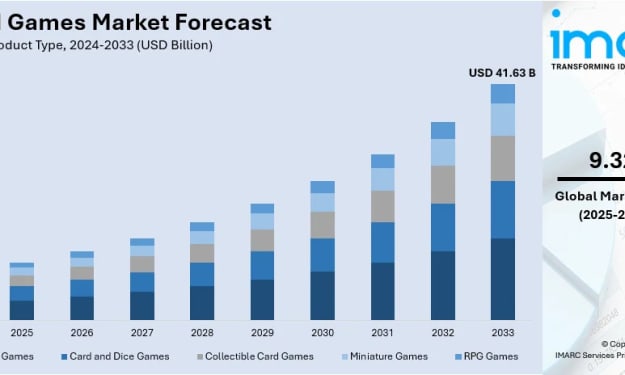
Rising demand for social entertainment, family bonding activities, educational gameplay, and hybrid digital integration, supported by e-commerce expansion and product innovation, is accelerating global board games market adoption. According to IMARC Group's latest research publication, global board games market size reached USD 18.53 Billion in 2024. Looking forward, IMARC Group expects the market to reach USD 41.63 Billion by 2033, exhibiting a growth rate (CAGR) of 9.32% during 2025-2033.
By Andrew Sullivan17 days ago in Futurism
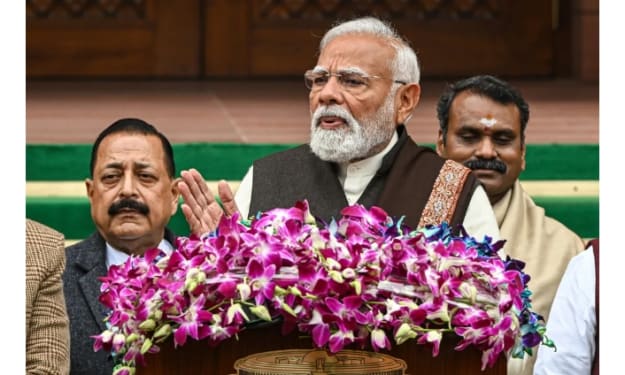
Modi Takes Aim at Trump Threats With Budget to Shield India. AI-Generated.
In a dramatic response to tariff threats and trade pressure from U.S. President Donald Trump, Indian Prime Minister Narendra Modi and Finance Minister Nirmala Sitharaman unveiled the 2026–27 Union Budget on Feb. 1, 2026, prioritising strategic protection for India’s economy in a shifting global order. � finance.yahoo.com +1 The budget—often described as a shield-building exercise for India’s economy—comes as ongoing U.S.–India trade tensions escalate, including steep U.S. tariffs imposed on Indian goods and the risk of more punitive measures that could hit everything from textiles to manufactured exports. � finance.yahoo.com Tariff Challenges From the U.S. Since 2025, the Trump administration has leveraged tariffs as a tool of trade policy, imposing duties on Indian imports—particularly in labour-intensive sectors—and reportedly even asked the European Union to join in punitive tariffs on India and China. � www.ndtv.com Although neither leader names the other when discussing trade policy in official speeches, India’s budget strategy was clearly shaped by these external pressures. That includes U.S. tariffs—some targeted at India’s purchases of Russian oil and other strategic imports—which have dented competitiveness for Indian farmers and exporters alike. � arcamax.com Budget Focus: Economic Resilience and Strategic Investment 1. Boost for Exporters and Strategic Sectors The budget includes measures aimed directly at countering tariff impacts and supporting exporters: Targeted relief for sectors hit hardest by U.S. tariffs, especially labour-intensive industries like textiles and furniture. Duty exemptions and incentives designed to make Indian exports more competitive abroad. Expansion of support for rare earths, semiconductors, biopharmaceuticals, and critical minerals—sectors central to future global supply chains. � arcamax.com +1 2. Strong Infrastructure and Modernisation Push India’s 2026–27 budget also allocates record funding toward long-term growth drivers: A nearly 9% jump in capital expenditure to expand infrastructure, manufacturing capacity, and core industries. Incentives for cloud computing, data centres, and semiconductor fabrication that aim to attract global investment and reduce dependence on foreign supply. Significant increases in defence spending—up by double digits—strengthening India’s strategic posture amid geopolitical uncertainty. � ft.com 3. Keeping Fiscal Discipline While Responding to External Pressure Despite these strategic outlays, the government largely avoided broad tax cuts or unfunded spending booms, sticking instead to a balanced approach that maintains fiscal discipline and debt targets—a key credit-rating and investment consideration. � uk.finance.yahoo.com That cautious stance reflects concerns about global economic volatility, the impact of external headwinds, and the need to counter risks without destabilising India’s economic fundamentals. Self-Reliance and “Atmanirbhar Bharat” as Core Themes Modi has long championed the idea of self-reliant India (Atmanirbhar Bharat)—an economic vision that traces back to domestic-manufacturing goals and resilience against global shocks. This budget deepens that focus by reinforcing: Domestic value chains for high-technology and strategic industries. Policies aimed at reducing reliance on imports that could be hit by foreign tariffs or supply disruptions. Support for micro, small and medium enterprises (MSMEs), often most vulnerable to tariff shocks, through dedicated growth funds and cluster revitalisation programs. � The Times of India Economists say the strategy is designed not only to cushion India from external trade shocks but also to position the country as an alternative manufacturing hub to China—an increasingly attractive narrative for global investors. � ft.com Market and Political Reactions The budget’s reception has been mixed: Investors reacted nervously to tax hikes in areas like equity market transactions, triggering short-term stock market volatility. Some analysts argue that while the budget strengthens resilience, it lacks bold reforms needed to significantly accelerate growth and fully counter external pressures. � Reuters Politically, the budget also sends a message: that India will not be easily diverted from its chosen path of economic reform and global engagement, even in the face of protectionist pressures. Trade Diplomacy and Global Partnerships In parallel with domestic policy, India is also pursuing strategic trade partnerships to offset U.S. tariff pressure. A major free-trade agreement with the European Union—called by some observers the “mother of all deals”—was completed after nearly two decades of negotiation late in 2025, offering new export opportunities for Indian firms. � The Times of India Earlier, similar agreements with the UK and New Zealand boosted India’s market diversification strategy. These diplomatic trade moves are complementary to the budget’s push for economic resilience. Looking Ahead: Balancing Growth and Geopolitical Pressures Modi’s 2026–27 budget marks a critical moment in India’s economic strategy: It signals strategic readiness to withstand external shocks—including tariffs from the U.S.—without sacrificing long-term growth goals. It reinforces a self-reliance narrative that dovetails with global supply-chain realignment and the push for manufacturing-led growth. It highlights India’s determination to remain integrated with global markets while building internal buffers against geopolitical and trade risks. � uk.finance.yahoo.com As global trade tensions continue, observers will be watching how India balances domestic growth imperatives with the need to manage relations with major partners like the United States. For now, the Modi government’s budget represents a clear attempt to shield the economy from looming risks while charting a path toward a stronger, more diversified future.
By Zahid Hussain17 days ago in The Swamp
Union Bank Share Price: Insights for Investors with a Financial Sector Perspective. AI-Generated.
Tracking Union Bank Share Price has become a priority for investors focused on the financial sector. As a key player in retail banking, corporate lending, and wealth management, Union Bank’s stock reflects both the company’s performance and the overall health of the banking industry. For a broader approach, investors often consider combining individual bank shares with diversified financial sector funds such as the Franklin Mutual Financial Services Fund. This combination allows participation in both individual stock growth and sector-wide opportunities.
By Hammad Nawaz17 days ago in Trader
Laura Fernández Declares Victory in Costa Rica’s Presidential Election. AI-Generated.
Costa Rica’s 2026 presidential election has delivered a clear winner: Laura Fernández Delgado, the 39-year-old conservative candidate from the ruling Sovereign People’s Party (PPSO), has claimed victory with more than 40 % of the vote in Sunday’s election, avoiding a runoff and becoming Costa Rica’s next president.� english.news.cn +1 Preliminary and partial results released by Costa Rica’s Supreme Electoral Tribunal (TSE) showed Fernández securing almost 48–49 %, well above the 40 % threshold needed to win the presidency in the first round of voting, with her main rival, centrist economist Álvaro Ramos of the National Liberation Party (PLN), trailing with roughly 33 % of the vote.� Reuters +1 A First-Round Victory in Historic Context Costa Rican electoral law stipulates that a presidential candidate must receive at least 40 % of valid votes to be elected without a runoff election scheduled for April 5. Fernández surpassed that mark as votes continued to be counted, giving her an outright win without a second round.� Reuters With high turnout among the country’s 3.7 million registered voters, Fernández’s victory reflects both her personal appeal and broader public support for her platform, especially on issues where many voters feel the government has fallen short.� english.news.cn Her win also comes as the PPSO is expected to expand its representation in the 57-seat Legislative Assembly, climbing toward a majority, though short of a supermajority that would allow it to pursue constitutional changes without broad opposition support.� NST Online Who Is Laura Fernández? Laura Virginia Fernández Delgado is a political scientist and longtime public servant. She previously served as minister of national planning and economic policy (2022–2025) and minister of the Presidency (2024–2025) in the administration of outgoing President Rodrigo Chaves Robles.� Wikipedia Born on July 4, 1986, in Puntarenas, Fernández holds a degree in public politics and democratic governability and positioned herself as the continuity candidate for Chaves’s policies. Her campaign emphasized security, institutional reform, and economic growth, tapping into widespread voter concern over rising crime and public safety.� english.news.cn She is poised to become the second woman elected president in Costa Rica’s history, following Laura Chinchilla (2010–2014).� amcostarica.com Campaign Themes: Crime, Security & “Third Republic” Crime and security dominated the 2026 election campaign. Costa Rica, historically one of Latin America’s most peaceful democracies, has seen a significant rise in violence and drug-related crime in recent years — a trend that Fernández and other conservative candidates made central to their platforms.� Malay Mail In her victory speech, Fernández framed her win as the start of a “Third Republic,” calling for deep changes and continuity of policies aimed at combating crime, strengthening institutions, and boosting economic activity. She thanked President Chaves for his support and indicated she would involve him in her new administration, even though constitutional rules bar him from seeking immediate reelection.� english.news.cn Reaction from Rivals and International Leaders Álvaro Ramos, Fernández’s closest competitor, conceded defeat and vowed to remain a force in Costa Rican politics, focusing on democratic oversight and constructive opposition in the Legislative Assembly.� Reuters International leaders have also responded. For instance, Israeli Foreign Minister Gideon Sa’ar congratulated Fernández on her victory and underscored the longstanding relationship between Costa Rica and Israel, highlighting expectations for enhanced cooperation.� JNS.org Similarly, El Salvador’s President Nayib Bukele — whose hardline security policies have influenced Fernández’s rhetoric — reportedly congratulated her on social media, reinforcing regional connections among right-wing leaders.� Reddit What Her Presidency Could Mean Fernández’s victory signals a shift to the right in Costa Rican politics — part of a broader regional trend where conservative and populist figures have gained ground amid public frustration over crime, corruption, and governance challenges.� Malay Mail Her policy agenda includes: Tougher measures against crime and organized gangs Support for strong security infrastructure, including completion of a new high-security prison Public–private partnerships to stimulate infrastructure investment Institutional reforms and bureaucratic streamlining While Fernández has pledged to uphold Costa Rica’s democratic norms, critics and political analysts caution against potential overreach or erosion of civil liberties, especially if security policies become increasingly authoritarian.� Malay Mail Looking Ahead: From Election Night to Inauguration Costa Ricans elected Fernández in a crucial moment for the country’s future, choosing leadership that reflects growing public concern about safety and governance. Her presidency will officially begin on May 8, 2026, when she is sworn in for a four-year term that runs through May 8, 2030.� amcostarica.com The expanded majority for her party in the legislature could facilitate her policy initiatives, though meaningful opposition within the Assembly remains to ensure democratic checks and balances.
By Zahid Hussain17 days ago in The Swamp
Large Cap Equity Fund: A Beginner’s Guide to Safe and Steady Growth
Investing in a Large Cap Equity Fund is one of the smartest ways to grow your money while keeping risk low. These funds focus on big, well-established companies with strong performance histories. By understanding how they work and following simple strategies, even beginners can build wealth steadily over time. To learn more about starting smart investments, check out our guide on Top Mutual Fund Tips for New Investors.
By John.doe79817 days ago in Trader
Casualties Include Women and Children as Gaza Hospitals Receive Bodies After Latest Violence. AI-Generated.
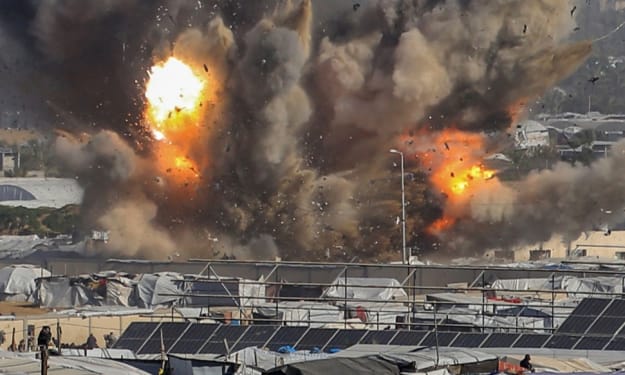
Officials at Gaza hospitals have reported receiving bodies from a recent violent incident, with casualties including two women and six children from two different families. The development has once again drawn global attention to the devastating human cost of ongoing violence in the region and the increasing strain on already fragile humanitarian systems.
By Aarif Lashari17 days ago in The Swamp
Gaza’s Rafah Border Crossing With Egypt Reopens for Limited Traffic. AI-Generated.
The Rafah border crossing — Gaza’s only direct land link to Egypt — has reopened for limited movement of people after being largely closed for nearly two years amid the Israeli-Hamas war. The reopening marks a key, if cautious, milestone in the implementation of a cease-fire agreement designed to ease the humanitarian plight in Gaza and restore some access to the outside world. � AP News +1 What Has Changed at Rafah? On February 2, 2026, Egyptian and Israeli security officials confirmed that the Rafah crossing had resumed limited pedestrian movement in both directions. The crossing, which had been under Israeli control since May 2024, had remained mostly shut after it was seized early in the conflict, severely restricting movement and worsening humanitarian conditions in Gaza. � AP News +1 Under the initial reopening: Only a small number of Palestinians will be allowed to cross each day. Movement is currently limited to foot traffic, with strict security screening by both Israel and Egypt. No cargo or general goods are entering Gaza through Rafah yet. European Union border agents are also present to help monitor the process. � AP News Egyptian media reported that in the first phase about 50 people are expected to exit Gaza daily and a similar number to return. Priority is being given to patients needing medical treatment abroad, many of whom have been waiting for weeks or months for access. � AP News Why This Matters 1. Reopening After Long Closure The crossing’s closure has been one of the most significant barriers isolating Gaza from the outside world. Rafah is the only border crossing between Gaza and Egypt that does not require transit through Israel, making it especially important for humanitarian access and travel. Its reopening — even at limited capacity — is widely viewed as a humanitarian relief step. � Reuters 2. Part of Cease-Fire Implementation The limited reopening is tied to a fragile cease-fire agreement between Israel and Hamas that began in October 2025. The deal was negotiated with international involvement, including the United States and the European Union, and called for steps to ease restrictions on movement and improve living conditions in Gaza. � Reuters 3. Meeting Urgent Medical Needs Health officials in Gaza estimate tens of thousands of sick or wounded people urgently need medical care not available inside the enclave. Allowing patients and their families to leave for treatment abroad is a high humanitarian priority tied to the crossing’s reopening. � wgvunews.org How the Reopening Is Being Managed The process is being phased in carefully: Screening by multiple parties: Israel and Egypt are vetting individuals before they travel. A European border mission adds an external supervisory role. � wgvunews.org Limited capacity: Movement is restricted at first to keep the process orderly and secure and to allow authorities to manage security concerns. � Al Jazeera Focus on people, not goods: At this stage, the crossing isn’t open for commercial goods or aid shipments — just for the movement of people. � Al Jazeera Ongoing trial phase: Initial movement began with a trial phase, and officials are evaluating how to expand operations safely over time. � Anadolu Ajansı Critics and Ongoing Challenges While the reopening is welcomed by many, it has also drawn criticism and caution: Some humanitarian groups argue the limited scope doesn’t do enough to address basic supply needs in Gaza, where shortages of medicine, fuel, and food remain serious. Social media and commentators point to the strict security approvals and small numbers allowed, describing them as insufficient given the scale of need. � الجزيرة نت Critics say the strict conditions, including prior Israeli security clearance and coordination, continue to limit true freedom of movement and access. � الجزيرة نت What Comes Next? Officials say the reopening of Rafah is a first step in a phased plan to eventually restore fuller access for Gaza residents. Future phases could include: Increasing daily crossing numbers Gradual opening for more categories of travellers Possible future movement of goods and aid supplies However, any expansion will depend on continuing security coordination and progress in broader cease-fire and peace plan negotiations. Conclusion: A Step Forward Amid Fragile Peace The partial reopening of Gaza’s Rafah border crossing to Egypt is a significant symbolic and humanitarian step after nearly two years of severe restriction. While still limited in scope, it offers a lifeline for families, especially for urgent medical travel, and reflects ongoing efforts to implement cease-fire arrangements. For Palestinians in Gaza — long cut off from the outside world — even this small window of movement is a meaningful development, underscoring both the urgency of addressing humanitarian needs and the fragility of regional diplomatic efforts.
By Zahid Hussain17 days ago in The Swamp
Companies That Develop Apps in 2026: What Actually Matters Now. AI-Generated.
Let’s be real for a second. If you’re reading this in 2026, you’ve probably realized that "building an app" isn't the golden ticket it was ten years ago. Back then, you could slap a half-baked Flappy Bird clone on the App Store and retire to the Bahamas. Today? The Apple App Store and Google Play are graveyards of good intentions and bad code.
By Samantha Blake17 days ago in Geeks
Enterprise Web Design Is Not “Just More UX”. AI-Generated.
If you’ve ever worked on enterprise or AI-driven corporate platforms, you already know that applying standard web design practices to them is a category error. Designing at this level isn’t about polishing interfaces; it’s about building systems that people can safely rely on every day. That’s why teams moving into this space often discover—sometimes painfully—that the rules change the moment a product becomes operationally critical.
By Valeriia Shulga17 days ago in 01
Russian Drone Attack on Bus Carrying Mine Workers in Ukraine Kills at Least 12. AI-Generated.
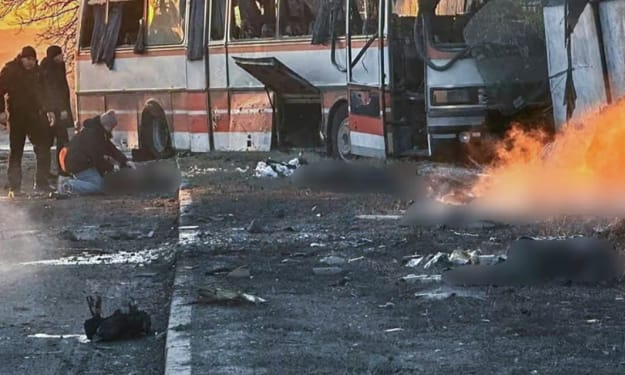
At least 12 people have reportedly been killed following a drone attack on a bus carrying mine workers in Ukraine, an incident that has intensified concerns about civilian safety amid the continuing conflict. The attack, attributed in early reports to Russian military drone activity, underscores the ongoing risks faced by civilians and industrial workers in regions affected by active hostilities.
By Aarif Lashari17 days ago in Journal
Historic Storm Delivers Biggest Snowfall in Decades for North Carolina. AI-Generated.
A rare and powerful winter storm — described by meteorologists as “historic” — has brought the most significant snowfall North Carolina has seen in decades, blanketing all 100 counties and transforming the Tar Heel State’s landscape from coastal plains to mountain peaks. (turn0news0turn0news2)(https://www.carolinajournal.com/north-carolina-begins-cleanup-following-historic-snowfall/) Dubbed a bomb cyclone and fueled by a strong nor’easter, the storm delivered heavy snow, large drifts, and dangerously cold conditions. From Charlotte’s urban streets to the Outer Banks’ coastal dunes, communities were blanketed with snow totals rarely seen in modern memory. (turn0news3) Record or Near-Record Snowfall Across the State The storm’s snowfall — in many places the greatest in decades — shocked residents and meteorologists alike: Eastern North Carolina’s coast recorded up to 15 inches, the highest in nearly 40 years. Some coastal communities saw totals that exceeded those from storms in 1980 and 1989. (turn0search19) Charlotte reported around 11 inches on a single day, tying for one of the city’s fourth-heaviest one-day snowfalls ever recorded in historical meteorological data. (turn0search25) Interior regions and foothills experienced heavy snow as well, with isolated reports of over *20 inches in some rural parts of eastern North Carolina. (turn0news38) The breadth of the snowfall — reaching nearly every corner of the state — was remarkable for a region that typically sees light snow at most a few times a winter. Storm Mechanics and Historical Context This powerful system developed as a bomb cyclone, meaning the storm underwent rapid intensification off the southeastern U.S. coast as cold Arctic air collided with moist air over the Atlantic. This kind of setup is rare in the Southeast and more common farther north, making the storm both unusual and impactful. (turn0news36) Meteorological records show that events this significant haven’t occurred frequently in recent decades. The last time much of eastern North Carolina saw comparable snow accumulation was in the 1980 and 1989 storms, which stood as benchmarks for heavy winter snow in the region for decades. (turn0search19) Widespread Disruptions and Safety Hazards While the snow delighted many residents, the impacts were serious and widespread: Road and Travel Chaos More than 1,100 vehicle crashes were reported across North Carolina due to slick, icy roads, stretching emergency services thin. (turn0news2) Major highways, including Interstate 85, saw multi-car pileups and extended travel delays. Airports including Charlotte’s major hub canceled scores of flights as crews struggled to clear runways and cope with heavy snowfall. Power Outages and Cold Freezing temperatures and weight on lines caused power outages for thousands of homes and businesses. Local officials urged people to stay home, citing dangerous road conditions and the risk of hypothermia. Rare Southern Snow The storm’s influence even spread beyond North Carolina: snow flurries and record cold were reported as far south as Florida, where temperatures plunged far below typical winter lows. In some areas, cold-stunned iguanas fell from trees, highlighting the extremity of the cold. (turn0news36) Community Reactions: Beauty and Strain Social media and local commentary captured a mix of wonder and hardship: Many residents described the snowy landscape as “magical” and shared photos of heavy snow drifts and winter scenes reminiscent of more cold-climate states. (turn0reddit70) At the same time, emergency managers warned that beautiful snow can mask deadly conditions, including black ice, downed trees, and the dangers of extended cold exposure. Local schools and businesses closed for safety, and community members helped shovel driveways and clear sidewalks — a rare sight in a state better known for warm beaches than winter blizzards. State Response and Cleanup Efforts North Carolina officials moved quickly to begin cleanup and restoration: State Highway Patrol and DOT crews worked around the clock to clear roads and treat bridges with salt and sand. Local governments deployed plows to priority routes even in areas that rarely see heavy snow. Emergency workers urged residents to avoid unnecessary travel and to check on neighbors, especially elderly or disabled individuals. The state’s emergency management highlighted that while snowfall may taper off, dangerous icy conditions would persist for several days due to below-freezing temperatures. What This Storm Says About Winter Weather Trends Although climate patterns vary from year to year, this event stands out as exceptional for the Carolinas: The scale of snowfall — from the Outer Banks to the mountains — is highly unusual. Many communities saw snow accumulations not experienced in decades. Meteorologists stress that such storms, while rare, can occur when atmospheric forces align just right, particularly with strong cold air masses and abundant moisture. Some long-time residents noted that while snow was more common in past decades, heavy events of this magnitude haven’t been typical in recent years — making this storm both a meteorological landmark and a reminder of nature’s unpredictability. (turn0reddit64) Looking Ahead: Cold Weather Continues National weather authorities warn that the freezing temperatures will persist, keeping roads icy and slowing recovery efforts. Residents were advised to prepare for continued hazardous conditions, even as snowplows and crews work to restore normalcy. (turn0news38) As North Carolina digs out from one of the most remarkable snow events in living memory, the storm will be remembered not just for its beauty but for the challenges it posed and the resilience it revealed in communities across the state.
By Zahid Hussain17 days ago in The Swamp