Latest Stories
Most recently published stories in Longevity.
Musk’s SpaceX and xAI Merge to Make World’s Most Valuable Private Company. AI-Generated.
Elon Musk has announced a landmark merger between two of his most ambitious ventures—SpaceX and xAI—creating what is now considered the world’s most valuable privately held company. The deal brings together SpaceX’s dominance in aerospace and satellite technology with xAI’s rapidly growing artificial intelligence platform, signaling a bold step toward Musk’s long-stated vision of uniting advanced AI with space exploration. The combined entity is valued at an estimated $200 billion or more, based on recent private funding rounds and market comparisons. While both companies will continue to operate under their existing brands, the merger establishes a unified corporate structure aimed at accelerating innovation in artificial intelligence, satellite communications, and deep-space missions. A Strategic Union of Technology Giants SpaceX, founded in 2002, has transformed the global space industry through reusable rockets, commercial satellite launches, and NASA partnerships. Its Starlink satellite constellation already serves millions of users worldwide, providing internet access to remote and underserved regions. xAI, launched in 2023, was created to compete with major AI developers such as OpenAI, Google DeepMind, and Anthropic. Its flagship product, the Grok AI system, has been integrated into Musk’s social media platform X (formerly Twitter), where it provides conversational assistance and data analysis. By merging these two companies, Musk is combining space infrastructure with artificial intelligence capabilities—two technologies that are increasingly intertwined. Industry analysts say the move positions the new company at the intersection of aerospace, communications, and machine intelligence. “This is not just a financial merger,” said one technology analyst. “It’s a strategic convergence of data, computing power, and physical systems in orbit.” Why the Merger Matters One of the primary motivations behind the merger is efficiency. SpaceX generates enormous volumes of data from satellite operations, rocket telemetry, and space missions. xAI’s systems can process and analyze this information in real time, improving navigation, predictive maintenance, and mission planning. Starlink, in particular, stands to benefit. AI-driven optimization could make satellite networks more resilient to outages, cyber threats, and congestion as demand for global internet service continues to grow. Autonomous decision-making systems may eventually allow satellites to adjust their positions and communications routes without human intervention. The merger also strengthens Musk’s broader technological ecosystem, which already includes Tesla, Neuralink, and X. Together, these companies form an interconnected web of transportation, communications, and intelligence platforms. Financial and Market Impact The newly merged company immediately becomes the most valuable private enterprise in the world, surpassing companies like ByteDance and Stripe. Investors see enormous potential in a business that controls launch services, satellite networks, and proprietary AI systems. Private equity firms and venture capital groups have reportedly shown strong interest in participating in future funding rounds. Analysts believe the company could eventually pursue a public offering, though Musk has not indicated any immediate plans to do so. However, the scale of the merger also raises questions about market concentration and corporate influence. Combining aerospace and AI under one corporate umbrella creates a powerful entity with access to sensitive data and strategic technologies. “This is a company with both digital intelligence and physical reach in space,” said a former U.S. regulator. “That brings both opportunity and responsibility.” Regulatory and Political Scrutiny The merger is expected to draw attention from regulators in the United States and abroad. Governments may examine whether the deal gives Musk too much control over critical infrastructure such as satellite communications and AI platforms. SpaceX already plays a major role in U.S. national security through military satellite launches and classified missions. xAI’s advanced machine-learning tools could further enhance SpaceX’s defense-related capabilities, which may trigger national security reviews. In Europe and Asia, regulators are also likely to study the implications for competition and data privacy. Some policymakers have expressed concern about private companies controlling systems that influence global communications and information flows. Vision for the Future Musk has long argued that artificial intelligence and space exploration must develop together. He believes that AI will be essential for navigating Mars missions, managing large-scale space colonies, and operating autonomous spacecraft. In a brief statement, Musk said the merger would “accelerate humanity’s progress toward becoming a multiplanetary civilization while ensuring AI is developed with a deep understanding of reality.” The company’s roadmap reportedly includes: AI-assisted rocket design and testing Autonomous satellite operations Enhanced space-based computing systems Advanced robotics for lunar and Mars missions These projects reflect Musk’s belief that future exploration will depend on machines capable of making complex decisions without constant human oversight. Risks and Challenges Despite its promise, the merger carries risks. Integrating two highly complex organizations could create operational challenges and internal competition for resources. AI development is also under intense ethical and legal scrutiny, especially as governments debate how to regulate powerful algorithms. There are also financial risks. Space exploration remains expensive, and AI research requires massive investment in computing power and energy infrastructure. Critics warn that concentrating so much technological power in one company could limit transparency and accountability. Others question whether Musk’s multiple leadership roles across several companies might stretch management capacity too thin. Conclusion The merger of SpaceX and xAI marks a turning point in the evolution of private technology companies. By combining rockets, satellites, and artificial intelligence, Elon Musk has created a corporate giant that operates across Earth and beyond. Whether this union becomes a catalyst for unprecedented innovation or a source of regulatory conflict will depend on how the company balances ambition with responsibility. What is clear is that the world’s most valuable private company is no longer just building rockets—it is building the intelligence to guide humanity’s next frontier.
By Fiaz Ahmed 4 days ago in Longevity
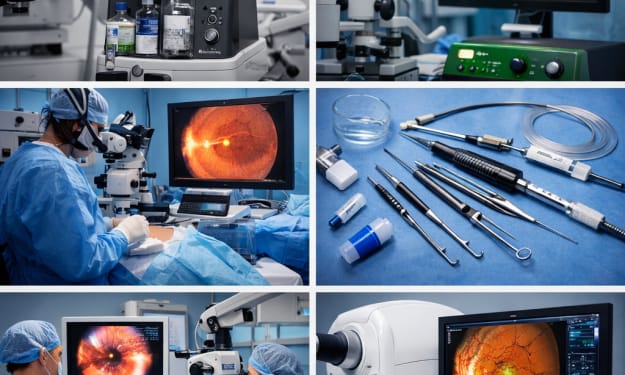
United States Retinal Surgery Devices Market Size & Forecast 2026–2034. AI-Generated.
Market Overview The United States retinal surgery devices market is projected to witness consistent and robust growth over the forecast period, driven by the increasing burden of retinal disorders, rising diabetes prevalence, and rapid adoption of technologically advanced ophthalmic solutions. According to Renub Research, the market is expected to expand from US$ 902.54 million in 2025 to US$ 1,852.87 million by 2034, registering a Compound Annual Growth Rate (CAGR) of 8.32% during 2026–2034.
By Sakshi Sharma4 days ago in Longevity
United States Thermoplastic Polyurethane Market Size and Forecast 2026–2034. AI-Generated.
Market Overview The United States Thermoplastic Polyurethane (TPU) Market is positioned for steady and sustained growth over the forecast period from 2026 to 2034. According to Renub Research, the market is projected to expand from US$ 816.27 million in 2025 to US$ 1,418.20 million by 2034, registering a compound annual growth rate (CAGR) of 6.33%.
By shibansh kumar4 days ago in Longevity
Cracker Barrel’s New Dining Rule. AI-Generated.
Cracker Barrel has long been known for its comforting mix of homestyle food, rustic décor, and a dining experience that feels familiar no matter where you visit. For decades, guests have expected consistency—from the rocking chairs on the porch to the biscuits served warm at the table. Recently, however, conversations online and in dining communities have focused on a new Cracker Barrel dining rule, prompting questions about what has changed and how it affects customers.
By Saboor Brohi 4 days ago in Longevity
Greenland Declares Emergency After Repeated Orca Sightings Near Unstable Ice Shelves. AI-Generated.
Greenland’s government has declared a climate emergency following an unusual and growing number of orca sightings near unstable coastal ice shelves, a development that officials and scientists say signals rapidly accelerating environmental change in the Arctic. The emergency declaration comes amid rising concern that dramatic ice loss is reshaping Greenland’s marine ecosystems, threatening local communities and contributing to broader global impacts. The decision followed the release of dramatic videos showing pods of orcas — also known as killer whales — breaching near sections of coastal ice that were historically solid and relatively inaccessible. The footage, widely shared on social and traditional media, stunned researchers and Arctic residents alike, prompting questions about what the appearances of these apex predators so close to fragile ice might mean. � Smithame Events Unprecedented Orca Activity Signals Deep Changes Orcas have long been known to traverse Arctic waters, but scientists say the frequency, location, and timing of the latest sightings are unprecedented. Traditionally, thick sea ice and stable ice shelves kept these waters blocked for much of the year. Recent observations, however, show orcas navigating regions previously covered by year-round ice, a pattern researchers say reflects broader shifts in habitat availability and prey migration triggered by warming temperatures and shrinking ice cover. � Smithame Events “We have never recorded orcas operating in these specific GPS-marked locations, let alone swimming freely near solid glacial ice,” said marine biologist Dr. Lise Thomassen, who has studied Arctic marine ecosystems for nearly two decades. “This suggests ocean conditions have changed so substantially that longstanding barriers no longer exist.” � Smithame Events The appearance of orcas near unstable ice is more than a curiosity; it may indicate broader disruption of the Arctic food web, with potential ripple effects for species such as seals, walruses, and polar bears that depend on stable ice for hunting and breeding. Climate Emergency Declared In response to the growing evidence of rapid environmental shifts, Greenland’s Ministry of Environment announced a formal climate emergency, a rarely invoked designation that allows for expanded monitoring, research collaboration, and community support. The government said the declaration would fund: 24/7 satellite and aerial monitoring of ice shelf stability Expanded data sharing with climate research partners, including the European Space Agency Community-based observation programs involving Inuit hunters and local elders A planned Arctic Stability Summit to coordinate scientific and policy responses According to officials, the emergency designation is driven not only by orca sightings but also by broader trends in ice melt, glacial retreat, and shifting marine conditions that together pose risks to both ecosystems and human communities. Local Inuit leaders have been integrated into the planning process, bringing centuries of generational knowledge about seasonal ice behavior and as a bridge between traditional insight and modern science. � Smithame Events What Orca Sightings Reveal Orca sightings near unstable ice are alarming because these animals typically avoid areas with dangerous conditions or unpredictable prey patterns. Their movement patterns are closely tied to prey availability, such as seals and fish — both of which also migrate in response to changing ice conditions. Scientists interpret the orcas’ presence not as evidence of unusually active whales, but rather as a symptom of ecological shifts. “Orcas are, metaphorically, like oceanic analysts,” one climate ecologist told a news outlet. “They react to changes in water temperature, prey behavior, and ice condition in real time — and then adapt right in front of you.” � WNC Group Emerging research indicates that weakening ice shelves allow warmer ocean waters to penetrate deeper into fjords and coastal margins, making these regions more navigable for large marine mammals but less stable for ice-dependent species. � ETH Zürich Local and Global Impacts For Greenland’s residents, the changes are not just scientific data points; they have real economic and cultural effects. Coastal communities rely on stable ice for travel, hunting, and fishing. The loss of predictable ice not only affects traditional ways of life but also raises the risk of hazards such as calving icebergs, shifting shorelines, and more frequent open water events in what were once reliably frozen zones. Globally, the accelerated melting of Greenland’s ice sheets contributes directly to rising sea levels, with long-term implications for coastal cities from New York to Dhaka. The Greenland Ice Sheet holds enough water to raise sea levels by more than 20 feet if it were to melt entirely — a process scientists once believed would take centuries but now warn could accelerate under current warming trends. � Smithame Events Research and Action Scientific teams are intensifying efforts to understand the linkages between marine predator behavior, ice stability, and climate change. Universities, Arctic research institutes, and governmental agencies are pooling satellite data, oceanographic measurements, and long-term ecological observations to map how ecosystems are reconfiguring. At the same time, Greenlandic officials have called for international cooperation to address the underlying drivers of climate change, including greenhouse gas emissions and feedback loops that amplify Arctic warming at more than twice the global average rate. What Comes Next Greenland’s emergency declaration emphasizes both urgency and adaptability. While orca sightings may grab headlines, they symbolize broader environmental dynamics that will shape the Arctic for decades to come. Local leaders stressed that adaptation and mitigation strategies must include community voices, scientific research, and global policy action. As one elder from a coastal village put it, “The ice never used to creak this time of year. Now it sings the wrong song.” � Smithame Events
By Fiaz Ahmed 4 days ago in Longevity