
They Saved My Heart. I Lost My Voice.
My father saved my life with a phone call I didn't want to take.

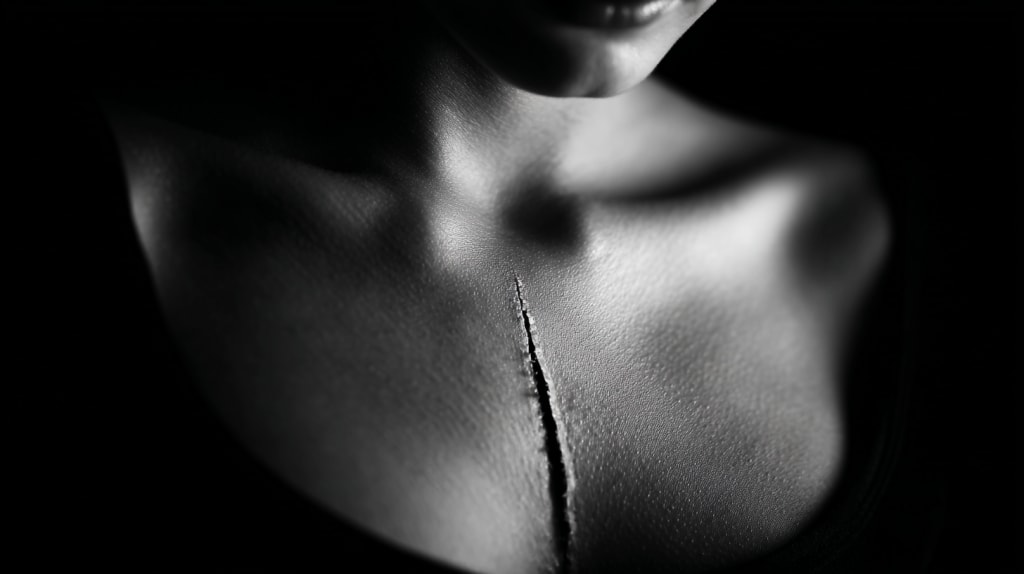
He was in Kerrville, five hours east of me, pacing his kitchen like a man trying to outrun fear. His voice was tight, angry in the way only terror can sound.
"Make them do an EKG," he said. "Why can't they get your blood pressure down? Why the fuck hasn't anyone looked at your heart?"
I was 44. I'd been in pain for years—real pain, the kind that makes you feel older than your parents. Hauling trash felt like dragging a dead deer uphill. Making a bed left me breathless. I kept telling doctors something was wrong. They kept telling me it wasn't.
Fibromyalgia. Anxiety. Stress.
A diagnosis that felt like a pat on the head.
I kept going to appointments, chasing answers that never came. Every time they ran a new test, I let myself hope. Lupus. Lyme disease. Autoimmune panels. I remember sitting in the exam room when my doctor told me the results were negative again, and I cried—not out of relief, but because it meant I was walking out of yet another appointment with no answers. I was so desperate to be believed that I would've accepted almost any diagnosis if it meant someone finally saw what was happening to me.
My doctor didn't want to do the EKG. I could see it in his face—here she goes again.
But he did it.
And everything changed.
The Day My Life Split in Two
The cardiologist in Odessa ran every test they had. I remember lying there with cold gel on my chest, staring up at the ceiling while they slid me into that long, humming tube. I hated that thing more than anything—the way it swallowed you whole, the way the air felt too close, the way you had to hold still while your mind tried to crawl out of your skin. I feared that tube more than I feared the surgery they hadn't even told me I needed yet. When it was over, all I could think about was the two-hour drive back to Marfa and whether I'd have the energy to cook dinner.
When he told me I needed a stent, I felt… nothing. Just a quiet, exhausted hope that maybe—finally—someone had found the thing that would give me my life back.
He told me to thank my dad.
I didn't know how literal that would become.
My sister drove me to Odessa for the procedure. I wasn't scared. I was too tired to be scared. I went under thinking I'd wake up fixed.
Instead, I woke up broken open.
"We couldn't do it," they said. "There are more blockages. Three vessels. You need a triple bypass."
I remember blinking at them, like they were telling me someone else's story.
I remember my sister's face going pale.
I remember my parents trying to sound brave on the phone and failing.
I went home.
I went back to work.
I cooked an entire service the night before they cracked my chest open.
That's who I was then.
The Heart Attack I Didn't Know I Survived
After the surgery, the surgeons told me I'd had a heart attack years earlier. Probably that night I woke up in agony, rocking in the bathtub, thinking I'd pulled something. The pain that wrapped around my jaw. The pain that eased just enough for me to go back to sleep.
I worked a whole spring break after that.
Three more years in the kitchen.
Three more years of doctors telling me it was all in my head.
Every surgeon said the same thing:
"I don't know how you were alive."
"I don't know how you were functioning."
"I've never seen anything like this."
I wasn't proud.
I wasn't amazed.
I was just tired.
The Six Years After
People think the story ends when you survive.
Mine didn't.
I stayed in the kitchen for six more years, trying to be the chef I used to be. Trying to move the way I used to move. Trying to pretend my body wasn't betraying me every single shift.
The pain never stopped. It lived in my bones, in my sternum, in the places where they wired me back together. I'd lift a pan and feel something pull. I'd bend to grab a hotel pan and feel my chest tighten. I'd push through service and then hide in the bathroom, crying quietly so no one would hear me. Not because I was weak, but because I could feel myself slipping. I could feel the distance between who I was and who I'd become.
The worst part wasn't the pain.
It was watching other cooks do what I used to do without thinking. The speed. The precision. The volume. The way they could command a station with their voice alone. I'd stand there, trying to keep up, trying to pretend I wasn't drowning in my own kitchen.
Every shift felt like a reminder of the woman I'd lost.
Every service felt like a test I kept failing.
Every night I went home feeling like a ghost of myself.
I stayed because I loved it.
I stayed because I didn't know who I was without it.
I stayed until staying hurt more than leaving.
What Survival Really Costs
People love a survival story. They love the part where you wake up grateful and changed and full of perspective.
Nobody talks about the bill that comes due.
The bypass machine damaged my cognition. Pump brain. A cute name for something that stole pieces of me. I used to hold entire menus in my head. I used to run a line like a conductor. After surgery, I'd forget steps in my own recipes. My kids—who worked for me—would watch me lose my place mid-service.
Then came my voice.
The intubation damaged my vocal cords. I couldn't project. Couldn't yell over the line. Couldn't command a kitchen the way a chef has to. I'd call out an order and it would disappear into the noise.
I went from being the loudest, sharpest person in the room to someone people leaned in to hear.
Someone easy to ignore.
That's what I grieve.
Not the scar.
Not the surgery.
The loss of the woman I fought to become.
The Life I Didn't Choose
I left the kitchen because I had no choice.
I didn't walk out triumphant.
I didn't reinvent myself with grace.
I crawled out.
Now I write in the desert. Horror stories, mostly. It feels fitting. I survived one.
My heart beats differently now. My life does too. The woman who could run a kitchen with her voice alone—she didn't make it off that table. Someone quieter came back. Someone who still startles at her own softness.
People tell me I should be grateful. And I am. I'm here. I'm alive. My dad saved my life from 300 miles away, standing in his kitchen in Kerrville, refusing to let a doctor dismiss me one more time.
But gratitude doesn't erase grief. Survival doesn't return what was taken. I'm still learning how to live in this body that forgets things, in this throat that can't rise above the noise, in this life I didn't choose but had to build anyway.
The scar is permanent.
So is the loss.
So is the strange, complicated gratitude that sits beside the rage.
They saved my heart.
I'm still trying to hear my own voice again.
About the Creator
Leslie L. Stevens Writer | Marfa, Texas
Her work blends personal essays, folklore-tinged storytelling, and emotional realism, often rooted in the West Texas landscape. She publishes fiction and nonfiction across Medium, Amazon KDP, and reader-driven platforms.
Keep reading
More stories from Leslie L. Stevens Writer | Marfa, Texas and writers in Longevity and other communities.
9:52
by Leslie L. Stevens 9:52 PM. Jessica bounced into the kitchen like she owned it. Ponytail swinging, sneakers squeaking, still high off sixty bucks in tips and a full week of crushing it. Her tables were clean. Her section was empty. Her stomach was growling.
By Leslie L. Stevens Writer | Marfa, Texas7 days ago in Fiction
Day 4 of Quitting
If this is how sobriety feels, maybe it’s better to go through life a little buzzed… this, along with other hits like, I want to kill myself, I wish I was dead, and I’m going to throw myself off a bridge have been the only thoughts on rotation these past few days. I promise myself that if, in a month, I still feel like this (‘this’ meaning despondent, full of rage, and simultaneously numb) I can go back to smoking. Until mid-February though? Nicotine is off the table.
By sleepy draftsabout a month ago in Longevity
Officially Confirmed: Heavy Snow Will Begin Late Tonight as Weather Alerts Warn of Major Disruptions, Travel Chaos, and Dangerous Conditions
Meteorological agencies have officially confirmed that a powerful winter storm system will bring heavy snowfall beginning late tonight, prompting widespread weather alerts and urgent warnings about dangerous travel conditions and major disruptions across affected regions.
By Fiaz Ahmed 5 days ago in Longevity
The Devil's Triangle
The sails ruffled in the breeze as we cruised along. The Sea Breeze was a mid-size catamaran that sailed out of Royal Naval Dockyard in Bermuda. We had booked this trip weeks in advance and were now looking at our Captain, Spike and two boat hands. Paddy and Wilson seemed like nice guys, joking around with the passengers and telling us some stories about Bermuda that only locals would know. Their island accents sounded almost British but they were pleasant to listen to.
By Barbara Gode Wiles3 days ago in Fiction


Comments
There are no comments for this story
Be the first to respond and start the conversation.