
Through the Looking Glass: The Hidden World of Optical Lenses
Exploring how precision engineering shapes the science and art of modern optics

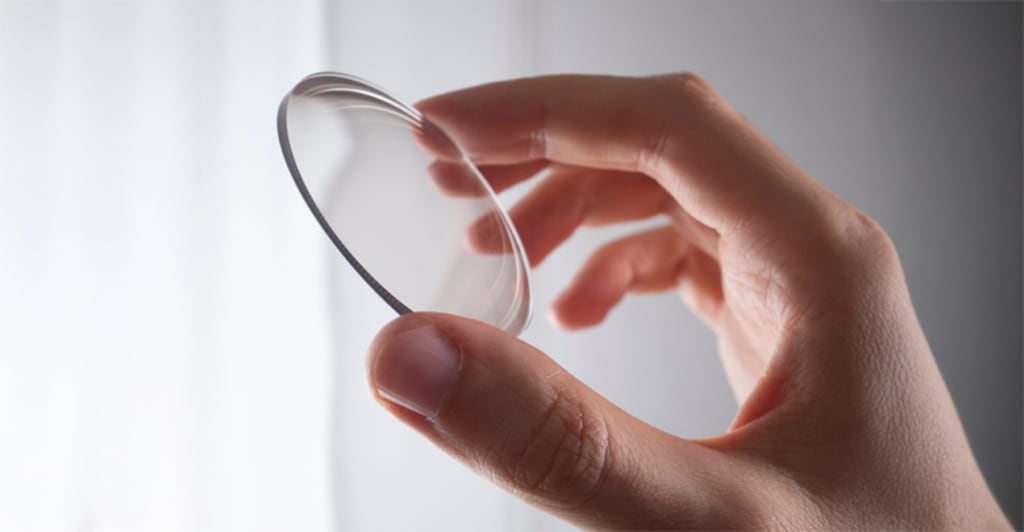
Before we slip on our glasses or peer through a camera, few of us pause to consider the silent complexity behind what we see. Yet at the heart of so many devices—microscopes, telescopes, projectors, smartphones, and more—lie optical lenses that bend, focus, filter, or redirect light in precisely engineered ways.
In the realm of optical innovation, companies such as Optlenses help build the foundational elements of that world. This article explores how lenses operate, the challenges of precision optics, and how a behind-the-scenes lens provider contributes to scientific, industrial, and daily life—even when most of us never see it.
The Anatomy of Optical Lenses
An optical lens is a transparent element—often of glass or specialized material—that refracts (bends) light. Lenses come in various shapes (convex, concave, cylindrical, aspheric) and serve different roles: focusing, magnifying, collimating, diverging, or filtering.
Key properties and constraints
- Refractive index & dispersion
Light of different wavelengths refracts slightly differently. That dispersion must be managed, especially in lenses used for imaging across broad spectra (e.g., visible light).
- Surface quality and flatness
Even microscopic deviations in a lens surface can degrade performance in high-precision systems (e.g., interferometry, laser optics).
- Coatings and anti-reflection
Lenses often carry coatings (anti-reflective, dielectric, hydrophobic) to reduce stray reflections or protect surfaces.
- Geometric tolerances
The exact curvature, centration, alignment, and thickness tolerances are critical. A lens that is off-center by micrometers can significantly worsen image quality.
- Material constraints
The choice of glass or crystalline materials carries tradeoffs in transmission, absorption, thermal expansion, mechanical strength, and cost.
Because of these constraints, designing optical lenses involves tradeoffs. A lens ideal for visible light may fail in infrared; a cost-effective lens for casual photography would fall short in a scientific instrument.
From Concept to Fabrication: The Journey of a Lens
Let’s follow a hypothetical lens from design to integration, highlighting challenges along the way.
Design & simulation
Optical engineers model how light passes through a proposed lens or system. Ray tracing and wave optics simulations predict aberrations, focusing power, and tolerances.
Material specification
Based on spectral requirements, cost, durability, and size, the appropriate glass or optical crystal (e.g., sapphire, fused silica, borosilicate) is chosen.
Grinding and polishing
Each surface is shaped and polished to nanometer-level accuracy using CNC machining, diamond turning, or magnetorheological finishing.
Coating and inspection
Multi-layer coatings are applied to manage reflection and transmission. Interferometers and profilometers ensure the final product meets exact tolerances.
Assembly and testing
Once complete, lenses are integrated into devices—sometimes alone, often in multi-element assemblies that balance each other’s imperfections.
The final test may involve shining a laser through the lens or capturing an image to ensure focus, alignment, and performance meet design goals.
The Role of Optical Lenses in Modern Life
While the word “lens” might make us think of eyeglasses, its impact stretches far beyond vision correction.
Medical imaging: Endoscopes, microscopes, and laser surgery systems rely on precise lenses for illumination and focus.
Consumer technology: Every smartphone camera and VR headset hides complex lens arrays engineered to deliver sharp, distortion-free imagery.
Scientific exploration: Telescopes and spectrometers use advanced optical lenses to explore the cosmos or analyze materials at the atomic scale.
Industrial applications: Laser cutting, quality inspection, and autonomous navigation all depend on optical components that can withstand demanding environments.
Each of these areas benefits from the quiet work of engineers and fabricators dedicated to improving optical performance and durability.
Innovation and Sustainability in Optics
The optics industry has increasingly embraced sustainability. Manufacturing high-precision optical lenses often involves energy-intensive processes and specialized materials, but advances in coatings, recycling, and precision machining are reducing waste.
For example, adaptive optics—systems that adjust shape in real time—have minimized the need for replacing physical components. Similarly, additive manufacturing techniques now enable rapid prototyping of polymer lenses, cutting down both energy consumption and material waste.
As noted across industry discussions and platforms such as Optlenses, sustainability is no longer an afterthought but a design principle. The aim is to produce lenses that not only perform well but also have minimal environmental impact.
Precision, Partnership, and Progress
Behind every optical system is a partnership between designers, manufacturers, and researchers. The collaboration ensures that lenses meet specialized demands—from thermal stability in satellites to bio-compatibility in medical devices.
Companies that supply precision optical lenses work closely with scientists to adapt solutions for evolving fields like quantum optics, photonics, and autonomous systems. These partnerships often lead to cross-disciplinary innovations, blending physics, chemistry, and materials science.
At Optlenses, for instance, one can see the range of products that serve diverse purposes—from UV-grade fused silica lenses for laboratory setups to infrared optics for defense applications. Each lens represents thousands of calculations, adjustments, and measurements.
The Human Side of Optical Engineering
Optical design may appear mechanical, but it requires creativity. The challenge lies in controlling light—a substance that cannot be touched, only modeled. Engineers must visualize invisible rays and predict their paths through layers of material.
Many optical engineers compare their work to composing music: tiny adjustments create harmony or discord in the final image. Achieving that harmony means balancing physics and art, precision and intuition.
As technology grows more sophisticated, so does the need for optics that are smaller, lighter, and smarter. From augmented reality glasses to medical diagnostics, the future will demand even more innovation at microscopic scales.
Looking Ahead: The Future of Optical Lenses
The next decade promises extraordinary developments:
- Smart lenses and adaptive optics
Lenses that can change focus or shape using electrical signals are already moving from research to commercialization.
- Meta-optics
Using nanostructured surfaces instead of curved glass, meta-lenses can control light in ways that traditional optics cannot.
- Integration with AI and photonics
Imaging systems that adjust automatically to lighting conditions or movement are reshaping fields from astronomy to autonomous driving.
- Sustainable materials
Biodegradable polymers and recycled glass options are emerging as part of a more eco-conscious optics supply chain.
Each innovation brings both excitement and responsibility: ensuring these technologies remain accessible, affordable, and environmentally sound.
Conclusion
When you next peer through a camera or glance at your reflection, remember that the clarity you enjoy depends on centuries of optical refinement. The art and science of optical lenses represent one of humanity’s quiet triumphs—a synthesis of physics, craftsmanship, and vision.
From the telescope that mapped the stars to the microscope that revealed the cell, lenses have shaped how we see our universe and ourselves. Behind every clear image stands a hidden network of innovators ensuring that light, in all its wonder, is perfectly guided to the eye.
About the Creator
Roy
I am a professional content writer.
Day 4 of Quitting
If this is how sobriety feels, maybe it’s better to go through life a little buzzed… this, along with other hits like, I want to kill myself, I wish I was dead, and I’m going to throw myself off a bridge have been the only thoughts on rotation these past few days. I promise myself that if, in a month, I still feel like this (‘this’ meaning despondent, full of rage, and simultaneously numb) I can go back to smoking. Until mid-February though? Nicotine is off the table.
By sleepy drafts26 days ago in Longevity




Comments
There are no comments for this story
Be the first to respond and start the conversation.