
"A New Dawn for the Catholic Church: The Historic Rise of Pope Leo XIV"
Pope Leo XIV, the first American to lead the Catholic Church, ushers in a bold new era of reform, compassion, and global unity.
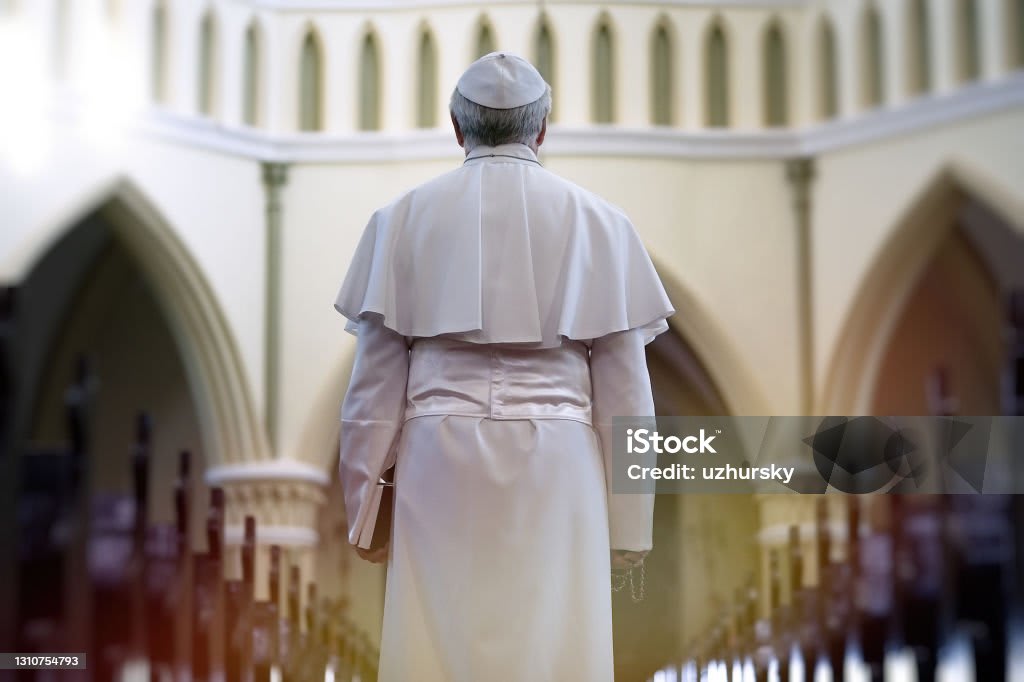
In an unprecedented moment that has captured the attention of millions around the world, the Catholic Church has elected its first American pontiff—Pope Leo XIV. The announcement was made on May 9, 2025, as white smoke billowed from the Sistine Chapel chimney, signaling the conclusion of the papal conclave and the beginning of a new chapter for the global Catholic community.
The new Pope, formerly known as Cardinal John M. Smith of New York, emerged on the balcony of St. Peter’s Basilica, greeted by thunderous applause and the awe of a watching world. At 61 years old, Pope Leo XIV is not only the first American to ascend to the papacy but also represents a shift toward a more inclusive and modern church that reflects the diverse faces of its 1.3 billion members.
John M. was born in Brooklyn, New York, and Smith was ordained in 1989 and quickly rose through the ranks of the Church, gaining recognition for his deep commitment to social justice, interfaith dialogue, and the empowerment of marginalized communities. His work in post-Katrina Louisiana, as well as his advocacy for immigrant rights, earned him the nickname “The Shepherd of the Streets.”
The choice of the name “Leo” carries deep historical significance. Pope Leo I, also known as Leo the Great, was a fifth-century leader renowned for his theological clarity and diplomatic prowess. By choosing this name, Pope Leo XIV signals a vision of courageous leadership and bridge-building in a world rife with division and uncertainty.
In his first public address, delivered in both English and Italian, the new Pope struck a note of unity and peace. “I stand before you today not as a man of one nation, but as a servant of all nations,” he declared. “May this be a papacy not of walls, but of bridges. Not of exclusion, but of embrace.”
This message resonates strongly in a world facing increasing polarization—both politically and spiritually. The Church itself has wrestled with internal challenges, from the handling of sexual abuse scandals to debates over the role of women and LGBTQ+ members within its fold. Many now view Pope Leo XIV as a reform-minded figure with the potential to usher in a period of renewal.
International leaders responded with a mix of enthusiasm and optimism. U.S. President Maria Gonzalez issued a statement calling the election “a proud moment for Americans of all faiths” and praised Pope Leo’s “lifelong dedication to compassion and justice.” In a similar vein, leaders from Asia, Europe, and Africa sent messages of congratulations, highlighting the Pope's potential to promote global dialogue and peace. Yet, the road ahead will not be without challenges. The Catholic Church remains deeply divided along conservative and progressive lines, with issues such as clerical celibacy, contraception, and priestly ordination of women still hotly debated. Observers note that Pope Leo XIV’s ability to navigate these waters—balancing tradition with reform—will define the success of his papacy.
The election of an American Pope also raises questions about the role of the Church in global politics. Will Leo XIV take a more active stance on climate change, income inequality, or international conflict? His early record suggests he might. During his time as Archbishop of New York, he was a vocal supporter of environmental sustainability and universal healthcare. As Pope, his moral voice could influence not just the faithful, but policymakers worldwide.
What is clear is that this moment marks a turning point. The cheers in Vatican City were not just for a new leader, but for the hope of a revitalized Church, one that listens more and judges less. One that seeks to serve not from the top down, but from the heart out.
As the bells of St. Peter’s continue to ring, echoing across continents and cultures, the world watches and wonders: Will Pope Leo XIV be the shepherd who guides the Church into a new era of faith, inclusivity, and renewal?
Only time will tell. But for now, the world pauses—and dares to believe.
About the Creator
Mahmud Labib
latest News is here...
Keep reading
More stories from Mahmud Labib and writers in The Swamp and other communities.
Trump Claims ‘Total Reset’ in US-China Trade Relations After Tariff Talks in Geneva
Introduction Former U.S. Following high-stakes tariff negotiations in Geneva, President Donald Trump has declared a "total reset" in trade relations with China. The talks, which took place between senior trade officials from both nations, aimed to address long-standing disputes over tariffs, intellectual property rights, and market access. Trump’s bold assertion suggests a potential thaw in the economic tensions that have defined U.S.-China relations in recent years. However, experts remain cautious, questioning whether this signals a genuine breakthrough or merely a temporary pause in the ongoing trade war.
By Mahmud Labib9 months ago in Journal
Why Black History Matters in America?
The United States of America is celebrating their 250th anniversary in 2026. I'm proud to be an American and as someone who was born here, I wouldn't imagine myself living anywhere else. This is a country where opportunities are possible. Where anyone can be successful in anything they desire to do. Equality, community, and togetherness are the backbones of what America is and should be about. However, we have an administration who wants to erase and disregard those who have made positive, meaningful impacts in our country, specifically Black figures, such as Martin Luther King, Jr., Rosa Parks, and Maya Angelou. President Trump and his administration have been constantly complaining and fighting against what they call the "Woke agenda". They use this excuse as a distraction from other issues they refuse to address, such as the high cost of living, climate change, and inflation. That equality is dividing America, when in reality, it's bringing us together. Being woke is not tied to a specific political party. No matter where you stand on the political spectrum, you can still care about other people and their plights. Compassion and empathy for others isn't tied to a political party, either. We were taught as children to treat others the way we want to be treated and not judge others because they're different from us. Caring about others isn't a personal attack on your beliefs. It doesn't make you any less of a person. People who are easily offended over African American figures, past or present, or anything related to it, are grasping at straws. Current and future generations need to know who people like Harriet Tubman and Shirley Chisholm were, especially in the classroom. Black History is part of American History. It should be recognized, not hidden or forgotten. Besides, you can't shield children from everything, just because your feelings are easily hurt.
By Mark Wesley Pritchard 16 days ago in The Swamp
Marco Rubio to Address Munich Security Conference Amid Tensions Over Donald Trump’s Foreign Policy
The annual Munich Security Conference has long been a place where world leaders speak openly about war, peace, and global cooperation. This year, the atmosphere is tense. Many European officials are uneasy about the direction of United States foreign policy. Into this uncertain setting steps U.S. Secretary of State Marco Rubio, who is scheduled to deliver a major speech.
By Muhammad Hassan3 days ago in The Swamp


Comments
There are no comments for this story
Be the first to respond and start the conversation.