
Bangladesh Nationalist Party Sweeps to Victory in First Election Since Gen Z Uprising
A historic electoral mandate signals a new political era following nationwide youth-led protests

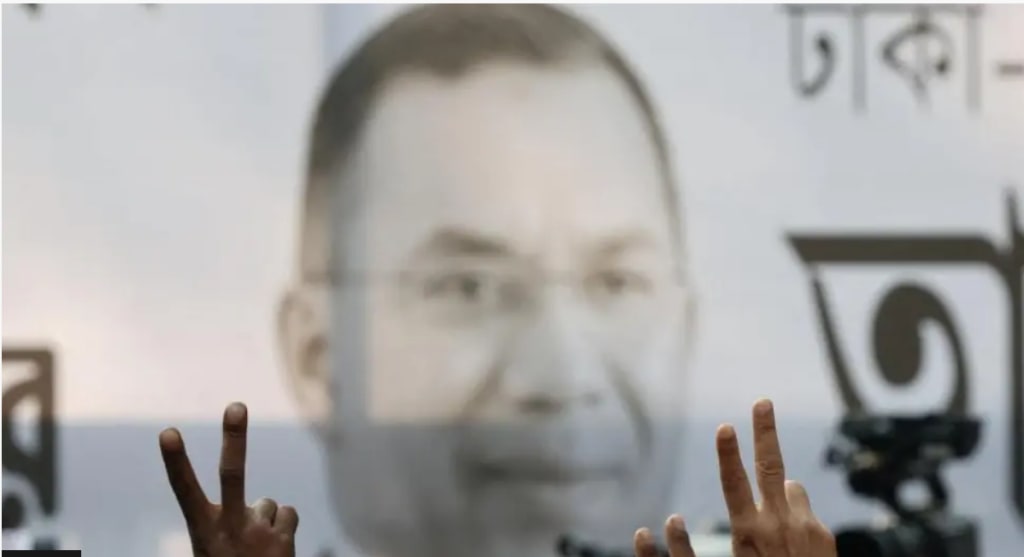
Bangladesh has entered a decisive new chapter in its political history. The Bangladesh Nationalist Party (BNP) has secured a sweeping victory in the country’s first general election since the 2024 Gen Z–led uprising that reshaped the nation’s political landscape.
The outcome marks a dramatic shift in power and reflects the electorate’s demand for political transformation, institutional reform, and renewed democratic accountability. Following years of tension, protest, and political polarization, this election represents both a culmination of public dissent and the beginning of a new governing phase.
Background: The Gen Z Uprising and Political Transition
The 2024 uprising, largely driven by young voters and civil society groups, emerged from widespread frustration over governance concerns, economic pressures, and limitations on political participation. The protests ultimately led to the collapse of the previous administration under Sheikh Hasina and initiated a transitional period aimed at restoring electoral legitimacy.
The recent general election was therefore widely viewed as a referendum on the country’s future direction. For many citizens, it was an opportunity to redefine Bangladesh’s democratic framework after a period of intense political upheaval.
A Decisive Electoral Mandate
The BNP secured a commanding majority in the Jatiya Sangsad (National Parliament), comfortably surpassing the threshold required to form a government. The scale of the victory signals broad public support and a clear mandate for leadership transition.
Political observers have noted that the election’s significance extends beyond seat counts. It reflects a recalibration of political power after nearly two decades during which the BNP remained outside executive authority.
The party’s success underscores the electorate’s desire for change, stability, and economic revitalization.
Leadership and Political Renewal
Central to the BNP’s resurgence is the leadership of Tarique Rahman, who is widely expected to assume a leading role in the new administration. His political re-emergence has been framed as both symbolic and strategic, representing continuity within the party while signaling generational adaptation.
The BNP’s campaign focused on governance reform, anti-corruption initiatives, institutional strengthening, and economic recovery. By addressing youth employment, inflation, and public sector transparency, the party successfully connected with both traditional supporters and newly mobilized younger voters.
Voter Participation and Electoral Climate
Voter turnout was substantial, reflecting strong public engagement in what many described as a defining national moment. Security measures were heightened to ensure orderly proceedings, and the voting process was largely peaceful.
Although some opposition voices raised concerns about procedural matters, international observers characterized the election as a critical step toward restoring competitive democratic practice in Bangladesh.
The election’s broader importance lies not only in its outcome but also in its function as a stabilizing mechanism after months of political uncertainty.
Opposition Landscape and Political Balance
While the BNP achieved a dominant position, other political actors also contested the election. However, the Awami League, historically one of Bangladesh’s principal parties, did not participate in the vote following the upheaval of 2024.
This absence has prompted debate regarding inclusiveness and long-term political reconciliation. Analysts emphasize that sustainable democratic governance will require institutional balance, constructive opposition, and respect for pluralism.
The presence of smaller parties and independent candidates suggests that Bangladesh’s political landscape may evolve toward a more diversified parliamentary framework.
Challenges Facing the New Government
Despite the electoral victory, the incoming administration faces considerable challenges:
Economic Stabilization: Addressing inflation, investment confidence, and employment generation.
Institutional Reform: Strengthening judicial independence, electoral credibility, and administrative transparency.
Youth Engagement: Responding to the aspirations of the generation that catalyzed political transformation.
International Diplomacy: Maintaining balanced relations with key regional and global partners.
Bangladesh occupies a strategically significant position in South Asia, and its economic growth trajectory has attracted global attention. The BNP government’s policy decisions will therefore carry both domestic and international implications.
Regional and Global Implications
The election outcome has drawn attention from major regional stakeholders, including India, China, and Western partners. Bangladesh’s economic partnerships, infrastructure development initiatives, and security cooperation frameworks may undergo recalibration under the new administration.
Observers will closely monitor whether the BNP government adopts policy continuity in foreign affairs or introduces notable strategic adjustments.
Conclusion: A Defining Democratic Moment
The sweeping victory of the Bangladesh Nationalist Party in the first election since the Gen Z uprising represents a watershed moment in the country’s democratic evolution.
While the transition signals renewed public confidence in electoral politics, it also imposes significant responsibility on the new leadership. The expectations of citizens—particularly younger generations—are substantial. Delivering governance reform, economic resilience, and institutional stability will determine whether this political shift translates into sustained national progress.
Bangladesh now stands at a critical juncture. The coming years will test the durability of its democratic institutions and the capacity of its leadership to convert electoral momentum into meaningful reform.
About the Creator
Asad Ali
I'm Asad Ali, a passionate blogger with 3 years of experience creating engaging and informative content across various niches. I specialize in crafting SEO-friendly articles that drive traffic and deliver value to readers.
Why Black History Matters in America?
The United States of America is celebrating their 250th anniversary in 2026. I'm proud to be an American and as someone who was born here, I wouldn't imagine myself living anywhere else. This is a country where opportunities are possible. Where anyone can be successful in anything they desire to do. Equality, community, and togetherness are the backbones of what America is and should be about. However, we have an administration who wants to erase and disregard those who have made positive, meaningful impacts in our country, specifically Black figures, such as Martin Luther King, Jr., Rosa Parks, and Maya Angelou. President Trump and his administration have been constantly complaining and fighting against what they call the "Woke agenda". They use this excuse as a distraction from other issues they refuse to address, such as the high cost of living, climate change, and inflation. That equality is dividing America, when in reality, it's bringing us together. Being woke is not tied to a specific political party. No matter where you stand on the political spectrum, you can still care about other people and their plights. Compassion and empathy for others isn't tied to a political party, either. We were taught as children to treat others the way we want to be treated and not judge others because they're different from us. Caring about others isn't a personal attack on your beliefs. It doesn't make you any less of a person. People who are easily offended over African American figures, past or present, or anything related to it, are grasping at straws. Current and future generations need to know who people like Harriet Tubman and Shirley Chisholm were, especially in the classroom. Black History is part of American History. It should be recognized, not hidden or forgotten. Besides, you can't shield children from everything, just because your feelings are easily hurt.
By Mark Wesley Pritchard 16 days ago in The Swamp
Gold Set to Hit $5,900/oz by Year End on Fed Easing, Sovereign Buying – UBS
Gold markets are on the brink of a historic rally, according to a recent forecast from global banking giant UBS. In a note that has captured investor attention, UBS analysts now see gold potentially reaching $5,900 per ounce by the end of the year, a dramatic escalation from earlier forecasts and far above current market prices. This projection reflects a confluence of powerful drivers — from anticipated Federal Reserve monetary easing to sustained sovereign and central bank buying — that could propel bullion to unprecedented heights.
By Sadaqat Ali7 days ago in The Swamp
What Happens To Your Brain When You Stop Multitasking
Digital technology is the culprit that is causing us to doom scroll when tired, disengaged and unmotivated with the content that motivated you to log onto your device to consume in the first place. That is only the beginning. In the modern workplace (and even when filing cabinets were around, I confirmed this with my adopted parents to get my facts right); reading files while you are supposed to be present to the caller on the other end of the phone line is another classic example of multitasking that causes your brain (although adaptable and intelligent) to lose focus and concentration.
By Justine Crowley4 days ago in Psyche


Comments
There are no comments for this story
Be the first to respond and start the conversation.