
Europe Looks to Shore Up Its Own Defenses Amid U.S. Uncertainty
European leaders debate military spending, strategic autonomy, and security cooperation as questions grow about long-term American commitments

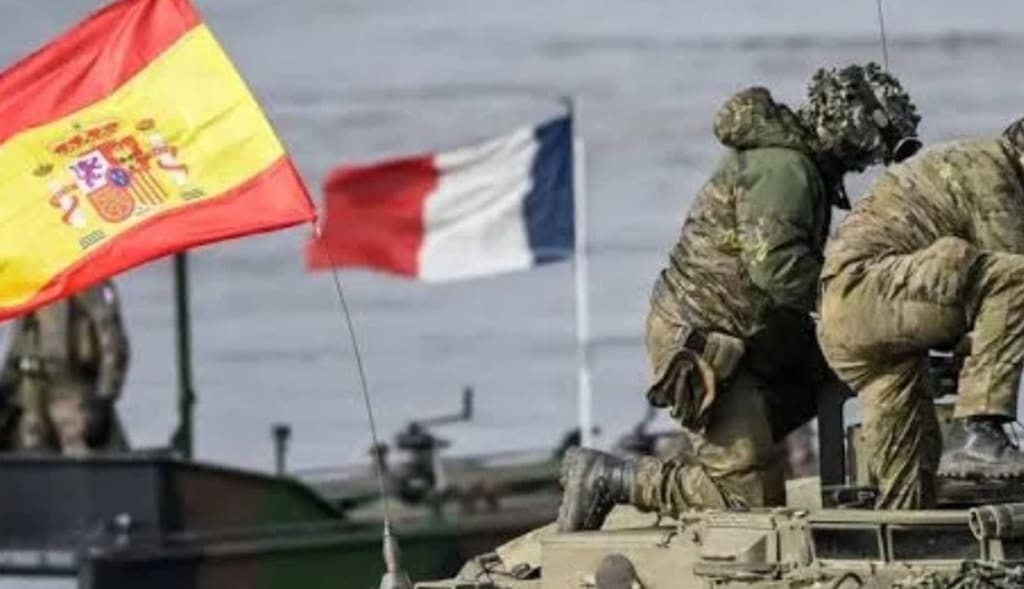
A Changing Security Landscape
European governments are reassessing their defense strategies as uncertainty grows about the future role of the United States in global security. For decades, the U.S. has played a central role in protecting Europe through the framework of NATO. But recent political shifts in Washington, combined with rising global tensions, have prompted leaders across the European Union to consider how prepared they are to act independently if needed.
The discussion is not about ending transatlantic ties. Instead, it focuses on strengthening Europe’s own capabilities so that it can respond to crises without relying entirely on American support. This shift has been described by policymakers as a move toward “strategic autonomy,” a concept that has gained attention in recent years.
The Role of NATO
Since its founding in 1949, NATO has served as the foundation of European collective defense. The alliance’s principle of mutual defense, known as Article 5, states that an attack on one member is considered an attack on all. The United States has long been the alliance’s largest contributor in terms of funding and military capability.
However, debates within the U.S. about defense spending and foreign commitments have raised concerns in European capitals. Some American leaders have questioned whether European allies are contributing enough to their own defense budgets. In response, European governments have increased spending, but gaps remain.
European officials emphasize that NATO remains central to their security. At the same time, they argue that stronger European defense capabilities would make the alliance more balanced and resilient.
Rising Security Concerns
Security concerns have intensified since Russia’s invasion of Ukraine in 2022. The war has reshaped Europe’s threat perception and reinforced the importance of military readiness. Countries along NATO’s eastern flank, such as Poland and the Baltic states, have been particularly vocal about strengthening deterrence.
The conflict has also led to new defense initiatives within the European Union. Programs aimed at joint procurement of weapons and coordinated military research have expanded. Leaders believe that cooperation can reduce duplication and improve efficiency.
In addition to Russia, Europe faces other challenges, including cyber threats, terrorism, and instability in neighboring regions. These risks have reinforced the view that defense planning must adapt to a wider range of scenarios.
Strategic Autonomy: What It Means
The idea of strategic autonomy does not imply isolation from allies. Rather, it suggests that Europe should have the ability to act independently when necessary. This includes developing its own defense industries, improving rapid deployment forces, and strengthening intelligence cooperation.
France has been a leading advocate of this approach. President Emmanuel Macron has argued that Europe must not depend entirely on external powers for its security. Germany has also taken steps in this direction, announcing major increases in defense spending and pledging to modernize its armed forces.
At the same time, some European countries remain cautious. They worry that too much emphasis on autonomy could weaken ties with the United States. For many governments, the challenge is to find a balance between independence and alliance.
Defense Spending and Budget Debates
One of the clearest indicators of change is defense spending. Following Russia’s invasion of Ukraine, several European countries committed to meeting or exceeding NATO’s target of spending 2 percent of GDP on defense.
Germany, long criticized for low military investment, announced a special fund worth 100 billion euros to upgrade its armed forces. Poland has increased its defense budget significantly and expanded its military personnel. Nordic countries have also strengthened their capabilities.
Despite these increases, differences remain among EU members. Some southern European states face budget constraints and competing domestic priorities. Public opinion can also influence spending decisions, especially in countries with strong social welfare systems.
Lawmakers across Europe are debating how to allocate resources effectively. Investments in air defense systems, ammunition production, and advanced technology are among the top priorities.
The European Union’s Role
The European Union has expanded its role in defense policy over the past decade. Through initiatives such as the Permanent Structured Cooperation (PESCO) framework, EU members coordinate projects ranging from drone development to military mobility.
The European Defence Fund provides financial support for joint research and development. Supporters argue that these programs strengthen Europe’s industrial base and reduce dependence on foreign suppliers.
However, defense policy remains primarily under national control. Member states retain authority over their armed forces, which can make coordination complex. Progress often depends on political consensus among diverse governments.
Transatlantic Relations Under Review
Uncertainty about U.S. policy has influenced European planning. Changes in American leadership can lead to shifts in foreign policy priorities. European officials note that domestic debates in the United States sometimes question the value of overseas commitments.
At the same time, U.S. military presence in Europe remains significant. American troops are stationed in several countries, and joint exercises continue regularly. Cooperation in intelligence sharing and logistics is ongoing.
European leaders generally stress that the transatlantic partnership remains strong. Yet they also acknowledge that preparing for different scenarios is a prudent step.
Industry and Supply Chains
Another focus of Europe’s defense strategy is strengthening its industrial capacity. The war in Ukraine exposed shortages in ammunition and equipment. European manufacturers are now working to expand production lines and secure supply chains.
Cooperation among defense companies across EU borders has increased. Joint ventures aim to reduce fragmentation in the market and encourage innovation. Governments are also discussing how to streamline procurement processes.
A stronger industrial base is seen as essential for long-term resilience. It allows Europe to replenish stockpiles quickly and support allies without relying heavily on external suppliers.
Public Opinion and Political Debate
Public attitudes toward defense policy have evolved. In many countries, support for increased military spending has grown since 2022. Citizens have become more aware of regional security risks.
However, debates continue about how to balance defense with other priorities such as healthcare, education, and climate policy. Political parties often differ on the pace and scale of military expansion.
In some nations, historical experiences shape public opinion. Countries with a tradition of neutrality or limited military engagement may approach defense changes more cautiously.
Cooperation Beyond Europe
Europe’s security efforts also involve partnerships beyond NATO and the EU. The United Kingdom, which left the European Union, remains an important military actor. Cooperation between London and EU capitals continues on defense matters.
In addition, Europe works with countries such as Canada and Japan on security issues. These partnerships reflect a broader understanding that global challenges require coordinated responses.
The Road Ahead
Europe’s effort to strengthen its own defenses is likely to continue regardless of short-term political developments in Washington. The goal is not to replace the United States but to ensure that Europe can act effectively in a changing world.
Key questions remain. How quickly can Europe close capability gaps? Will member states maintain long-term investment? Can political unity be sustained during periods of economic strain?
The answers will shape the continent’s security landscape for years to come.
Conclusion
Europe is navigating a period of adjustment in its defense strategy. While NATO remains central, European leaders are working to enhance their own military capabilities. Increased spending, industrial cooperation, and policy coordination reflect a broader effort to prepare for uncertainty.
The debate is ongoing and involves complex political choices. What is clear is that European governments see the need to take greater responsibility for their security. As global conditions evolve, the balance between alliance and autonomy will remain a key issue in transatlantic relations.
By focusing on cooperation, realistic planning, and steady investment, Europe aims to strengthen its position while maintaining long-standing partnerships. The coming years will determine how successfully these goals are achieved.
About the Creator
Saad
I’m Saad. I’m a passionate writer who loves exploring trending news topics, sharing insights, and keeping readers updated on what’s happening around the world.
Why Black History Matters in America?
The United States of America is celebrating their 250th anniversary in 2026. I'm proud to be an American and as someone who was born here, I wouldn't imagine myself living anywhere else. This is a country where opportunities are possible. Where anyone can be successful in anything they desire to do. Equality, community, and togetherness are the backbones of what America is and should be about. However, we have an administration who wants to erase and disregard those who have made positive, meaningful impacts in our country, specifically Black figures, such as Martin Luther King, Jr., Rosa Parks, and Maya Angelou. President Trump and his administration have been constantly complaining and fighting against what they call the "Woke agenda". They use this excuse as a distraction from other issues they refuse to address, such as the high cost of living, climate change, and inflation. That equality is dividing America, when in reality, it's bringing us together. Being woke is not tied to a specific political party. No matter where you stand on the political spectrum, you can still care about other people and their plights. Compassion and empathy for others isn't tied to a political party, either. We were taught as children to treat others the way we want to be treated and not judge others because they're different from us. Caring about others isn't a personal attack on your beliefs. It doesn't make you any less of a person. People who are easily offended over African American figures, past or present, or anything related to it, are grasping at straws. Current and future generations need to know who people like Harriet Tubman and Shirley Chisholm were, especially in the classroom. Black History is part of American History. It should be recognized, not hidden or forgotten. Besides, you can't shield children from everything, just because your feelings are easily hurt.
By Mark Wesley Pritchard 17 days ago in The Swamp
Donkeys, Elephants, and the Great American Zoo: Is There a Way Out?
Donkeys, Elephants, and the Great American Zoo: Is There a Way Out? Do You Really Believe Them? Look, I’m going to be blunt with you. When you watch their polished debates, do you honestly believe they care about you? Or are they just talking to their billionaire donors? I remember checking my bank account after rent last month and thinking: this can’t be what “the greatest country on earth” looks like. Seriously, look at your own bills. Look at the crumbling roads in your neighborhood. How many times have the Elephants been in charge? How many times has the Donkey run the show? The names change, but has your life actually improved? This isn’t complicated. It’s a rigged game. If things keep going from bad to worse, why do you keep giving them your vote? It’s a joke. Your Money Abroad, Their Corruption at Home Doesn’t it boil your blood to see your hard-earned tax dollars shipped overseas to places like Israel—where citizens receive free healthcare and free education—while you are forced to borrow money just to earn a college degree and still can’t afford basic medicine? It’s a bitter irony: you are funding a lifestyle for others that you cannot even secure for yourself at home. And it’s not just about money; it’s about moral decay. The shadow of the Epstein documents still hangs over Washington. When you see names from both sides of the aisle entangled in that filth, you realize these people don’t share your values. They are an elite club, protected from the very laws that apply to you. I’m fed up with it. Aren’t you? The Trap: “Don’t Waste Your Vote” You know all of this is true. But when election day comes, they pull out their favorite weapon: fear. You vote for the Elephant so the Donkey doesn’t kick you. Or you vote for the Donkey so the Elephant doesn’t crush you. They’ve convinced you that any choice outside their circus is a “wasted vote.” But think about it: if every one of us stopped feeding them our power and gave it to someone else, the votes would be split—but their votes would be split too. Suddenly, they wouldn’t be “giants” anymore. Everyone would be standing on a level playing field. Your vote is only “wasted” when you give it to the same people who have been failing you for decades. The Human Alternative Now you’re probably asking: “Who’s the alternative? Are there other animals in this zoo besides the Donkey and the Elephant?” Look, the alternative doesn’t have to be another animal—we’re human beings, after all! 😂 Honestly, it’s time to stop looking for a mascot and start looking for a real solution. Here are the "Human" alternatives that Washington doesn't want you to take seriously: The Forward Party (The Center): This is for the millions of Americans who feel politically homeless. Founded by Andrew Yang and former governors from both sides, the Forward Party isn't about rigid ideology; it’s about fixing the "plumbing" of our democracy so it actually works for us. They focus on Ranked Choice Voting, which allows you to rank candidates by preference so you never have to worry about a "spoiler effect" again. They advocate for Open Primaries, meaning you aren't forced to join a specific "tribe" just to have a say in who runs. Their philosophy is "Not Left, Not Right, but Forward." They want to end the toxic polarization that treats half the country as the enemy and instead focus on data-driven, common-sense solutions that 70% of Americans already agree on. It’s about making the system functional, transparent, and representative of the sensible majority rather than the radical fringes. The Libertarian Party: For those who believe that you, not the government, should own your life. They want to slash federal spending, end the IRS, and bring our troops home. Their philosophy is simple: keep the government out of your wallet and out of your private life. It’s about maximum personal freedom and total fiscal responsibility. The Green Party: If you’ve had enough of corporate monopolies writing our laws. They focus on an economy that works for the people, not the 1%. This includes a "Green New Deal" that guarantees healthcare as a human right and living wages for all. They believe the economy should serve the people, not the CEOs. The Constitution Party: For those who feel we’ve drifted too far from our foundation. They want to strip power away from the federal government and return it to the states and the people, exactly as the Founders intended. They believe in limited government and the strict rule of law. The Choice Is Yours If we all decide—right now—to stop buying into their fear, the walls of this zoo will collapse. The system only works because we agree to stay in our cages. But the door isn't locked from the outside. The key to the cage is already in your pocket. It’s your voice, your dignity, and your refusal to be tricked again. Do you have the courage to use it?
By Beyond the Beltway6 days ago in The Swamp


Comments
There are no comments for this story
Be the first to respond and start the conversation.