
Oil Prices Jump Amid Signs of U.S.–Iran Conflict
Geopolitical tensions send crude higher as markets weigh supply risks and global economic impact

Oil markets are once again on edge.
Crude prices surged this week as rising tensions between the United States and Iran injected fresh uncertainty into global energy markets. While no direct disruption to supply has yet occurred, traders are increasingly pricing in the possibility that conflict in the Middle East could impact one of the world’s most critical oil-producing regions.
The result? A sharp spike in crude benchmarks and renewed volatility across financial markets.
Why Oil Prices Are Climbing
The rally reflects what analysts call a “geopolitical risk premium.” In simple terms, oil prices often rise when political tensions threaten supply routes — even if production hasn’t actually been interrupted.
In this case, escalating rhetoric and military signaling between the U.S. and Iran have raised concerns that diplomatic talks could falter, increasing the odds of confrontation.
Energy markets respond quickly to such signals. Even the possibility of:
Military strikes
Sanctions tightening
Naval standoffs
Disruptions to shipping lanes
…can push traders to bid up prices in anticipation of potential shortages.
The Strategic Importance of the Strait of Hormuz
One of the biggest concerns is the Strait of Hormuz — a narrow shipping corridor between Iran and Oman.
Roughly 20% of the world’s seaborne oil supply passes through this chokepoint every day. Any disruption here, even temporary, could significantly restrict global supply and send prices soaring.
Historically, even threats involving the strait have been enough to move markets sharply.
The U.S.–Iran Relationship: A Long-Running Tension
Relations between United States and Iran have been strained for decades, particularly over nuclear development and regional influence.
Recent developments suggest diplomatic negotiations may be facing renewed pressure. While neither side has confirmed imminent military action, market participants are reacting to:
Escalating public statements
Military positioning in the region
Renewed sanctions discussions
Rising regional instability
The energy market doesn’t wait for confirmation — it reacts to probability.
How High Could Oil Go?
That depends on what happens next.
There are two key scenarios:
1️⃣ Escalation
If tensions deepen or actual supply disruptions occur, oil could spike sharply. A direct conflict affecting infrastructure or shipping routes would likely push crude significantly higher in a short period.
2️⃣ De-escalation
If diplomatic efforts resume or cooler heads prevail, the geopolitical premium could fade quickly. In that case, prices may retreat just as rapidly as they rose.
Markets are currently trading more on headlines than fundamentals.
The Broader Economic Impact
Higher oil prices don’t stay confined to energy markets.
They ripple through the economy in several ways:
🚗 At the Gas Pump
Sustained increases in crude prices usually lead to higher gasoline and diesel prices. Consumers often feel the impact within weeks.
✈️ Business Costs
Industries such as airlines, logistics, and manufacturing face rising operating expenses when fuel prices increase.
📈 Inflation Pressure
Energy costs influence transportation, food production, and manufacturing. If oil remains elevated, it could complicate inflation trends and monetary policy decisions.
Financial Markets React
Oil isn’t the only asset moving.
When geopolitical tensions rise:
Energy stocks often climb
Broader stock indices may fall
Investors move into safe-haven assets like gold
Currency markets become more volatile
This week’s price jump reflects a wider “risk-off” sentiment spreading across global markets.
Is This a Long-Term Trend?
For now, the surge appears to be driven more by uncertainty than by actual supply shortages.
Global production remains relatively stable. Strategic reserves exist. OPEC and non-OPEC producers still hold some capacity to adjust output if necessary.
The key variable is geopolitics.
Oil markets are highly sensitive to Middle Eastern developments because the region remains central to global energy flows. Even in an era of renewable expansion, crude oil still plays a dominant role in transportation and industrial activity.
What to Watch Next
Investors and policymakers will be closely monitoring:
Diplomatic announcements
Military movements in the Persian Gulf
Shipping activity through Hormuz
Official statements from Washington and Tehran
Markets could remain volatile in the coming weeks as headlines evolve.
Final Thoughts
Oil prices often serve as a real-time barometer of global tension.
This latest jump underscores how quickly geopolitical uncertainty can reverberate through financial markets and household budgets alike. Whether the surge proves temporary or becomes the start of a longer rally depends largely on political developments between the United States and Iran.
For now, traders are bracing for volatility — and the world is watching closely.
About the Creator
Why Black History Matters in America?
The United States of America is celebrating their 250th anniversary in 2026. I'm proud to be an American and as someone who was born here, I wouldn't imagine myself living anywhere else. This is a country where opportunities are possible. Where anyone can be successful in anything they desire to do. Equality, community, and togetherness are the backbones of what America is and should be about. However, we have an administration who wants to erase and disregard those who have made positive, meaningful impacts in our country, specifically Black figures, such as Martin Luther King, Jr., Rosa Parks, and Maya Angelou. President Trump and his administration have been constantly complaining and fighting against what they call the "Woke agenda". They use this excuse as a distraction from other issues they refuse to address, such as the high cost of living, climate change, and inflation. That equality is dividing America, when in reality, it's bringing us together. Being woke is not tied to a specific political party. No matter where you stand on the political spectrum, you can still care about other people and their plights. Compassion and empathy for others isn't tied to a political party, either. We were taught as children to treat others the way we want to be treated and not judge others because they're different from us. Caring about others isn't a personal attack on your beliefs. It doesn't make you any less of a person. People who are easily offended over African American figures, past or present, or anything related to it, are grasping at straws. Current and future generations need to know who people like Harriet Tubman and Shirley Chisholm were, especially in the classroom. Black History is part of American History. It should be recognized, not hidden or forgotten. Besides, you can't shield children from everything, just because your feelings are easily hurt.
By Mark Wesley Pritchard 19 days ago in The Swamp
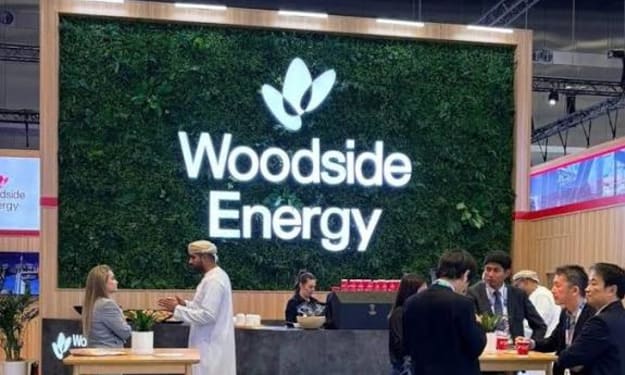
Woodside Energy Asks for Second Round of Offers on LNG Newbuildings
Woodside Energy, one of Australia’s leading liquefied natural gas (LNG) producers, has initiated a second round of bids for new LNG carrier construction, signaling its commitment to expanding its shipping fleet amid rising global demand for natural gas. The move reflects both strategic planning for long-term supply contracts and efforts to secure favorable construction terms from shipbuilders. Expanding the LNG Fleet Woodside Energy, which operates multiple LNG facilities in Australia, is seeking additional carriers to transport its gas from remote production sites to international markets, particularly in Asia and Europe. The company had previously issued a first round of offers, but escalating costs, evolving technology requirements, and competitive pressures prompted the decision to reopen negotiations. Industry analysts note that securing new LNG carriers is critical as the company ramps up production to meet long-term contracts with customers in Japan, South Korea, China, and increasingly Europe. LNG shipments are a key component of Woodside’s revenue stream, and reliable transport capacity is essential for meeting delivery commitments. Second Round Bidding Process The second round of offers is expected to attract international shipbuilders specializing in LNG vessels. Woodside has emphasized the importance of efficiency, low emissions technology, and adherence to evolving maritime environmental regulations. Builders are being asked to submit competitive bids that account for construction timelines, fuel efficiency, and vessel capacity. A company spokesperson said, “Our focus is on securing LNG carriers that meet our operational needs and sustainability targets. We are carefully evaluating proposals to ensure the fleet expansion aligns with our long-term strategic objectives.” Market Context Global LNG demand has grown steadily, driven by efforts to reduce carbon emissions and shift from coal and oil to cleaner fuels. Europe’s recent energy crisis has accelerated the need for secure LNG supply chains, while Asian economies continue to rely heavily on natural gas for power generation and industrial use. Shipbuilders face challenges in meeting demand for specialized LNG carriers, including longer lead times and rising steel and labor costs. Woodside’s second round of bidding allows the company to explore cost optimization while securing vessels equipped with modern propulsion technology, such as dual-fuel engines and reduced boil-off systems, to minimize environmental impact. Strategic Importance The expansion of the LNG fleet is part of Woodside’s broader strategy to maintain and grow its market share globally. With energy transition policies influencing the mix of fuels, LNG is positioned as a bridge energy source, and having a reliable, efficient shipping fleet ensures that Woodside can respond to shifting demand patterns and contract obligations. Investors and industry observers see fleet expansion as a signal that Woodside is preparing for increased export volumes and a longer-term commitment to LNG as part of its portfolio. The company’s ability to negotiate favorable terms in the second round could have significant financial implications, influencing capital expenditure, operational efficiency, and profitability. Environmental and Regulatory Considerations In addition to operational efficiency, the company is emphasizing compliance with international maritime regulations, including those related to carbon emissions and fuel sulfur content. LNG carriers are increasingly being evaluated not just on transport capacity but also on environmental performance, as stricter rules come into effect globally. Woodside’s emphasis on low-emission technology and sustainability aligns with broader trends in the shipping and energy sectors. By selecting vessels that meet higher environmental standards, the company seeks to future-proof its fleet against regulatory and market pressures. Looking Ahead The outcome of the second round of offers is expected in the coming months, with contracts awarded to builders capable of delivering vessels that meet both technical and environmental criteria. The decision will set the tone for Woodside’s fleet strategy and capacity planning over the next decade. As LNG markets remain competitive and global energy demand evolves, Woodside Energy’s fleet expansion demonstrates the company’s proactive approach to securing shipping capacity, optimizing costs, and supporting its long-term growth objectives in the liquefied natural gas sector.
By Fiaz Ahmed 3 days ago in The Swamp



Comments
There are no comments for this story
Be the first to respond and start the conversation.