Fiaz Ahmed
Bio
I am Fiaz Ahmed. I am a passionate writer. I love covering trending topics and breaking news. With a sharp eye for what’s happening around the world, and crafts timely and engaging stories that keep readers informed and updated.
Stories (1126)
Filter by community
After Naval Drills With Iran, South Africa Faces New U.S. Scrutiny. AI-Generated.
Military cooperation raises questions about alliances and regional security South Africa is facing fresh scrutiny from the United States following recent naval drills conducted with Iran in the Indian Ocean. While South African officials emphasize the exercises were routine and aimed at strengthening maritime security, U.S. analysts and policymakers have expressed concern over the implications for international relations and regional stability. The development comes amid heightened attention to Iran’s military presence and influence in global waters. The U.S. has historically been cautious about any nation participating in naval exercises with Tehran, citing security and strategic concerns. South Africa’s decision has sparked debate over balancing sovereignty, security interests, and international diplomacy. The Naval Drills and Their Purpose According to South Africa’s Ministry of Defence, the naval exercises focused on maritime safety, search and rescue operations, and anti-piracy measures. The drills involved multiple Iranian vessels and South African naval ships navigating the strategic waters of the Indian Ocean. Officials stress that these exercises were not intended as a political statement and were aimed purely at improving operational skills and international cooperation in securing shipping lanes. Piracy and maritime crime remain significant challenges in the region, making such joint exercises relevant from a practical standpoint. U.S. Concerns and Scrutiny Despite South Africa’s assurances, the U.S. has flagged the drills as a potential issue. Washington is particularly cautious because of: Iran’s involvement in broader geopolitical tensions Concerns over the transfer of military knowledge and technology The potential perception of South Africa aligning with nations opposed to U.S. interests Analysts note that while South Africa is not under sanctions for its military cooperation, the optics of working closely with Iran can strain relations with Washington, a key ally in global security initiatives. South Africa’s Position South African officials have defended the exercises, highlighting that: The drills were part of routine maritime collaboration They focused on non-combat areas like search and rescue South Africa maintains independent foreign policy decisions Foreign Minister representatives emphasized that cooperation with multiple countries at sea is common practice, and engaging with Iran does not imply endorsement of all Iranian policies. Regional and Strategic Implications The Indian Ocean is a vital maritime corridor for global trade, including oil and gas shipments. Security in these waters is critical for regional and global stability. South Africa’s participation in drills with Iran may be viewed as: Strengthening maritime security through multilateral exercises Sending a message that the country pursues independent defense partnerships Potentially complicating relationships with countries that have adversarial positions toward Iran Some security experts suggest that while the exercises are technically defensive, perception matters as much as reality in international relations. Historical Context South Africa has a history of maintaining a non-aligned and independent foreign policy, often engaging with countries outside traditional Western alliances. During the Cold War, Pretoria navigated complex global dynamics while balancing domestic and international priorities. The current naval exercises reflect this tradition of pragmatic engagement, aimed at enhancing capabilities without committing to political alignments. Potential Impact on U.S.–South Africa Relations While the naval drills are unlikely to cause an outright diplomatic rift, they may prompt: Closer scrutiny of South African defense cooperation Increased U.S. diplomatic engagement to clarify intentions Discussions about how South Africa manages relationships with countries under international scrutiny Some analysts warn that repeated engagements with Iran could lead Washington to reconsider strategic and military support initiatives, though this is still speculative. Balancing Security and Diplomacy South Africa’s government faces a delicate balancing act. On one hand, regional security requires cooperation with multiple partners, including Iran. On the other, South Africa must maintain good relations with major powers like the United States to ensure continued access to military technology, training, and strategic support. The situation highlights the challenges nations face when pursuing independent foreign policies in a polarized geopolitical environment. Public and Political Response in South Africa Within South Africa, reactions are mixed. Some political commentators argue that engaging with Iran demonstrates sovereignty and pragmatism, while others warn that such actions could strain vital international partnerships. Veterans and defense experts generally support naval readiness and skills development, emphasizing that the exercises improve operational capacity regardless of political context. Looking Ahead How the U.S. responds could set the tone for future South African defense cooperation. Key considerations include: Transparency in military engagements Clear communication about the non-political nature of exercises Continued focus on maritime safety and anti-piracy efforts Experts suggest that South Africa can maintain independent partnerships while mitigating political risks by emphasizing practical objectives and regional stability. Conclusion South Africa’s participation in naval drills with Iran has brought renewed scrutiny from the United States, underscoring the complex intersection of military cooperation, diplomacy, and international perception. While the exercises are officially focused on security and operational readiness, they highlight how even routine defense activities can carry political and strategic implications. For South Africa, navigating this situation will require careful messaging, maintaining transparency, and balancing national interests with the expectations of global partners. The episode illustrates that in international relations, actions at sea often ripple far beyond the waters in which they occur.
By Fiaz Ahmed 22 days ago in The Swamp
Food Sector Calls for Transition Period if UK and EU Agree Post-Brexit Rules Reset. AI-Generated.
Businesses warn that sudden changes could disrupt supply chains and raise food prices The UK food and drink sector is urging policymakers to introduce a transition period if the United Kingdom and the European Union agree to reset post-Brexit rules. Industry leaders say that while closer alignment could reduce long-term friction, sudden regulatory changes would place heavy pressure on producers, suppliers, and retailers already facing rising costs and tight margins. Since Brexit, the food sector has been one of the industries most affected by new trade barriers. From paperwork delays to higher compliance costs, businesses have struggled to adapt. A possible rules reset offers hope, but only if companies are given enough time to adjust. Why a Rules Reset Is Being Discussed Post-Brexit trade arrangements introduced new checks on goods moving between the UK and EU. These changes affected food more than many other sectors because of strict safety, hygiene, and animal health rules. Recent discussions between UK and EU officials suggest there may be room for: Reduced border checks Greater regulatory cooperation Simplified paperwork for agri-food products Supporters argue that these changes could improve food availability and ease pressure on supply chains. However, businesses caution that how the changes are introduced matters as much as the changes themselves. Why the Food Sector Wants a Transition Period Food producers and distributors operate on long planning cycles. Packaging, labeling, and safety standards are often set months or even years in advance. A sudden regulatory shift could leave businesses with: Non-compliant packaging Delayed shipments Increased waste Unexpected costs Industry groups stress that a transition period would allow companies to update systems gradually, train staff, and avoid unnecessary disruption. Without this buffer, even positive policy changes could have negative short-term effects. Supply Chains Remain Fragile The food sector is still recovering from multiple shocks, including the pandemic, energy price spikes, and labor shortages. Brexit-related changes added another layer of complexity. Many suppliers operate on thin profit margins. Even small disruptions at borders can delay deliveries of fresh food, increasing spoilage and costs. Businesses warn that abrupt rule changes could make the situation worse before it improves. A transition period, they argue, would help stabilize supply chains while new systems are put in place. Impact on Small and Medium-Sized Businesses Smaller food producers are particularly vulnerable. Unlike large corporations, they often lack dedicated compliance teams or legal experts. For these businesses, sudden changes to: Export certification Product labeling Ingredient sourcing can be overwhelming. Industry representatives say that without a clear transition plan, smaller firms may reduce exports or exit EU markets altogether. A phased approach would help protect diversity in the food sector and support regional producers. Consumer Concerns and Food Prices The food sector’s request is not only about business survival. Consumer groups warn that rushed changes could affect food prices and availability. If companies face higher short-term costs, those expenses may be passed on to shoppers. Delays at borders could also reduce the availability of certain products, especially fresh goods imported from the EU. A well-managed transition could help ensure that any long-term benefits of a rules reset do not come at the expense of consumers. Government Balancing Act For UK policymakers, the challenge is balancing political goals with economic reality. A closer relationship with the EU may offer practical benefits, but it also requires careful handling to avoid backlash from businesses and voters. Officials have indicated that any agreement would aim to reduce friction while maintaining regulatory independence. Industry leaders argue that independence does not have to mean instability. Clear timelines, guidance, and phased implementation would help build trust and allow businesses to prepare. Lessons From Previous Changes Businesses point to earlier post-Brexit changes as evidence of why caution is needed. The introduction of new border controls has been delayed multiple times due to concerns about readiness. These delays show that even well-planned systems can take longer than expected to implement. A transition period built into any new agreement would reflect these lessons and reduce the risk of disruption. EU Perspective on Transition From the EU’s perspective, a transition period could also be beneficial. Gradual implementation would allow authorities to: Test new processes Ensure compliance Avoid border congestion Mutual cooperation during a transition could improve trust and make long-term arrangements more effective. Trade experts note that successful agreements often include phased rollouts to ensure smooth adoption. What the Industry Is Asking For Food sector representatives are calling for: Clear timelines for any rule changes Detailed guidance well in advance A realistic transition period for compliance Ongoing dialogue between government and industry They stress that businesses are not resisting change, but asking for predictability and practicality. Conclusion The call for a transition period reflects the food sector’s desire for stability during a time of ongoing change. A post-Brexit rules reset between the UK and EU could bring long-term benefits, but only if implemented carefully. By allowing businesses time to adapt, policymakers can reduce disruption, protect consumers, and strengthen supply chains. As negotiations continue, the success of any agreement may depend less on what is decided and more on how smoothly it is put into practice.
By Fiaz Ahmed 22 days ago in The Swamp
Removal of Flags for Fallen Danish Soldiers at U.S. Embassy Sparks Backlash. AI-Generated.
The removal of flags honoring fallen Danish soldiers at the U.S. Embassy has triggered a strong public and political backlash, highlighting how symbols of remembrance can carry deep national and emotional weight. What may have appeared to be a routine or administrative decision quickly escalated into a sensitive diplomatic issue, raising questions about respect, alliance values, and communication between close partners. Denmark and the United States share a long history of military cooperation, particularly through NATO. For many Danes, the flags represented sacrifice, solidarity, and shared responsibility in international missions. Their removal has therefore been interpreted by critics as more than a procedural change—it is seen as a symbolic dismissal of service and loss. Why the Flags Mattered The flags were displayed to honor Danish soldiers who lost their lives while serving alongside international allies. Such symbols are common in military and diplomatic spaces, where remembrance plays a vital role in maintaining morale and honoring commitment. For families of fallen soldiers, these gestures serve as public recognition that sacrifices are not forgotten. For the broader public, they reinforce national values such as duty, courage, and partnership. The removal of these flags disrupted that sense of acknowledgment, especially in a setting as visible as a foreign embassy. Public Reaction and Backlash News of the flags being taken down spread quickly, sparking widespread reaction across social media and political circles. Many Danes expressed disappointment and anger, viewing the move as disrespectful to those who gave their lives. Veterans’ groups and families of fallen soldiers were among the most vocal critics. They argued that even if the decision was administrative, the lack of explanation amplified frustration and hurt. Some political figures also weighed in, urging clarification and emphasizing the importance of honoring shared sacrifices between allies. Symbolism in Diplomacy Diplomatic spaces are carefully managed environments where symbolism matters greatly. Flags, plaques, and memorials are not merely decorative; they communicate respect, values, and shared history. When such symbols are altered or removed without clear communication, misunderstandings are almost inevitable. Experts note that in diplomacy, intent often matters less than perception. In this case, the absence of immediate explanation allowed speculation to fill the gap, turning a localized decision into a broader diplomatic issue. U.S.–Denmark Military Relationship Denmark has been a consistent contributor to NATO missions and has worked closely with U.S. forces in multiple international operations. This partnership has strengthened ties between the two nations and fostered mutual respect. Given this history, the flag removal was particularly sensitive. Critics argue that honoring fallen soldiers is one of the most basic ways allies show appreciation for one another’s sacrifices. Supporters of the alliance stressed that the controversy does not erase decades of cooperation, but acknowledged that such incidents can strain public trust if not handled carefully. Calls for Explanation and Transparency As backlash grew, calls increased for a clear and transparent explanation from embassy officials. Observers emphasized that even a simple statement outlining the reason for the removal could have reduced public anger. Transparency is especially important when dealing with memorials. Without context, actions can be interpreted in ways never intended by decision-makers. Diplomatic analysts suggest that proactive communication is essential when changes involve sensitive historical or emotional symbols. The Role of Respect in Remembrance Remembrance is not only about the past; it shapes how nations view their present relationships. Honoring fallen soldiers reinforces mutual respect and shared values. Removing symbols of remembrance—intentionally or not—can weaken that message. This incident has reignited discussion about how institutions should handle memorials tied to international cooperation. Many commentators argue that respect should guide all decisions involving military remembrance, regardless of administrative considerations. A Lesson in Diplomatic Sensitivity This controversy serves as a reminder that small actions can have large consequences in international relations. Diplomatic institutions operate under constant public scrutiny, and symbolic decisions rarely go unnoticed. Experts note that embassies, in particular, must balance internal policies with host nation sensitivities. When that balance is disrupted, trust can erode quickly. The situation also highlights the importance of cultural awareness and historical understanding in diplomatic practice. What Happens Next Moving forward, observers expect some form of clarification or corrective action to ease tensions. This could include: A public explanation of the decision Reinstating the flags or introducing an alternative memorial Engaging directly with Danish officials and veterans’ groups Such steps would help restore goodwill and reaffirm respect for shared sacrifices. Conclusion The removal of flags honoring fallen Danish soldiers at the U.S. Embassy has sparked backlash because it touched on deeply held values of remembrance and respect. While the decision itself may not have been intended as a political statement, its impact demonstrates the power of symbols in diplomacy. In an era of close military alliances, honoring sacrifice remains a cornerstone of trust. Clear communication and sensitivity are essential to maintaining that trust. As both nations reflect on the controversy, the episode stands as a reminder that how we remember matters just as much as what we remember.
By Fiaz Ahmed 22 days ago in The Swamp
One Deal, Three Setbacks: How India Gained an Edge Over Turkey, Pakistan, and Bangladesh With an EU Trade Agreement. AI-Generated.
A shifting trade landscape reshapes competition between emerging economies India’s expanding trade engagement with the European Union has begun to reshape global economic competition, creating new opportunities for New Delhi while presenting fresh challenges for regional rivals such as Turkey, Pakistan, and Bangladesh. As negotiations around EU–India trade cooperation move forward, the effects are already being felt across textiles, manufacturing, and export-driven sectors. Rather than a sudden disruption, this shift reflects a long-term strategic recalibration—one where India’s scale, policy reforms, and diplomatic outreach have aligned to strengthen its position in European markets. Why the EU–India Trade Relationship Matters The European Union is one of the world’s largest trading blocs and a critical export destination for developing economies. Preferential access to the EU can significantly boost competitiveness, especially in sectors like: Textiles and apparel Pharmaceuticals Automotive components Technology services India’s growing alignment with EU standards and trade priorities has helped position it as a reliable long-term partner, particularly as Europe seeks to diversify supply chains away from overdependence on a single region. India’s Strategic Advantage India’s trade strategy with the EU has focused on: Improving regulatory compatibility Expanding manufacturing capacity Strengthening labor and sustainability standards Leveraging its large domestic market These factors have increased India’s appeal as a production and sourcing hub. As a result, European buyers are increasingly viewing India as a stable and scalable alternative to other exporters. This shift has not occurred in isolation. It has coincided with economic and political challenges faced by several competing economies. Turkey: Facing Competitive Pressure Turkey has long enjoyed strong trade ties with the EU, particularly in textiles and consumer goods. However, rising production costs, inflation, and regulatory uncertainties have begun to weaken its advantage. India’s lower labor costs and expanding textile capacity allow it to compete aggressively in price-sensitive segments. Additionally, Indian exporters have invested heavily in meeting EU environmental and labor requirements, reducing compliance gaps that once favored Turkey. While Turkey remains an important EU supplier, India’s growing presence has increased competition, forcing Turkish manufacturers to reassess pricing and market positioning. Pakistan: Structural Challenges Exposed Pakistan has traditionally relied on textile exports to Europe, benefiting from preferential access under EU trade schemes. However, several factors have reduced its competitiveness: Energy shortages Currency instability Limited industrial diversification India’s broader manufacturing base and improved logistics infrastructure have made it easier for European firms to source a wider range of products from a single country. This efficiency advantage has slowly shifted orders away from Pakistan in certain segments. Trade analysts note that Pakistan’s challenge is not exclusion, but relative loss of market share as buyers diversify toward larger, more stable suppliers. Bangladesh: A Narrow Export Base Bangladesh’s success in the EU market has largely been built on ready-made garments. While this specialization has delivered growth, it has also created vulnerability. India’s textile sector is more diversified, spanning: Cotton and synthetic fabrics Finished garments Technical textiles As EU buyers increasingly seek supply chain resilience, India’s ability to offer multiple product categories under one trade framework has proven attractive. This does not eliminate Bangladesh’s role, but it adds competitive pressure in areas where both countries overlap. Beyond Tariffs: The Real Impact The impact of India’s EU trade engagement extends beyond tariff advantages. Key non-tariff factors include: Faster delivery times Compliance with sustainability rules Digital trade readiness Policy stability European firms are placing greater emphasis on transparency and long-term reliability. India’s reforms in taxation, digital infrastructure, and manufacturing incentives have helped address these concerns. This shift highlights that modern trade competition is about systems and scale, not just price. Geopolitical Context Matters Global politics has also played a role. The EU’s interest in strengthening ties with India reflects broader strategic goals, including: Reducing dependence on limited supply sources Supporting democratic trade partners Securing resilient supply chains In this environment, India’s geopolitical positioning has enhanced its economic appeal. Turkey, Pakistan, and Bangladesh are not excluded, but they now operate in a more crowded and competitive landscape. What This Means for Regional Economies For Turkey, Pakistan, and Bangladesh, India’s progress is a signal rather than a defeat. Trade experts suggest that each country can respond by: Diversifying export products Investing in higher-value manufacturing Strengthening compliance with EU standards Improving energy and logistics reliability Competition driven by trade agreements often encourages reform and innovation. In this sense, India’s success may act as a catalyst for broader regional upgrades. India’s Next Challenge While India has gained momentum, maintaining its advantage will require continued effort. European markets demand: Consistent quality Environmental responsibility Labor protections Policy predictability Any slowdown in reforms or infrastructure development could weaken India’s position just as quickly as it improved. Conclusion India’s expanding trade engagement with the European Union has reshaped regional export dynamics, creating challenges for Turkey, Pakistan, and Bangladesh while strengthening India’s global standing. This outcome reflects strategic planning, scale, and sustained reform, rather than a single agreement alone. In a rapidly evolving trade environment, success belongs to economies that adapt quickly and invest deeply. For India, the EU partnership offers opportunity. For its neighbors, it presents a reminder that competitiveness is not static—but something that must be continuously earned.
By Fiaz Ahmed 22 days ago in The Swamp
Imran Khan’s Health in ‘Grave Danger’ After Eye Blockage Diagnosis, Party Says. AI-Generated.
Political tensions rise as concerns grow over the former prime minister’s medical condition Fresh concerns have emerged over the health of former Pakistani Prime Minister Imran Khan, after his political party warned that his condition is in “grave danger” following a diagnosis related to an eye blockage. The statement has drawn widespread attention, adding a new layer of urgency to Pakistan’s already tense political climate. According to party representatives, the condition requires immediate and proper medical care. They argue that delays or restrictions in treatment could lead to serious and potentially irreversible consequences. While official medical details remain limited, the warning has sparked debate over prisoner health rights, transparency, and political accountability. What the Party Has Claimed Imran Khan’s party has stated that doctors identified a blockage affecting his eye, a condition that can interfere with blood flow and vision. Party officials say the diagnosis raises serious concerns and should be treated as a medical emergency. They have emphasized that eye-related blockages, if left untreated, may lead to long-term damage. The party insists that timely access to specialists, diagnostic tests, and treatment is essential to prevent further complications. The use of strong language such as “grave danger” reflects growing frustration among supporters, who believe Khan’s health situation is not being handled with the seriousness it deserves. Why Health Claims Matter in Detention Health concerns involving detained political leaders often draw public attention, especially in countries where politics is deeply polarized. International norms stress that detainees, regardless of status, are entitled to adequate medical care. Legal experts note that access to healthcare is not a political privilege but a basic right. When health warnings are ignored or delayed, they can become human rights issues, attracting scrutiny from courts, civil society, and international observers. In Khan’s case, supporters argue that medical transparency would help reduce speculation and restore public confidence. Understanding Eye Blockage Conditions While exact medical details have not been officially released, eye blockages generally refer to restricted blood flow affecting vision. These conditions can vary in severity and cause. Possible risks include: Sudden vision loss Persistent pain or pressure Long-term damage if untreated Medical professionals often stress early diagnosis and intervention. However, without official medical reports, it remains unclear how advanced the condition may be. Political Context Behind the Concern Imran Khan remains one of Pakistan’s most influential and divisive political figures. His legal troubles and detention have fueled ongoing political tensions across the country. Any development related to his health quickly becomes politically charged, with supporters viewing it as a test of fairness and opponents urging caution against politicizing medical issues. This situation highlights the difficulty of separating health matters from politics in high-profile cases. Calls for Transparency and Independent Review Human rights groups and legal analysts have repeatedly emphasized the importance of independent medical assessments in cases involving detained leaders. Transparent medical evaluations help ensure credibility and prevent misinformation. Party leaders have demanded that: Independent doctors be allowed to examine Khan Medical reports be shared with legal teams Treatment decisions remain free from political influence Such steps, they argue, would reduce tensions and reassure the public. Public Reaction and Supporter Response News of Khan’s reported health condition has triggered strong reactions among his supporters. Many have taken to social media to express concern and demand immediate action. Public gatherings, online campaigns, and legal petitions have followed similar health-related claims in the past. Analysts warn that continued uncertainty could lead to increased unrest if supporters believe medical needs are being ignored. At the same time, others urge patience, calling for verified information rather than emotionally driven conclusions. Government Silence and Official Position So far, official responses have been limited. Authorities have not released detailed medical statements addressing the party’s claims, which has fueled speculation. In high-profile cases, delays in communication often worsen public mistrust. Observers note that clear and factual updates could help ease tensions and prevent rumors from spreading. Silence, even if procedural, can be interpreted as indifference in politically sensitive situations. Health, Law, and Political Stability The situation underscores how health issues intersect with law and political stability. When the health of a prominent political figure is questioned, the impact extends beyond personal well-being. Such moments test: Legal safeguards for detainees Institutional transparency Public trust in governance Pakistan has faced similar challenges in the past, where unresolved health controversies added pressure to already fragile political environments. What Happens Next The coming days may prove crucial. Much will depend on whether: Independent medical evaluations are allowed Official health updates are shared Treatment access is clearly confirmed If authorities address the concerns openly, tensions may ease. If not, the issue could continue to dominate political discourse and legal proceedings. Conclusion The claim that Imran Khan’s health is in “grave danger” following an eye blockage diagnosis has intensified scrutiny on how health issues are managed in politically sensitive cases. While medical facts remain limited, the situation highlights broader questions about detainee rights, transparency, and accountability. In a deeply divided political landscape, clear communication and proper medical care are essential—not only for Khan’s well-being but also for maintaining public confidence. As attention remains focused on his condition, the response from authorities may shape both political reactions and public trust in the days ahead.
By Fiaz Ahmed 22 days ago in The Swamp
Met Office Issues Yellow Weather Warning for Ice. AI-Generated.
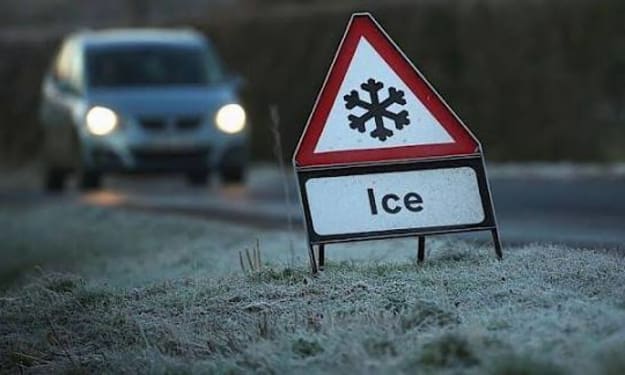
Slippery roads, travel delays, and safety concerns as temperatures drop The Met Office has issued a yellow weather warning for ice, alerting the public to potentially dangerous conditions across affected areas. As temperatures fall overnight, untreated roads, pavements, and rural routes are expected to become icy, increasing the risk of accidents and travel disruption. While a yellow warning is the lowest level of weather alert, it should not be ignored. Ice can form quickly and unexpectedly, making everyday journeys hazardous and placing pressure on emergency services. What a Yellow Warning for Ice Means A yellow weather warning is issued when conditions may cause minor disruption and increased risk to safety. In this case, the Met Office warns that freezing temperatures could lead to ice forming on roads and walkways, particularly overnight and during early morning hours. Drivers, pedestrians, and cyclists are advised to remain cautious, as even small patches of ice can cause vehicles to skid or people to slip. Rural areas and higher ground are especially vulnerable due to lower temperatures and fewer treated surfaces. How Ice Forms So Quickly Ice often forms when temperatures drop close to or below freezing, especially after rain or melting snow. Moisture left on roads and pavements can freeze rapidly, creating black ice, which is nearly invisible and extremely dangerous. Black ice is particularly common: In shaded areas On bridges and overpasses On untreated country roads Because it is hard to see, black ice is responsible for many winter accidents. Impact on Travel and Transport Icy conditions can cause significant disruption to travel, even when snowfall is minimal. Road traffic accidents often increase during icy spells, leading to delays and congestion. Public transport services may also be affected. Buses can struggle on steep or untreated roads, while rail services may operate at reduced speeds to maintain safety. Airports may face minor delays due to icy runways or aircraft de-icing procedures, especially during early morning departures. Authorities urge travelers to: Check travel updates before leaving Allow extra time for journeys Avoid unnecessary travel during icy conditions Risks for Pedestrians and Cyclists Ice is not only a threat to drivers. Pedestrians and cyclists face a high risk of injury, particularly on untreated pavements and paths. Slips and falls can lead to broken bones, head injuries, and hospital admissions. Older adults are especially vulnerable, as falls can have long-lasting health effects. Local councils often prioritize gritting main roads, which means pavements and side streets may remain icy for longer. Wearing suitable footwear and walking carefully can reduce risk, but caution remains essential. Pressure on Emergency and Health Services During icy weather, emergency services experience a rise in callouts. Ambulance crews respond to accidents, falls, and cold-related illnesses, while hospitals may see increased admissions. Fire and rescue teams are also affected, responding to road incidents and assisting vulnerable people. These pressures highlight why even moderate weather warnings deserve attention. Healthcare professionals encourage people to check on elderly neighbors and relatives, ensuring they are warm, safe, and have access to essential supplies. How to Stay Safe During Icy Conditions The Met Office and local authorities recommend several practical steps to stay safe: Drive slowly and smoothly, avoiding sudden braking Keep a safe distance from other vehicles Wear shoes with good grip when walking outdoors Use handrails where available Stay informed by checking local weather updates Preparing in advance can help reduce risk and prevent accidents during icy spells. Schools, Workplaces, and Daily Life Ice can also disrupt schools and workplaces, particularly if travel becomes unsafe. Some schools may open late or close temporarily, while employers may allow remote working where possible. For people whose jobs require travel or outdoor work, icy conditions increase the risk of injury. Employers are encouraged to assess risks and take steps to protect staff. Daily routines such as shopping, medical appointments, and social activities may also be affected, especially for those with limited mobility. Why Winter Warnings Matter Weather warnings are designed to give people time to prepare, not to cause alarm. Even a yellow warning can help reduce accidents by encouraging caution and awareness. Meteorologists note that winter weather in the UK can be unpredictable. Rapid changes in temperature mean ice can form even when conditions appear calm. Climate experts also point out that while average temperatures may rise over time, extreme and sudden cold spells are still possible, making preparation essential. Community Awareness and Responsibility Local communities play an important role during icy weather. Neighbors clearing pathways, sharing information, and checking on vulnerable residents can make a real difference. Many councils encourage residents to clear snow and ice from pavements outside their homes where it is safe to do so. These small actions help reduce injuries and keep communities moving. Conclusion The Met Office’s yellow weather warning for ice serves as an important reminder that winter conditions can be dangerous, even without heavy snow. Slippery roads, icy pavements, and reduced visibility all increase the risk of accidents and disruption. By staying informed, taking sensible precautions, and looking out for others, communities can reduce the impact of icy weather. While winter hazards cannot be avoided entirely, awareness and preparation remain the best tools for staying safe when temperatures fall.
By Fiaz Ahmed 22 days ago in Longevity
Blueberries vs. Grapes: Which Fruit Is Better for Heart Health?. AI-Generated.
Both fruits support the heart, but they do it in different ways When it comes to heart health, fruit often tops the list of doctor-recommended foods. Among the many options, blueberries and grapes stand out for their powerful nutrients and long list of benefits. Both are rich in antioxidants, easy to add to meals, and supported by scientific research. But if you had to choose one, which fruit offers more protection for your heart? The answer is not as simple as picking a winner. Blueberries and grapes help the heart in different ways, and understanding those differences can help you make smarter dietary choices. Why Fruit Matters for Heart Health Heart disease remains one of the leading causes of death worldwide. Diet plays a major role in reducing risk factors such as: High blood pressure High cholesterol Inflammation Poor blood vessel function Fruits provide vitamins, fiber, and plant compounds that protect the cardiovascular system. Blueberries and grapes are especially valued because they contain polyphenols, natural compounds that help reduce damage to blood vessels and improve circulation. Blueberries: Small Fruit, Big Benefits Blueberries are often called a superfood, and for good reason. They are packed with antioxidants known as anthocyanins, which give blueberries their deep blue color. How Blueberries Support the Heart Research suggests that regular blueberry consumption may: Improve blood vessel flexibility Lower blood pressure Reduce inflammation Improve cholesterol balance Anthocyanins help protect arteries by reducing oxidative stress. This means less damage to the lining of blood vessels, which lowers the risk of plaque buildup. Blueberries are also low in calories and sugar, making them a heart-friendly choice for people watching their weight or blood sugar levels. Fiber and Blood Sugar Control One cup of blueberries contains a good amount of dietary fiber, which plays a key role in heart health. Fiber helps: Lower “bad” LDL cholesterol Slow sugar absorption Support healthy digestion Stable blood sugar levels reduce stress on the cardiovascular system, especially for people with diabetes or insulin resistance. Grapes: A Heart-Healthy Classic Grapes, especially red and purple varieties, have long been linked to heart health. They contain powerful antioxidants such as resveratrol, flavonoids, and quercetin. How Grapes Protect the Heart Studies suggest that grapes may: Improve blood flow Reduce inflammation Lower blood pressure Prevent blood clots Resveratrol, found mainly in grape skins, has been studied for its potential role in protecting arteries and supporting healthy aging of blood vessels. Grapes also contain potassium, which helps balance sodium levels and supports healthy blood pressure. The Role of Resveratrol Resveratrol is often highlighted as the key heart-protective compound in grapes. It may help: Reduce artery stiffness Improve nitric oxide production, which relaxes blood vessels Protect against oxidative damage While resveratrol supplements exist, experts agree that whole grapes offer more benefits due to the combined effect of fiber and multiple antioxidants working together. Comparing Nutritional Profiles Both fruits are healthy, but they differ slightly in nutrition: Blueberries Lower sugar content High in anthocyanins Rich in vitamin C and vitamin K Strong anti-inflammatory effects Grapes Higher natural sugar Contain resveratrol and flavonoids Provide hydration due to high water content Support circulation and blood flow For people managing blood sugar, blueberries may be the safer option. For those focused on circulation and vascular function, grapes offer unique benefits. What About Cholesterol? Both fruits can help improve cholesterol levels, but through different mechanisms. Blueberries help reduce LDL cholesterol by improving how the body processes fats and reducing inflammation. Grapes may prevent LDL cholesterol from oxidizing, which is a major factor in artery damage. In short, blueberries reduce the problem, while grapes help prevent it from getting worse. How Much Should You Eat? Moderation is key. A healthy serving includes: About one cup of blueberries, fresh or frozen About one cup of grapes, preferably with skins intact Eating a variety of fruits throughout the week ensures you get a wider range of protective nutrients. Fresh, Frozen, or Dried? Fresh blueberries and grapes offer the most benefits. Frozen blueberries are also an excellent choice, as they retain most nutrients. Dried grapes (raisins) are nutritious but higher in sugar and calories, so portion control is important. Raisins still provide heart-friendly compounds but should be eaten sparingly. Which One Is Better for Heart Health? There is no clear winner. Both blueberries and grapes are excellent for heart health, but they shine in different areas. Choose blueberries if you want lower sugar, strong antioxidant protection, and help with blood pressure. Choose grapes if you want improved circulation, vessel protection, and powerful polyphenols like resveratrol. For the best results, include both fruits in your diet. Final Thoughts When it comes to heart health, consistency matters more than perfection. Blueberries and grapes both offer powerful protection, and neither should be excluded. Rather than choosing one over the other, rotating both fruits into your meals can provide broader cardiovascular support. Combined with regular exercise, balanced nutrition, and healthy lifestyle habits, these fruits can play a meaningful role in keeping your heart strong.
By Fiaz Ahmed 22 days ago in Longevity
Poland Built the E.U.’s Biggest Army, but the Threat Has Changed. AI-Generated.
From tanks and troops to cyberwar and hybrid pressure, Poland adapts its defense strategy Over the past decade, Poland has built the largest army in the European Union, investing heavily in troops, tanks, aircraft, and artillery. This rapid military expansion was driven by fear of conventional war, especially after Russia’s actions in Ukraine. For Warsaw, a strong army was seen as the best shield against invasion. But as Europe’s security landscape continues to evolve, Polish defense planners are facing a new reality: the threat is no longer only about tanks crossing borders. Today’s dangers are more complex, less visible, and harder to stop with traditional military power alone. Why Poland Built Europe’s Biggest Army Poland’s military growth did not happen by accident. Its history, geography, and politics all played a role. Poland sits on NATO’s eastern edge, close to Russia and Belarus, and has long viewed itself as a frontline state. The invasion of Ukraine in 2022 confirmed long-standing fears in Warsaw that hard power still matters. In response, Poland: Expanded its armed forces toward 300,000 troops Purchased modern tanks, fighter jets, and missile systems Increased defense spending to well above NATO’s 2% target The goal was clear: deterrence through strength. Poland wanted to make any potential attack too costly to consider. A Strong Army, but a Changing Battlefield While Poland’s conventional military power has grown, the nature of threats facing Europe has shifted. Security experts now warn that future conflicts may not begin with open warfare. Instead, they could start with: Cyberattacks on power grids and communication networks Disinformation campaigns targeting public trust Economic pressure and political interference Border manipulation, including the use of migration as leverage These so-called hybrid threats are harder to detect and respond to, and they often fall outside the reach of tanks and artillery. Cyber and Information Warfare One of the biggest challenges Poland now faces is in the digital domain. Cyberattacks aimed at government systems, banks, and infrastructure have increased across Europe. Poland, as a vocal supporter of Ukraine, is considered a high-value target. Disinformation is another concern. False narratives spread online can: Undermine trust in democratic institutions Create political division Weaken public support for defense spending and alliances Polish officials increasingly recognize that defending the country also means defending information space, not just territory. Border Pressure and Non-Military Tactics Poland has already experienced how non-traditional threats can be used strategically. In recent years, pressure on Poland’s eastern border involved irregular migration flows, widely seen as a form of political coercion. Such tactics blur the line between civilian crisis and national security threat, forcing governments to respond carefully without escalating tensions. This kind of pressure cannot be solved by military force alone. It requires: Border management Diplomatic coordination Legal and humanitarian frameworks Intelligence sharing with allies The Role of Alliances Even with Europe’s largest army, Poland understands it cannot face modern threats alone. NATO remains the cornerstone of Polish security. Hosting allied troops, participating in joint exercises, and sharing intelligence all strengthen deterrence. At the same time, Poland has pushed for a stronger European defense role, especially in areas like cyber defense and crisis response. The focus is shifting from national strength only to collective resilience, where countries support each other across military, economic, and digital domains. Balancing Heavy Weapons and Smart Defense Poland’s defense debate is now about balance. Traditional military power is still necessary. Tanks, air defenses, and trained soldiers remain essential if deterrence fails. However, experts argue that future security depends equally on softer but smarter tools. These include: Cybersecurity investment Civil defense and emergency preparedness Strategic communication Energy independence Supply-chain protection A modern defense strategy must protect society as a whole, not just the battlefield. Public Expectations and Political Pressure Building Europe’s biggest army came with strong public support, especially after events in Ukraine. But sustaining such a force is expensive, and voters increasingly ask whether money should also go toward healthcare, infrastructure, and education. As threats become less visible, it becomes harder to explain why defense spending remains high. Leaders must now justify investment in areas people cannot easily see, like cybersecurity or intelligence. This requires clear communication and long-term planning, not fear-based messaging. What Comes Next for Poland Poland is unlikely to scale back its military anytime soon. Instead, the country is expected to adapt its defense posture. Future priorities may include: Integrating cyber and information defense into military planning Expanding cooperation with EU and NATO partners Strengthening civilian resilience alongside military readiness Preparing society for crises beyond armed conflict The focus is shifting from size alone to flexibility and resilience. Conclusion Poland’s decision to build the European Union’s largest army was shaped by real and immediate threats. That investment has made the country stronger and more confident within NATO and Europe. Yet the security environment has changed. Today’s threats are less direct, more complex, and often invisible. Tanks and troops remain important, but they are no longer enough on their own. For Poland, the challenge now is not just maintaining a powerful army, but redefining what security means in a world of hybrid warfare, digital threats, and political pressure. How well it adapts may shape not only its own future, but Europe’s as well.
By Fiaz Ahmed 23 days ago in The Swamp
Freezing Temperatures Make Life Difficult in Snow-Hit Areas. AI-Generated.
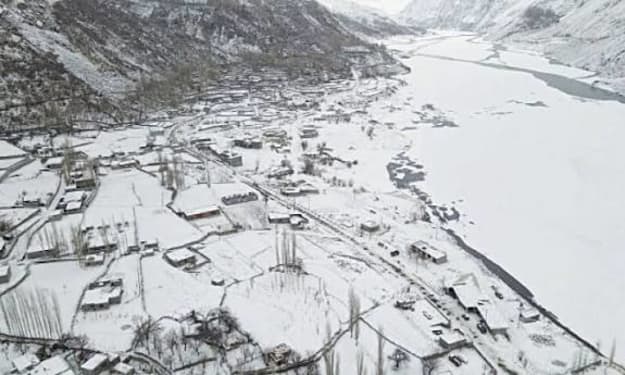
Severe cold and heavy snow disrupt daily life, travel, and essential services Across many snow-hit regions, freezing temperatures are turning daily routines into serious challenges. Heavy snowfall combined with bitter cold has affected transportation, power supplies, healthcare access, and basic survival needs. For millions of people, staying warm and safe has become a daily struggle as winter tightens its grip. While snow can be beautiful, extreme cold exposes the fragile balance between modern life and harsh weather, especially in communities not fully prepared for prolonged freezes. Roads, Travel, and Isolation One of the most immediate impacts of freezing temperatures is on transportation. Snow-covered roads become slippery and dangerous, leading to accidents and long delays. In rural areas, some roads remain blocked for days, leaving residents cut off from essential supplies. Public transport services are often reduced or suspended, affecting workers, students, and emergency responders. Airports cancel flights due to icy runways and poor visibility, while rail services slow down to prevent damage to tracks. For people living in remote or mountainous areas, isolation can quickly turn dangerous, especially for the elderly or those with medical conditions. Power Outages and Heating Problems Cold weather places enormous pressure on power grids. As heating demand rises, systems struggle to cope, increasing the risk of outages. Ice buildup on power lines and damage from falling trees often worsen the situation. When electricity fails, homes lose heating, lighting, and communication. Families may rely on backup heaters or fireplaces, which can increase the risk of fires or carbon monoxide poisoning if used improperly. Authorities frequently urge residents to: Use safe heating sources Avoid overloading electrical systems Check on vulnerable neighbors In prolonged outages, warming centers become critical lifelines for communities. Health Risks in Extreme Cold Freezing temperatures pose serious health risks, particularly to vulnerable populations. Prolonged exposure to cold can lead to: Hypothermia Frostbite Worsening of heart and respiratory conditions Hospitals often see an increase in emergency admissions during cold snaps. Slips and falls on icy surfaces add to the strain on healthcare services. Mental health is also affected. Long periods indoors, isolation, and stress from power or food shortages can increase anxiety and depression, especially among older adults and children. Struggles for the Homeless and Vulnerable For people without stable housing, extreme cold can be life-threatening. Shelters often operate at full capacity during severe winter weather, and outreach teams work to bring people indoors. Low-income households face difficult choices between heating and other basic needs, such as food or medication. Rising energy costs during winter make these decisions even harder. Community groups and charities play a vital role by providing: Warm clothing and blankets Hot meals Temporary shelter Their efforts often make the difference between survival and tragedy. Schools and Workplaces Disrupted Freezing temperatures and heavy snow force many schools and workplaces to close or shift online. While remote work can help some, not all jobs or families can adapt easily. Parents may struggle to balance work with childcare, while students in areas with limited internet access fall behind. Prolonged closures also affect meal programs that many children rely on. For outdoor workers, such as construction crews and delivery drivers, extreme cold increases the risk of injury and slows productivity. Agriculture and Food Supply Concerns Cold weather also impacts agriculture. Snow and frost can damage crops, delay planting, and harm livestock. Farmers must invest extra resources in feed, shelter, and heating to protect animals. Supply chain disruptions caused by blocked roads and weather-related delays can affect grocery stores, leading to shortages of fresh food in some areas. These challenges highlight how closely weather, food security, and economic stability are connected. Emergency Services Under Pressure Emergency responders work around the clock during winter storms. Firefighters, medical teams, and utility workers face dangerous conditions as they respond to calls, restore power, and clear roads. Their efforts are often slowed by icy terrain and poor visibility, increasing response times. Despite these risks, emergency crews remain essential in keeping communities safe during extreme cold events. Authorities regularly advise residents to avoid unnecessary travel, helping reduce accidents and allow emergency services to focus on critical cases. Climate Change and Extreme Winter Weather Scientists note that while winters are generally warming overall, extreme cold events still occur and may become more unpredictable. Changes in atmospheric patterns can cause sudden and severe cold spells in regions unaccustomed to them. This unpredictability makes preparation more difficult and raises questions about infrastructure resilience, especially in areas not designed for prolonged freezing conditions. Community Resilience and Preparedness Despite the hardships, communities often show remarkable resilience during severe winter weather. Neighbors check on each other, volunteers help clear snow, and local organizations step in to support those in need. Preparedness remains key. Experts recommend: Keeping emergency supplies at home Ensuring heating systems are maintained Staying informed through local alerts These steps can reduce risk and help families cope when temperatures plunge. Conclusion Freezing temperatures in snow-hit areas are more than an inconvenience—they disrupt lives, threaten health, and test the strength of communities. From power outages and travel disruptions to health risks and economic strain, extreme cold exposes vulnerabilities that often go unnoticed. As winter weather becomes more unpredictable, investing in preparedness, infrastructure, and community support will be essential. While no one can control the weather, thoughtful planning and cooperation can help ensure that even the coldest days are faced with resilience and care.
By Fiaz Ahmed 23 days ago in The Swamp
Future of BATUS Training Use Tied to Defence Investment Plan. AI-Generated.
UK military’s premier training area set to evolve with new investment The British Army Training Unit Suffield (BATUS) in Canada has long been a cornerstone of the UK’s military readiness. As the British Ministry of Defence announces new defence investment plans, the future of BATUS and its use for training exercises is increasingly linked to funding decisions, strategic priorities, and technological upgrades. BATUS, located in Alberta, Canada, provides the British Army with vast open spaces, live-fire ranges, and realistic terrain that cannot be replicated in the UK. The facility has supported decades of training for armoured units, infantry, and joint-force operations. Why BATUS Remains Important BATUS is unique for several reasons: Space for Large-Scale Exercises – The unit covers over 2,700 square kilometers, allowing tank manoeuvres, live-fire drills, and combined arms exercises. Realistic Combat Conditions – Soldiers train in environments that simulate complex battlefield conditions, including mixed terrain, obstacles, and simulated enemy forces. International Collaboration – BATUS supports exercises with allied forces, providing opportunities for joint training and interoperability. For the UK Army, these advantages make BATUS a vital asset in preparing troops for both conventional warfare and modern operations. Link to Defence Investment Plans Recent announcements by the Ministry of Defence outline a multi-billion-pound defence investment strategy, aimed at modernising the armed forces, upgrading equipment, and enhancing operational readiness. The strategy emphasizes: Modern armoured vehicles and technology integration Improved training infrastructure Sustainable operations and cost efficiency The future use of BATUS is directly tied to these investments. Upgrades at the facility could include advanced simulation systems, better live-fire ranges, and digital monitoring tools. Such improvements would allow troops to train more effectively, using technology that mirrors real-world combat scenarios. Armoured Units and Large-Scale Exercises BATUS has historically been used by the British Army’s armoured regiments, including Challenger tanks and mechanized infantry. Large-scale exercises, sometimes involving hundreds of vehicles and thousands of troops, prepare units for deployment in Europe or other conflict zones. With new defence investments, BATUS may see: Enhanced live-fire capabilities for modern weapons systems Integration of drones and unmanned vehicles for reconnaissance and support Expanded training scenarios reflecting contemporary threats, such as hybrid warfare Analysts say that continued investment in BATUS ensures that the UK maintains a credible and ready armoured force capable of responding to NATO commitments and global contingencies. Balancing Cost and Operational Needs While BATUS provides unmatched training benefits, it is expensive to operate. Maintaining facilities abroad, transporting troops and vehicles, and managing live-fire exercises require significant funding. The defence investment plan seeks to balance cost efficiency with operational effectiveness. Investments in modern technology and infrastructure aim to reduce long-term expenses while preserving high-quality training standards. Officials note that decisions on BATUS’ future will consider: Frequency and scale of exercises Integration of cost-saving technologies Alignment with overall defence priorities Environmental and Community Considerations Operating a large training area in Canada comes with environmental responsibilities. BATUS has programs to minimise ecological impact, including careful management of live-fire areas, wildlife protection, and land rehabilitation. The facility also interacts with local Canadian communities, supporting employment opportunities and fostering positive relationships with landowners and authorities. As investment plans progress, environmental and community factors will remain a key consideration in shaping the long-term strategy for BATUS use. The Role of Technology in Future Training Modern warfare demands integration of advanced technology in training. BATUS is exploring ways to incorporate: Virtual and augmented reality for scenario-based learning Digital battlefield monitoring to evaluate troop performance Data analytics to optimize training outcomes These upgrades are expected to enhance realism, safety, and efficiency, ensuring that soldiers are prepared for both conventional and hybrid combat environments. Strategic Implications BATUS’ continued use reflects the UK’s commitment to: Maintaining a capable and ready military Meeting NATO obligations Preparing forces for complex global threats By linking the training facility to a comprehensive defence investment plan, the UK ensures that its forces are not only well-trained but also equipped with the latest technology, operational doctrine, and logistical support. Looking Ahead The future of BATUS will likely involve a combination of traditional large-scale exercises and modern technological integration. Defence planners emphasize that continued investment is essential to maintain the facility as a world-class training environment. For the British Army, BATUS remains a cornerstone of readiness, preparing troops for a range of scenarios, from high-intensity combat to multinational operations. Conclusion BATUS has long been a symbol of UK military preparedness, offering unmatched training space and operational realism. With the defence investment plan guiding future funding and upgrades, the facility is poised to remain a critical asset for armoured units and modern training exercises. By balancing cost, technology, environmental responsibility, and operational needs, the UK ensures that BATUS continues to produce capable, ready, and adaptable forces—a cornerstone of national and allied security for decades to come.
By Fiaz Ahmed 23 days ago in Longevity
For Britain, China Remains a ‘Threat’ – But One Worth Doing Business With. AI-Generated.
Balancing security concerns with economic opportunity Britain’s relationship with China has entered a delicate phase. While the UK government officially considers China a strategic threat, it also recognizes the economic benefits of maintaining strong trade ties. This dual approach highlights the complex nature of modern geopolitics, where national security and global commerce must often coexist. China as a Strategic Threat Several factors contribute to the UK’s designation of China as a threat: Military Expansion – China’s growing naval and missile capabilities have raised concerns across Europe, including the UK. Cybersecurity Risks – Reports of hacking attempts and cyber espionage linked to China have fueled security worries. Global Influence – China’s Belt and Road Initiative and investment in key infrastructure worldwide is viewed as a potential tool for geopolitical leverage. British officials stress that while China is an important partner in some areas, its actions on the global stage require careful monitoring and strategic caution. Economic Ties That Cannot Be Ignored Despite security concerns, China remains one of the world’s largest markets. For Britain, trade with China supports businesses across technology, finance, energy, and manufacturing sectors. Recent trade data shows: Significant exports of British goods such as cars, machinery, and pharmaceuticals. Investment opportunities for UK firms in China’s growing middle-class consumer market. Collaboration in areas like green energy, digital innovation, and education. This economic reality means that completely disengaging from China is not feasible without severe consequences for British industry and jobs. The Diplomatic Balancing Act British policymakers face a challenging question: how to protect national security while maintaining economic engagement. The government has emphasized a strategy known as “strategic engagement”, which involves: Setting clear limits on sensitive sectors, such as 5G and advanced technology. Engaging in diplomatic dialogue to address security concerns. Promoting UK businesses in China while monitoring investment risks. This approach aims to reduce vulnerabilities while preserving opportunities for trade and growth. China’s Global Influence and UK Interests China’s growing influence in Asia, Africa, and Europe affects Britain’s global interests. Analysts note that China’s economic and political reach can shape supply chains, international norms, and alliances. By engaging with China carefully, the UK seeks to: Maintain a presence in global trade negotiations Safeguard critical infrastructure and technology Promote democratic values alongside commercial interests Balancing these priorities requires constant attention to the intersection of economics, diplomacy, and security. Business Opportunities Amid Risk UK businesses are finding that operating in China involves both risk and reward. Companies benefit from a large consumer base and opportunities for technology partnerships, but face regulatory and political challenges. Key considerations for firms include: Understanding China’s regulatory environment Protecting intellectual property and proprietary technology Building resilient supply chains to withstand geopolitical tensions Despite these challenges, many British companies continue to see China as a critical market for long-term growth. Security Measures and Strategic Investments To manage the “threat” while continuing business, Britain has invested in: Cybersecurity frameworks to protect against hacking Monitoring foreign investments in sensitive sectors Research partnerships with allied nations to counter undue influence This combination of risk management and engagement is central to the UK’s approach to China. Public Perception and Political Debate In the UK, public opinion about China is mixed. Some citizens view engagement as necessary for economic growth, while others worry that close ties compromise national security. Politicians have debated issues such as: Participation in Chinese technology projects Trade agreements and tariffs Human rights concerns and diplomatic stances The government’s strategy seeks to navigate this tension while keeping Britain competitive on the global stage. Looking Ahead As China continues to expand its global influence, Britain faces ongoing challenges in balancing threat perception with economic opportunity. Analysts predict that the UK will maintain a careful, pragmatic approach, engaging in trade where beneficial while protecting national security. Future policies may include: Strengthening partnerships with allies to counter shared risks Expanding domestic capabilities in technology and infrastructure Continuing dialogue with China to safeguard trade and security interests This dual strategy underscores the complexity of modern international relations, where economic imperatives and security concerns often coexist. Conclusion For Britain, China represents both a strategic challenge and a crucial economic partner. The UK’s approach reflects the reality that global powers cannot easily separate security from commerce. By combining careful engagement, strategic investment, and protective measures, Britain aims to maximize economic benefits while minimizing security risks. Navigating this delicate balance will remain a central feature of UK foreign policy, diplomacy, and trade strategy in the coming years.
By Fiaz Ahmed 23 days ago in The Swamp
World’s Most Powerful Warship Launches Jets in Caribbean. AI-Generated.
US Navy demonstrates power and readiness in strategic exercises The world’s most powerful warship recently conducted a series of jet launches in the Caribbean, showcasing the United States Navy’s strength, mobility, and operational capability. The exercises are part of routine training, but they also send a clear signal of deterrence, readiness, and commitment to regional security. The aircraft carrier, equipped with advanced technology and a full complement of fighter jets, represents the pinnacle of naval power. Its presence in the Caribbean underscores both military capability and strategic influence in a region vital to international trade and security. Details of the Exercise During the deployment, the carrier conducted multiple operations, including: Launching and recovering fighter jets in simulated combat scenarios Coordinating with support vessels in the carrier strike group Conducting air defense drills and reconnaissance missions These exercises allow pilots and crew to maintain peak operational readiness. They also test the carrier’s ability to coordinate complex flight operations in real-world conditions. Why the Caribbean Matters The Caribbean region is strategically important for several reasons: Shipping and Trade Routes – Vital sea lanes connect the Americas to Europe and Asia. Regional Security – The US and its allies monitor threats ranging from piracy to illegal trafficking. Natural Disaster Response – Naval assets can provide rapid humanitarian assistance after hurricanes and other disasters. By conducting exercises in this area, the US Navy ensures it can respond quickly to crises while maintaining a visible presence. The Carrier’s Capabilities The aircraft carrier involved in the exercises is among the most advanced in the world. Features include: A full air wing of fighter jets, electronic warfare planes, and surveillance aircraft Advanced radar and defense systems capable of tracking multiple threats simultaneously State-of-the-art propulsion and navigation systems, allowing sustained operations far from home ports This combination of capabilities allows the ship to project power, protect allies, and maintain control of strategic waterways. Training and Operational Benefits Carrier-based exercises are not just demonstrations; they are critical training opportunities for personnel. They help crews practice: Emergency procedures during flight operations Coordination with aircraft and escort ships Tactical decision-making under simulated combat conditions Pilots, sailors, and officers gain hands-on experience that prepares them for real-world operations, from defensive missions to humanitarian assistance. International Significance The presence of such a powerful warship in the Caribbean also has international implications. Allies and partners observe these exercises as: A signal of the US commitment to regional stability Proof of interoperability for joint operations with allied nations A demonstration of the capabilities available in crises or conflict scenarios For neighboring countries, it reassures them of support in emergencies, while also deterring potential threats. Technology and Innovation Modern aircraft carriers rely heavily on technology to maintain superiority. During the Caribbean exercises, the carrier demonstrated: Integration of advanced fighter jets capable of rapid launch and recovery Networked communications systems linking ship, air, and support units Enhanced radar and sensor arrays for detecting surface and aerial threats These innovations ensure the ship remains relevant in modern warfare, where speed, precision, and situational awareness are critical. Humanitarian and Strategic Readiness Beyond combat operations, the US Navy uses carriers for humanitarian missions. In the Caribbean, ships like this can deliver emergency supplies, medical aid, and disaster relief personnel. Exercises in this region also help crews practice rapid deployment, ensuring they can adapt to changing conditions—whether responding to a hurricane or a security threat. Global Presence and Deterrence Naval experts note that aircraft carriers serve both operational and symbolic purposes. Their presence in key regions signals: Readiness to respond to crises anywhere in the world Commitment to allies and regional stability Technological and military superiority By operating in the Caribbean, the US Navy demonstrates that it can project power far from domestic shores, a key aspect of modern military strategy. Conclusion The launch of jets from the world’s most powerful warship in the Caribbean illustrates the combined importance of training, readiness, and strategic presence. These exercises not only prepare crews for potential conflicts but also reinforce the US commitment to regional security and rapid response capabilities. As global tensions evolve and maritime security challenges grow, the US Navy’s ability to deploy advanced carriers and conduct complex operations remains a critical element of both defense strategy and international diplomacy.
By Fiaz Ahmed 23 days ago in Longevity