Fiaz Ahmed
Bio
I am Fiaz Ahmed. I am a passionate writer. I love covering trending topics and breaking news. With a sharp eye for what’s happening around the world, and crafts timely and engaging stories that keep readers informed and updated.
Stories (1092)
Filter by community
Joint Chiefs Chairman Issues Rare Invitation to Foreign Military Heads. AI-Generated.
A historic move aimed at strengthening international military cooperation In an unusual and significant development, the Chairman of the Joint Chiefs of Staff has extended a rare invitation to foreign military leaders. This move signals a renewed focus on international cooperation, strategic dialogue, and coordinated defense planning at a time of growing global security challenges.
By Fiaz Ahmed 25 days ago in The Swamp
France Faces Climate Collapse: Millions at Risk of Losing Everything. AI-Generated.
Rising temperatures, floods, and wildfires threaten communities across the country France is confronting an unprecedented climate crisis as extreme weather events threaten the livelihoods of millions of citizens. Scientists and government officials warn that rising temperatures, severe droughts, floods, and wildfires are creating conditions that could lead to widespread economic, social, and environmental disruption. The impacts of climate change are no longer distant projections—they are unfolding in real time, affecting cities, rural areas, and coastal regions alike. Experts say that without urgent action, many communities could face loss of property, farmland, and basic infrastructure. The Scope of the Crisis Recent studies indicate that millions of people in France are at risk due to the country’s increasing exposure to extreme weather: Rising temperatures – Average temperatures are climbing, with heatwaves becoming more frequent and intense. Flooding – Heavy rains and storms are causing rivers to overflow, especially in northern and central France. Droughts – Southern and western regions are experiencing water shortages, affecting agriculture and drinking water supplies. Wildfires – Forests in the south and Mediterranean regions are increasingly vulnerable to fast-spreading fires. The combination of these factors threatens both urban and rural areas. Cities face risks of infrastructure damage, power outages, and health hazards, while rural regions may lose crops, livestock, and livelihoods. Communities Most at Risk Certain populations are particularly vulnerable: Farmers – Crop failures due to drought and floods could lead to economic ruin for families and communities dependent on agriculture. Coastal Residents – Rising sea levels and storm surges put coastal towns at risk of flooding and permanent land loss. Low-Income Communities – Those living in older buildings without modern insulation or air conditioning are especially exposed to heatwaves and storms. Elderly and Health-Compromised Individuals – Vulnerable groups face increased health risks during extreme heat, pollution events, or wildfire smoke. Government reports suggest that without improved planning and emergency measures, millions could face loss of homes, income, and security in the coming decades. Recent Extreme Weather Events in France France has already experienced record-breaking heatwaves, flooding, and wildfires in recent years: In 2023, temperatures exceeded 45°C in parts of southern France, overwhelming hospitals and infrastructure. The Seine and Loire rivers have flooded multiple times in the past decade, destroying homes and displacing families. Wildfires in Provence and Corsica have consumed thousands of hectares of forest, destroying property and threatening biodiversity. These events illustrate the urgent reality of climate change, demonstrating that France is no longer facing a distant problem, but a current and escalating crisis. Government Response and Challenges French authorities have implemented measures to combat climate change and prepare communities, but challenges remain: Climate Adaptation Plans – France has invested in flood defenses, forest management, and heatwave preparedness programs. Renewable Energy Initiatives – Expanding solar, wind, and hydroelectric power is intended to reduce greenhouse gas emissions. Urban Planning – Cities are introducing green spaces and cooling infrastructure to combat heat island effects. However, experts warn that policy and investment have not kept pace with the scale of the threat. More ambitious actions, including rapid carbon reduction, improved disaster management, and community education, are needed to prevent large-scale displacement and economic loss. Economic and Social Implications The climate crisis is not just an environmental issue—it is a social and economic emergency: Agricultural Losses – Reduced crop yields and livestock losses could drive up food prices and create economic instability. Property Damage – Floods, fires, and storms can destroy homes, roads, and utilities, requiring costly repairs. Migration Pressure – Displaced populations may move to urban centers, creating stress on housing, infrastructure, and public services. Public Health – Heatwaves, polluted air, and wildfire smoke can lead to respiratory illness, heatstroke, and mental health challenges. Without coordinated action, the economic and social costs of climate change could worsen inequality and threaten national stability. Experts Call for Urgent Action Climate scientists emphasize that France must accelerate its response: Invest in Infrastructure – Build flood barriers, improve drainage systems, and retrofit homes to withstand heat and storms. Enhance Early Warning Systems – Ensure communities receive timely alerts about extreme weather events. Promote Sustainable Agriculture – Encourage water-efficient farming, crop diversification, and soil preservation. Reduce Emissions – Transition to renewable energy and implement stricter environmental regulations. Engage Citizens – Public awareness campaigns and community programs can help individuals prepare and respond effectively. Experts stress that failure to act now could lead to irreversible damage, with millions potentially losing their homes, livelihoods, and security in the decades ahead. Looking Ahead France is at a crossroads. The next few years will determine whether the country can adapt to climate change effectively or face large-scale disruption. Policymakers, scientists, and citizens must work together to strengthen resilience, reduce emissions, and protect vulnerable communities. While the challenges are immense, coordinated action, innovation, and public engagement could limit damage and ensure a safer future for millions of people across France. Conclusion France is facing a climate emergency that threatens millions of lives, homes, and livelihoods. Rising temperatures, floods, droughts, and wildfires are not just environmental concerns—they are human crises that demand immediate attention. The warning is clear: without urgent action, countless communities may lose everything they have built. France’s response in the coming years will determine whether it can adapt, protect its citizens, and lead by example in the global fight against climate change.
By Fiaz Ahmed 25 days ago in The Swamp
Why the Power May Not Go Out Until After the Storm Has Passed. AI-Generated.
Understanding the hidden resilience of the electricity grid When storms approach, many people immediately worry about losing power. Yet, in many cases, the electricity stays on until the storm is over, leaving some to wonder why outages don’t happen instantly when heavy rain, strong winds, or lightning strike. The answer lies in how power grids are designed, managed, and protected to balance reliability with safety. Power systems are built to withstand temporary disruptions, but certain conditions make it safer to maintain electricity during a storm until the full impact has been assessed. Understanding these mechanisms can help households and businesses better prepare for extreme weather events. The Electricity Grid’s Built-In Resilience Modern power grids are complex networks of generation plants, transmission lines, substations, and distribution networks. Engineers design them with multiple layers of protection to ensure that electricity continues to flow even under adverse weather conditions. Key features include: Automatic Circuit Breakers – These devices detect overloads or short circuits and temporarily cut power to affected areas, preventing damage to the larger grid. Redundant Systems – Many parts of the grid have backup connections, allowing electricity to reroute around damaged sections. Storm-Hardened Infrastructure – Transmission towers, underground cables, and substations are reinforced to withstand wind, ice, and lightning strikes. Thanks to these protections, minor disturbances during a storm often do not cause immediate outages, allowing power to remain on while safety systems monitor conditions. Why Power Stays On During the Storm Keeping electricity running during a storm is often safer and more efficient than shutting it down preemptively. Some reasons include: Preventing unnecessary disruption – Power shutdowns can affect hospitals, emergency services, and communication networks. Cutting power too early could create additional hazards. Monitoring the grid – Operators can assess damage and decide whether targeted outages are necessary. By maintaining power where possible, they reduce widespread impact. Minimizing restoration time – If power remains on until the storm passes, repairs can begin immediately, reducing overall downtime. Electric utilities follow strict protocols during extreme weather, continuously monitoring conditions. They aim to balance public safety with grid reliability, only disconnecting power when there is a clear and imminent danger. Storm-Related Triggers for Power Outages Despite the grid’s resilience, certain storm conditions can force outages: Fallen Trees and Debris – Branches or debris can strike power lines, causing immediate interruptions. Lightning Strikes – Direct hits on substations or transmission lines can trip circuit breakers. Flooding – Water intrusion into substations or underground vaults can create short circuits. High Winds – Sustained gusts can damage poles, lines, and transformers. In most cases, outages occur after these impacts happen, not before or during the initial storm approach. That’s why you may see electricity remain on even as severe weather hits. Role of Grid Operators During Storms Electric utilities rely on real-time monitoring and predictive modeling to manage risks. Operators use weather forecasts, satellite imagery, and sensors to detect threats to the grid. During storms, they: Adjust voltage and load to stabilize the system Dispatch repair crews strategically to prioritize critical infrastructure Activate backup generation to maintain supply if damage occurs Communicate with the public about potential outages and safety measures This careful coordination helps prevent unnecessary blackouts while ensuring safety for both people and equipment. Why Immediate Shutoffs Are Rare Some people assume that utilities should turn off power before a storm hits, but preemptive shutoffs carry risks: Impact on essential services – Hospitals, fire stations, water treatment facilities, and communication systems rely on continuous electricity. Economic disruption – Premature shutdowns can affect businesses, transport, and refrigeration. Public safety hazards – Darkened streets and traffic signals can increase accidents. Because of these risks, utilities often wait until the storm’s full effects are evident before disconnecting electricity, focusing instead on targeted, controlled outages. How Residents Can Prepare Even with a resilient grid, residents should be ready for potential outages: Keep flashlights, batteries, and emergency supplies handy Charge devices and have backup power if possible Secure outdoor items that could damage power lines during high winds Avoid using electrical appliances if flooding or water intrusion occurs Being prepared ensures safety and reduces stress, whether or not the power goes out immediately during a storm. The Future of Storm-Resilient Power Utilities are investing in smarter, more flexible grids that can withstand extreme weather better than ever: Advanced sensors and AI for predicting outages Undergrounding power lines in vulnerable areas Microgrids that isolate damage while keeping surrounding areas powered Renewable energy integration that adds redundancy and reduces reliance on a single source These innovations aim to make power outages less frequent and shorter, even during increasingly severe storms caused by climate change. Conclusion The reason electricity often stays on until after a storm has passed is a combination of engineering, monitoring, and safety protocols. Modern grids are designed to withstand temporary disruptions, and utilities prioritize keeping power flowing while assessing risks. Storms remain unpredictable, and outages can still occur, but understanding how the grid operates helps residents plan, prepare, and stay safe. By combining grid resilience with individual preparedness, households and businesses can weather storms with minimal disruption and risk.
By Fiaz Ahmed 25 days ago in Longevity
The Peculiar Magic of a Winter Snowstorm. AI-Generated.
How the world transforms when snow blankets the landscape There is something undeniably magical about a winter snowstorm. As flakes begin to fall, the world seems to slow down. Streets, trees, and rooftops are covered in a soft, white layer that transforms familiar landscapes into scenes of quiet beauty. But beyond its aesthetic charm, a snowstorm is a fascinating blend of nature’s power, science, and subtle wonder.
By Fiaz Ahmed 25 days ago in Longevity
French Authorities Ban British Far-Right Activists from Gathering at Weekend. AI-Generated.
Security concerns prompt preventative measures ahead of planned protests French authorities have moved to ban a group of British far-right activists from gathering this weekend, citing public safety concerns and the potential for unrest. The decision highlights the challenges governments face in balancing freedom of assembly with preventing extremist activity. The planned gathering, organized by several far-right groups from the United Kingdom, was expected to take place in a public square in a major French city. Officials feared that the event could attract violent confrontations with counter-protesters or create broader public security risks. What Prompted the Ban? French interior ministry sources confirmed that intelligence reports indicated a high likelihood of conflict if the group were allowed to assemble. Authorities noted that previous demonstrations by similar organizations had sometimes escalated into clashes, property damage, and arrests. In a statement, the ministry emphasized: "While freedom of expression is respected, public safety and the protection of citizens take priority. We will not allow gatherings that risk violence or disruption." The move aligns with France’s broader approach to prevent extremist activity from spilling into public spaces, especially in urban centers with high population density. Reaction from Far-Right Groups The British far-right organizations involved criticized the ban, claiming it infringed on their right to peaceful assembly. Some leaders warned that the restrictions could heighten tensions, arguing that dialogue and debate should not be curtailed. However, analysts point out that many of these groups have a history of provocative actions. Online posts and past events suggested that participants intended to carry nationalist symbols and slogans, which could have triggered clashes with anti-fascist demonstrators. France’s Approach to Extremism France has long maintained strict regulations on extremist gatherings, particularly when they involve foreign participants. Law enforcement agencies coordinate closely with intelligence services to assess threats and implement preventive measures. Measures can include: Temporary bans on assemblies Heightened police presence in targeted areas Monitoring of online activity linked to potential organizers Authorities argue that such steps are necessary to avoid escalation, maintain public order, and protect citizens from potential violence. International Implications The ban also carries diplomatic implications. British officials have expressed concern about the restrictions, highlighting the delicate balance between security and civil liberties. French authorities, meanwhile, maintain that their actions are strictly domestic law enforcement, not a reflection on bilateral relations. Experts note that cross-border activism has become increasingly common, with far-right and far-left groups often traveling internationally to participate in protests. This trend complicates national security planning and requires coordinated intelligence sharing between countries. Public Safety Considerations Authorities emphasized that the ban is primarily a preventive public safety measure. France has experienced numerous instances of street clashes and civil unrest in recent years, making authorities particularly cautious. In addition to potential violence, officials cited risks such as: Traffic disruptions Property damage Strain on emergency services Potential for wider social unrest By acting in advance, authorities hope to mitigate these risks and avoid situations that could escalate quickly. Freedom of Assembly vs. Security The decision underscores the ongoing tension between freedom of assembly and the need for public safety. While democratic societies value the right to protest, governments are increasingly confronted with groups whose activities pose a threat to law and order. Legal experts note that bans are typically justified when: There is credible evidence of imminent violence Authorities have specific intelligence linking participants to extremist actions Public safety cannot be assured through other means France’s actions reflect this legal framework, aiming to balance civil liberties with citizen protection. Lessons for Europe and Beyond The ban on British far-right activists in France is part of a broader European effort to manage extremist movements. Many countries now face the challenge of foreign groups traveling to stage demonstrations, often coordinated through social media and online forums. Preventive measures like this highlight the importance of: Cross-border cooperation among law enforcement agencies Early intelligence gathering Public communication to explain security measures Analysts suggest that such policies, when carefully implemented, can prevent violence while upholding democratic principles. Conclusion The weekend ban on British far-right activists reflects France’s commitment to public safety, particularly in an era of increasing extremist activity. While the decision has sparked debate about civil liberties, officials maintain that preventing violence and maintaining order must remain the top priority. As cross-border activism grows, European nations face ongoing challenges in balancing freedom of assembly with the protection of citizens. The events this weekend in France serve as a reminder that security, diplomacy, and civil liberties are interconnected in today’s complex social landscape.
By Fiaz Ahmed 25 days ago in The Swamp
Qatar Weather Alert: Strong Winds and Dust Clouds to Hit Tomorrow. AI-Generated.
Residents advised to take precautions as meteorological department issues warning Qatari authorities have issued a weather alert for tomorrow, warning that strong winds and dust clouds are expected to sweep across parts of the country. Officials have urged residents, motorists, and businesses to exercise caution, as the conditions could disrupt transportation, reduce visibility, and impact daily life. The alert comes as Qatar experiences seasonal changes in wind patterns, which often bring dust storms and challenging weather conditions, particularly in desert and urban areas. Authorities are closely monitoring the situation and coordinating with emergency services to ensure public safety. What to Expect from the Weather According to the Qatar Meteorology Department, the country will experience: Strong northwesterly winds reaching speeds of 35–50 km/h in some regions Dust clouds and reduced visibility, particularly on highways and open roads Fluctuating temperatures, with slightly cooler conditions in the evening and early morning The combination of wind and dust could affect outdoor activities, travel plans, and construction projects. Drivers are advised to reduce speed, keep headlights on, and maintain safe distances from other vehicles. Impact on Daily Life Strong winds and dust storms can disrupt several aspects of life in Qatar: Road Travel – Dust clouds may reduce visibility, increasing the risk of traffic accidents. Authorities recommend avoiding unnecessary travel, especially on highways and desert roads. Air Travel – Airports may experience minor delays due to low visibility or airborne dust affecting runways and aircraft systems. Passengers are advised to check flight schedules in advance. Public Health – Dust can irritate the respiratory system, particularly for children, the elderly, and those with asthma or other lung conditions. Wearing masks and limiting outdoor exposure is recommended. Business Operations – Outdoor work, including construction and maintenance, may face slowdowns or temporary halts to ensure safety. Emergency services and local municipalities are on standby to clear roads, assist motorists, and provide support for affected areas. Meteorological Explanation The upcoming weather is influenced by seasonal wind currents and regional pressure changes. Strong northwesterly winds carry fine sand and dust particles from the surrounding desert areas, creating widespread dust clouds across urban and rural regions. Meteorologists note that while Qatar often experiences high temperatures during the day, dust storms and wind gusts can lower daytime temperatures slightly, making conditions unpredictable. Residents should remain updated with the latest forecasts and advisories. Safety Tips for Residents Authorities recommend several measures to stay safe during strong winds and dust storms: Limit outdoor activities unless necessary Keep windows and doors closed to prevent dust from entering homes Use protective masks if going outside, especially for vulnerable groups Secure loose objects outdoors, such as garden furniture or construction materials Drive cautiously and avoid sudden lane changes or overtaking in low visibility These precautions can significantly reduce the risk of accidents and health issues during extreme weather events. Preparedness and Government Response The Qatari government has activated emergency response teams to monitor the situation. Municipalities are preparing to: Clean roads quickly in the event of heavy dust accumulation Assist in traffic management Provide medical support for dust-related health issues Authorities are also using social media, radio, and SMS alerts to inform the public in real-time about weather updates, ensuring residents can make informed decisions. Regional Implications Dust storms are common in Gulf countries during certain seasons. Neighboring countries like Saudi Arabia, the UAE, and Bahrain often experience similar conditions, which can affect air quality, travel, and cross-border transport. Meteorologists emphasize that these events are part of natural weather cycles and highlight the importance of preparedness and awareness. By following guidance from local authorities, residents can stay safe and minimize disruption. Looking Ahead The strong winds and dust clouds are expected to persist throughout tomorrow, gradually subsiding by late evening. While this particular weather event is temporary, Qatar experiences seasonal dust activity that may occur several times a year, particularly in transitional months. Experts advise residents and businesses to: Monitor daily forecasts Maintain emergency supplies such as masks and clean water Plan travel carefully to avoid high-risk periods Staying proactive and informed is the best way to navigate weather disruptions safely. Conclusion Qatar’s upcoming weather alert serves as a reminder of the country’s vulnerability to seasonal dust and strong winds. While such events are natural, preparation and caution are essential to protect public health, ensure road safety, and maintain normal daily life. By following the advice of meteorologists and government authorities, residents can minimize the impact of the strong winds and dust clouds expected tomorrow and stay safe during this temporary but disruptive weather event.
By Fiaz Ahmed 25 days ago in The Swamp
Black and White and Sent Back Over: End of Panda Diplomacy as Japan Returns Bears to China. AI-Generated.
Japan returns pandas to China, marking a shift in a long-standing diplomatic tradition Japan has officially returned two giant pandas to China, signaling the end of a chapter in the practice often called “panda diplomacy.” The bears, who have lived in Japanese zoos for nearly two decades, will now be relocated to conservation facilities in China.
By Fiaz Ahmed 25 days ago in Longevity
Heavy Snow Alert Issued for Fukui Prefecture. AI-Generated.
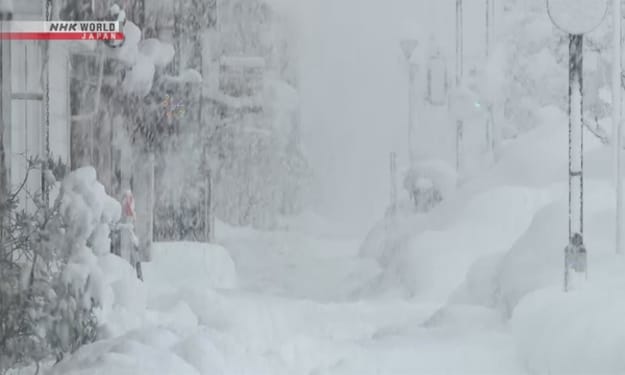
The Japan Meteorological Agency has issued a heavy snow alert for Fukui Prefecture, warning residents of potentially dangerous conditions over the coming days. Authorities are urging citizens to take precautions, as forecasts indicate significant snowfall, strong winds, and icy roads that could disrupt travel and daily activities. Fukui, located along the Sea of Japan coast, is no stranger to winter storms, but this alert comes amid forecasts of heavier-than-usual snow accumulation, raising concerns for both urban and rural communities. What to Expect According to meteorologists, Fukui Prefecture will experience: Heavy snowfalls exceeding 30–50 cm in some areas Strong northwesterly winds creating snowdrifts and reduced visibility Icy road conditions that may cause hazardous driving and pedestrian risks Temperature drops during nighttime, increasing the likelihood of frost and icy surfaces The Japan Meteorological Agency warns that snow accumulation may be rapid in mountainous areas, while coastal zones could experience blizzard-like conditions. Travelers are advised to monitor forecasts closely and avoid nonessential journeys. Impact on Daily Life Heavy snowfall can affect Fukui Prefecture in multiple ways: Road Travel – Snow and ice can make highways and streets treacherous. Local authorities advise slowing down, using winter tires, and avoiding steep or rural roads if possible. Public Transport – Train and bus services may experience delays or cancellations due to snow accumulation on tracks and roads. Passengers should check schedules regularly. Public Safety – Strong winds combined with snow may cause falling tree branches, power outages, and limited visibility, creating additional hazards for pedestrians. Businesses and Schools – Some schools and offices may close or delay openings to ensure safety. Residents are encouraged to plan ahead and keep emergency supplies on hand. Government and Emergency Response Local authorities in Fukui have activated emergency services and snow removal teams to prepare for the storm. Measures include: Deploying snowplows and salt trucks to keep main roads passable Opening emergency shelters for residents in high-risk areas Issuing advisories via media and mobile alerts to keep citizens informed Officials emphasize that public cooperation is essential, urging residents to follow safety guidelines, avoid unnecessary travel, and report emergencies promptly. Meteorological Explanation The heavy snow is caused by a cold Siberian air mass moving southward and interacting with moist air from the Sea of Japan. This phenomenon, known locally as the “sea-effect snow,” often brings rapid snow accumulation to western coastal regions like Fukui Prefecture. Meteorologists explain that strong winds can blow snow into drifts, sometimes blocking roads or creating hazardous conditions even in areas with moderate snowfall. Snowstorms of this type are typical in late winter, but residents are advised to take extra precautions when warnings are issued. Safety Tips for Residents Authorities recommend several measures to reduce risk during the heavy snowfall: Stay indoors if possible, especially during peak snowfall or blizzard conditions Keep walkways and driveways clear of snow to prevent accidents Stock up on essentials such as food, water, medications, and batteries Dress warmly in layers to avoid frostbite and hypothermia Drive cautiously and use winter tires or chains if travel is unavoidable Local media and municipal websites will continue to provide updated weather reports and road conditions to help residents plan accordingly. Impact on Infrastructure and Services Heavy snow can strain infrastructure, particularly in rural and mountainous regions. Roads may be temporarily blocked, power lines could be damaged, and emergency services may face delays reaching affected areas. Authorities advise residents to: Keep mobile devices charged for emergencies Maintain a supply of flashlights, blankets, and warm clothing Check on neighbors, especially the elderly or those living alone Emergency teams have pre-positioned equipment and personnel to respond quickly to accidents or snow-related incidents. Looking Ahead The heavy snow alert is expected to remain in effect for the next 24–48 hours, with the possibility of additional snowfall depending on the movement of the weather system. Meteorologists continue to monitor conditions closely and will issue updated warnings as necessary. Residents are encouraged to stay informed, prepare for temporary disruptions, and avoid unnecessary travel. Once the storm passes, authorities plan to continue snow removal and restore normal services as quickly as possible. Conclusion Fukui Prefecture faces significant snowfall and challenging winter conditions over the coming days. While snow is a familiar part of life in the region, the heavy snow alert serves as a reminder to prioritize safety, prepare in advance, and follow official guidance. By taking precautions and staying informed, residents can minimize disruption and ensure the well-being of their families and communities during the winter storm.
By Fiaz Ahmed 25 days ago in The Swamp
Change Is Inevitable”: What Is Next for Iran?. AI-Generated.
Iran stands at a critical moment in its modern history. A wave of protests has challenged the government’s authority, the economy is deeply troubled, and international pressure is mounting. As the nation maneuvers through this turbulence, many analysts say one thing is clear: change is inevitable — it’s no longer a matter of if, but how and when. A Nation in Turmoil Late in 2025, protests erupted across Iran in response to economic hardship, including the collapse of the national currency and rising inflation. What began as economic demonstrations quickly spread to cities nationwide, growing into broader demands for political reform and accountability from the ruling establishment. � AP News The state responded with a harsh crackdown that human rights groups describe as one of the most violent since the Islamic Revolution in 1979. Thousands of protesters have reportedly been killed or detained amid widespread reports of force used by security forces. � Reuters Despite the current “apparent calm,” many experts say this does not represent stability. Instead, it reflects a tense pause — the result of security force pressure rather than a resolution of the underlying problems. � Al Jazeera Why Change Is Seen as Unavoidable 1. Economic Collapse Is Deepening Iran’s economy has struggled for years under the weight of international sanctions, mismanagement, and declining oil revenue. By late 2025, inflation had skyrocketed, and poverty levels rose sharply, leaving many Iranians struggling to put food on the table. � Wikipedia Experts argue that without meaningful economic reform, the country cannot stabilize. Some believe that concessions or negotiations for sanctions relief could be critical, although every concession carries political risk for Iran’s leadership. � Al Jazeera 2. Social Contract Is Fraying For decades, Iran’s government maintained public support by offering relative security in exchange for limited freedoms. But when even the basic promise of security falters — whether through economic insecurity, declining services, or violent suppression — that social contract weakens. � Al Jazeera Commentators say this erosion of trust makes it increasingly difficult for the government to claim legitimacy without deeper reforms. 3. Protests Have Reached Broad Sections of Society Unlike earlier protests that were focused on specific issues, recent demonstrations have drawn people from different walks of life — students, workers, professionals, and families. Analysts have called this a “perfect storm” of economic pain, disillusionment, and political frustration. � The National This widespread sentiment adds pressure on the government to respond not just with force, but with meaningful change — reforms that address both economic and political demands. Paths Iran Might Take Next Experts and analysts outline several possible directions for Iran’s future. None are certain, but each reflects a different way that the inevitable push for change might play out: 1. Reform from Within Some analysts believe that elements within the government may pursue incremental reforms to maintain control. This could include economic policy shifts or limited political concessions to address public anger, while preserving core structures of power. � The National Reform might involve: Negotiating partial sanctions relief Updating economic policies to stabilize prices Enhancing social welfare support Allowing more civic engagement However, real reform would require trust-building — something that has been deeply damaged by violence and repression. 2. Hardline Continuity Another possibility is that the ruling establishment — especially hardline elements — doubles down on repression and controls dissent through force rather than compromise. This approach could stabilize the leadership in the short term but risks deepening grievances. Some observers note the regime has increased security measures and legal pressures, which point to a security-first response rather than political openness. � New York Post 3. Fragmentation or Division In extreme scenarios, parts of the state — such as local authorities, security forces, or regional groups — could begin to diverge in loyalty or priorities, leading to internal friction within the state apparatus itself. This does not necessarily mean full civil conflict, but it could signal a loss of centralized control. Historical examples show that when central legitimacy erodes too far, parts of a nation can become politically or socially divided over the future direction. 4. National Transformation or Regime Change Some experts — and many Iranians abroad — see regime change or profound transformation as inevitable at some stage. Such a transformation could reshape Iran’s political system and societal structure. However, this outcome is perhaps the most unpredictable and carries significant risk of instability in the short term. Whether through internal pressure or sustained protest movements, the notion that a fundamental shift is coming is shared by analysts on multiple sides of the debate. � The National External Pressures and Regional Tensions Iran’s internal dynamics do not exist in a vacuum. Regional rivalries and international tensions — particularly with the United States and its allies — factor into Tehran’s choices. Recent warnings from Iranian officials about conflict and growing military presence by foreign powers near Iranian territory add a layer of geopolitical complexity. The threat of escalation can either encourage hardline policies or push leadership toward negotiated solutions, depending on how challenges unfold. � The Times of India What the People Want At the heart of this moment are ordinary Iranians, many of whom simply want dignity, opportunity, and a say in their future: Economic stability Freedom of expression Respect for human rights Transparent governance Whether their demands translate into concrete political gains or structural reforms is still unclear. But the sheer scale of public dissatisfaction suggests that business as usual is no longer a sustainable option for Iran’s leaders. Conclusion: A Country at a Crossroads As Iran faces deep economic strain, political unrest, and global pressure, the idea that “change is inevitable” resonates with both critics and supporters of the state. Change might come in many forms — from moderation and reform to deeper conflict and transformation — but the stresses facing the country make some form of shift highly likely. The choices made in the next months and years — whether toward reform, repression, or something entirely unexpected — will shape Iran’s future and influence the broader stability of the Middle East.
By Fiaz Ahmed 25 days ago in The Swamp
Ukraine Condemns “Brutal” Russian Strikes as Second Day of Peace Talks Ends. AI-Generated.
Diplomacy struggles to keep pace with the violence as civilians pay the highest price As the second day of peace talks came to an uneasy close, Ukraine strongly condemned what it described as “brutal” Russian strikes, accusing Moscow of undermining diplomacy with continued military aggression. The renewed attacks, which reportedly hit civilian infrastructure, have deepened doubts about whether negotiations can bring meaningful relief to a conflict that has already caused immense human suffering. The contrast between diplomatic discussions and battlefield realities could not have been sharper. While officials spoke of dialogue and possible paths toward de-escalation, explosions and air raid sirens told a very different story on the ground. Strikes Cast a Shadow Over Peace Efforts Ukrainian officials said the latest Russian strikes targeted residential areas, energy facilities, and transportation hubs. Emergency services worked through the night to rescue civilians trapped under rubble and restore basic services. According to Kyiv, several regions experienced widespread power outages, leaving families without heat and electricity. Ukraine’s leadership called the attacks a deliberate signal of disregard for peace efforts, stating that military pressure appeared to increase even as talks were ongoing. “It is impossible to speak about peace while bombs continue to fall,” one senior Ukrainian official said. Russia has not publicly acknowledged targeting civilians, maintaining that its military operations focus on strategic objectives. However, images and reports from affected areas have fueled international concern and renewed calls for accountability. Civilian Toll Continues to Rise For ordinary Ukrainians, the timing of the strikes has been particularly devastating. Many had hoped that peace talks, even if slow, would reduce violence or at least create humanitarian pauses. Instead, communities woke up to damaged homes, shattered windows, and disrupted daily life. Hospitals reported an influx of injured civilians, including children and the elderly. Aid workers warned that repeated attacks on infrastructure make recovery increasingly difficult, especially as winter conditions or resource shortages strain local systems. Human rights organizations have again urged all parties to protect civilians and comply with international humanitarian law. The ongoing destruction of essential services, they argue, risks turning a military conflict into a long-term humanitarian crisis. What Happened at the Peace Talks? The peace talks, hosted with international mediation, were intended to explore confidence-building measures, ceasefire possibilities, and humanitarian access. While both sides attended, expectations were already low due to deep mistrust and previous failed negotiations. Sources familiar with the discussions described them as “tense but orderly.” Delegations reportedly exchanged positions but made little progress on key issues such as territorial control, security guarantees, and prisoner exchanges. Ukraine emphasized the need for an immediate halt to attacks on civilian areas, while Russia focused on broader security concerns. By the end of the second day, no major breakthrough had been announced, though mediators said dialogue would continue. International Reaction and Pressure The latest developments have drawn strong reactions from Ukraine’s allies. Several Western governments condemned the strikes and warned that continued attacks could lead to additional sanctions or diplomatic isolation for Russia. At the same time, international leaders urged both sides to remain engaged in talks. Many see negotiations as the only viable path to ending a conflict that has destabilized the region and affected global food and energy markets. The United Nations and other global institutions repeated calls for restraint, stressing that diplomacy must be backed by actions, not contradicted by violence. A Pattern of Talks and Escalation Analysts note that this is not the first time peace discussions have coincided with renewed fighting. In previous rounds, military escalations have often occurred alongside diplomatic efforts, leading critics to question whether talks are being used strategically rather than sincerely. Some experts believe the strikes are meant to strengthen negotiating positions by applying pressure on the battlefield. Others argue they reflect internal political dynamics and a lack of unified command or trust. Whatever the motivation, the outcome is the same for civilians: continued fear, displacement, and loss. Ukraine’s Position Moving Forward Despite the violence, Ukraine has said it will remain engaged in diplomacy, but not at any cost. Officials insist that peace must be just, lasting, and based on respect for sovereignty. Temporary pauses without security guarantees, they argue, only allow violence to resume later. Ukraine has also reiterated its calls for increased international support, including humanitarian aid and defensive assistance, to protect civilians while talks continue. “We want peace,” a Ukrainian spokesperson said, “but peace cannot be built on destruction.” What Comes Next? As the second day of peace talks ends without clear results, the path forward remains uncertain. Mediators are expected to push for follow-up meetings, possibly focusing on limited agreements such as humanitarian corridors or prisoner exchanges. However, trust between the two sides remains fragile. Each new strike makes compromise harder and deepens public skepticism about negotiations. For now, Ukraine’s condemnation reflects a broader frustration shared by many watching the conflict unfold: peace talks alone cannot succeed if violence continues unchecked. Conclusion The latest Russian strikes, coming as peace talks concluded their second day, have once again highlighted the gap between words and actions in this conflict. Ukraine’s strong condemnation underscores the belief that diplomacy must be matched by genuine efforts to reduce harm. Until that happens, peace will remain elusive, and civilians will continue to bear the heaviest burden of a war that shows no easy end.
By Fiaz Ahmed 25 days ago in The Swamp
Russian ‘Shadow Fleet’ Tanker Diverted to French Port by Naval Forces. AI-Generated.
A Russian oil tanker believed to be part of the so-called “shadow fleet” was recently diverted to a French port after being intercepted by naval forces. The incident has drawn international attention and renewed debate over sanctions enforcement, maritime security, and the hidden networks used to transport oil amid global restrictions. The diversion highlights growing efforts by European nations to tighten oversight of shipping routes used to bypass sanctions imposed on Russia following its invasion of Ukraine. As pressure increases, the seas have become a key battleground in the enforcement of international law. What Is the Russian ‘Shadow Fleet’? The term “shadow fleet” refers to a group of aging oil tankers operating outside standard international shipping practices. These vessels are often owned by shell companies, sail under flags of convenience, and frequently turn off tracking systems to avoid detection. Such tankers are used to transport Russian oil to buyers willing to ignore or work around Western sanctions. Many operate with limited insurance coverage and unclear ownership, raising safety and environmental concerns for coastal nations. Details of the Tanker Diversion According to officials, the tanker was navigating European waters when naval forces intervened and directed it to a French port for inspection. Authorities suspect the vessel was attempting to conceal its cargo origin or violate sanctions related to Russian energy exports. The operation was conducted under maritime law, which allows states to inspect ships when there is reasonable suspicion of illegal activity. Once docked, the tanker was expected to undergo checks related to its documentation, cargo, safety standards, and ownership structure. Why France Took Action France, like many European Union members, has strengthened its monitoring of shipping activity linked to sanctioned entities. The diversion reflects a broader strategy to prevent illegal oil trade and ensure compliance with international sanctions. Officials emphasized that the action was not an act of aggression but a lawful enforcement measure. By intercepting the tanker, French authorities aimed to send a clear signal that European waters will not be used to evade sanctions without consequence. Sanctions and Maritime Enforcement Since the introduction of price caps and trade restrictions on Russian oil, enforcement has proven challenging. Oil is easily transported, and global demand creates incentives for creative evasion methods. Shadow fleet vessels often: Change names and flags frequently Use complex ownership chains Disable location tracking systems Transfer oil at sea to other ships These practices make monitoring difficult, but recent interceptions show that naval and port authorities are improving coordination and intelligence sharing. Environmental and Safety Risks Beyond sanctions, shadow fleet tankers pose serious environmental risks. Many of these ships are old and poorly maintained. Without proper insurance, any oil spill could leave coastal nations with massive cleanup costs. Maritime safety experts warn that an accident involving such a tanker in busy European waters could have severe consequences for marine life, fisheries, and tourism. This adds urgency to efforts aimed at inspecting and, when necessary, detaining suspect vessels. Russia’s Response and Global Reactions Moscow has repeatedly criticized Western sanctions, arguing they disrupt global energy markets. Russian officials have denied wrongdoing and claim that such enforcement actions are politically motivated. Meanwhile, Western governments argue that sanctions are a legitimate response to Russia’s actions in Ukraine and that enforcement is essential to maintaining credibility. Analysts say incidents like this could become more frequent as authorities close loopholes. Countries outside Europe are also watching closely. Many rely on maritime trade and are concerned about how enforcement actions may affect global shipping norms. Impact on Global Energy Markets While a single tanker diversion may not disrupt oil supplies, it adds uncertainty to an already fragile market. Traders and shipping companies are paying closer attention to routes, compliance risks, and insurance coverage. Some experts believe stricter enforcement could raise transportation costs for sanctioned oil, reducing profits and limiting Russia’s ability to fund its war effort. Others warn that increased enforcement could push more activity underground. What This Means Going Forward The diversion of the shadow fleet tanker signals a shift from monitoring to action. European navies and port authorities appear more willing to intervene directly when they suspect sanctions violations. This approach may: Increase pressure on shadow fleet operations Encourage greater transparency in shipping Reduce environmental and safety risks Strengthen international sanctions enforcement However, it also raises questions about jurisdiction, escalation, and the balance between security and free navigation. Conclusion The diversion of a Russian shadow fleet tanker to a French port marks a significant moment in maritime sanctions enforcement. It reflects growing determination among European nations to close loopholes and hold violators accountable. As the conflict in Ukraine continues, the seas remain a crucial front in the global response. Whether through inspections, diversions, or tighter regulations, naval forces are playing an increasingly important role in shaping the future of international trade and security.
By Fiaz Ahmed 25 days ago in The Swamp
Inside Anduril’s Bolt-M Kamikaze Drone Program. AI-Generated.
How a new generation of autonomous weapons is reshaping modern warfare In recent years, modern warfare has shifted rapidly toward autonomy, speed, and precision. One of the clearest signs of this change is the rise of loitering munitions—often called “kamikaze drones.” Among the newest and most talked-about systems is Anduril Industries’ Bolt-M drone, a compact but powerful weapon designed for fast, flexible combat missions. Anduril, a U.S.-based defense technology company, has built a reputation for blending artificial intelligence with military hardware. The Bolt-M program reflects that approach, combining advanced software, autonomy, and battlefield adaptability into a single system. As conflicts around the world highlight the growing role of drones, Bolt-M offers a glimpse into how future wars may be fought. What Is the Bolt-M Drone? The Bolt-M is a man-portable loitering munition, meaning it can be carried by soldiers and launched quickly in the field. Unlike traditional missiles, loitering munitions can hover over an area before striking a target. This gives operators more time to identify threats and choose the best moment to attack. Bolt-M is designed to strike vehicles, equipment, and fortified positions with high accuracy. Once launched, it can fly autonomously or under human supervision, depending on mission needs. This flexibility makes it suitable for fast-moving battlefields where decisions must be made in seconds. Designed for Modern Battlefields One of the key goals behind the Bolt-M program is adaptability. Traditional weapons often require large support systems, but Bolt-M is meant to be used by small units operating independently. Soldiers can deploy it without heavy infrastructure, making it useful in both urban combat and remote areas. The drone is also built to survive contested environments. Modern battlefields are filled with electronic warfare systems that attempt to jam or disrupt drones. Anduril has focused heavily on resilience, ensuring Bolt-M can continue operating even when communications are limited. The Role of Artificial Intelligence Artificial intelligence sits at the heart of Anduril’s technology. Bolt-M uses AI to help with navigation, target recognition, and decision support. While human operators remain responsible for final engagement decisions, AI allows the system to process large amounts of data quickly. This capability is critical in environments where threats appear suddenly. Instead of relying solely on manual control, Bolt-M can adjust its flight path, avoid obstacles, and maintain stability under challenging conditions. This reduces operator workload and improves mission success rates. Why the U.S. Military Is Paying Attention The U.S. military has been closely watching developments in loitering munitions, especially after seeing their impact in recent conflicts. Systems like Bolt-M offer cost-effective precision, which is increasingly important as defense budgets face pressure. Bolt-M’s modular design also stands out. It can be integrated into broader command-and-control networks, allowing it to share information with other drones, sensors, and units. This fits well with the military’s push toward networked warfare, where systems work together rather than operating alone. Ethical and Strategic Concerns As with any autonomous weapon system, Bolt-M raises important ethical questions. Critics worry about the increasing role of AI in combat and the potential risks if systems malfunction or are misused. Anduril has emphasized that human oversight remains central, with operators maintaining control over lethal decisions. Strategically, the spread of loitering munitions also changes how conflicts are fought. Smaller forces can now threaten larger, better-equipped armies. This shift may deter aggression in some cases but could also lower the barrier to entry for advanced military capabilities. Competing in a Crowded Field Bolt-M enters a market that is becoming increasingly competitive. Several countries and companies are developing similar systems, each trying to improve range, accuracy, and autonomy. Anduril’s advantage lies in its software-first approach, treating hardware as part of a larger digital ecosystem. By constantly updating software, Anduril can improve performance without redesigning the entire drone. This allows Bolt-M to evolve rapidly as battlefield conditions change, a key advantage in modern warfare. What the Future Holds The Bolt-M program is still evolving, but its direction is clear. As militaries look for faster, smarter, and more flexible weapons, systems like Bolt-M are likely to play a larger role. Future versions may offer longer range, improved sensors, and deeper integration with other autonomous platforms. At the same time, governments and international organizations will continue debating how such weapons should be regulated. Balancing military effectiveness with ethical responsibility will be one of the defining challenges of the coming decades. A Glimpse Into Tomorrow’s Warfare Anduril’s Bolt-M is more than just another drone. It represents a shift in how wars are planned and fought—toward autonomy, precision, and networked systems. While questions remain about oversight and long-term impact, there is little doubt that loitering munitions like Bolt-M are shaping the future of global security. As technology continues to advance, the line between software and warfare will only grow thinner. Bolt-M stands at that intersection, offering a powerful example of how innovation is redefining the battlefield.
By Fiaz Ahmed 25 days ago in The Swamp