body
Love the body you're in with recipes, fitness, meditation, and everything needed to live a long and happy life.
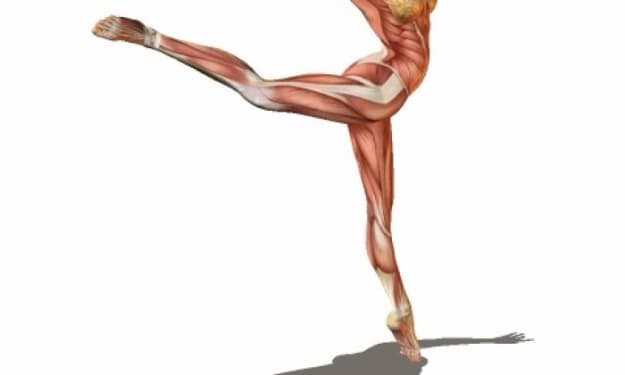
The human body is a miracle
When we were young we were very energetic, running around all day, falling from a high place is not much of an injury, there is a wound healing fast, but slowly the body will have all kinds of problems, adolescence began myopia, face acne, after work back strain, insomnia ...... good thing is that the body's ability to repair is also very strong. After a few months of exercise, I did a physical fitness test at the gym and increased my overall score by one point. The trainer said that this is already very good, because for middle-aged people like me, the body is getting worse and worse, but my physique has improved - this statement really gives me mixed feelings.
By Hazel Oneal5 years ago in Longevity
Temporomandibular joint syndrome (TMJ), Diagnosis, treatment, Symptoms and causes
A dentate joint is a joint that connects your chin to your skull. When this joint is injured or damaged, it can lead to a local pain disorder known as temporomandibular joint (TMJ) syndrome. Causes of TMJ syndrome include damage to teeth or jaws, crooked teeth, jaw grinding, poor posture, stress, arthritis, and chewing gum.
By Sarfraz Hussain5 years ago in Longevity
Back pain: Home contexts for back treatment
Back pain is a nasty companion. Pain is very common and the main causes of it are heavy physical work, poor working postures, immobility, sports and structural injuries. Home care prevents and helps keep your back in better shape. This article opens up back pain treatments that you can do completely at home.
By Sarfraz Hussain5 years ago in Longevity
Coccyx hurts: how to treat with medicine and folk remedies at home
Pain in the coccyx when walking, lifting from a chair, sitting, or lying down is a leading symptom of many inflammatory and degenerative-dystrophic pathologies. Therefore, the cause of uncomfortable feelings must first be determined. If the coccyx still hurts a little after the final therapy, your doctor will tell you how to treat it at home. Traditional healers also offer ways to improve well-being with creams and abrasions.
By Sarfraz Hussain5 years ago in Longevity
Why Should You Care About Your Skin?
“Skin”. For such a short word, the concept and its importance to the body carries an immense amount of weight (literally). It is the largest organ of the body, though one which may not be immediately apparent as an actual organ. Some may think of organs as more internal to the body, perhaps the heart, brain, liver, lungs, or kidneys. But in addition to these vital organs, we have many more that help the human body to function in a variety of different ways.
By James Goydos, MD5 years ago in Longevity
Best Ways To Get Cost-Efficient Hair Transplant In Bangalore
Hair loss is more distressing than we think that a sufferer can only understand. Hair transplant has come up as a permanent and perfect solution of your hair loss problem which offers maximum hair growth and natural looking results. If the surgery is performed under the expert hands then in most of the cases the procedure delivers undetectable results. This is possibly the reason of the huge popularity of the hair transplant procedure.
By Lucifer Ralf5 years ago in Longevity
3 Natural Remedies To Improve Your Lungs Health
We all sometimes can take our lungs for granted and even forget about their important functions. Despite the fact that these organs are keeping us alive, we are often unaware of that. It’s time to get your priorities right and think more about your lungs' health. After all, your lungs are the primary organs of your respiratory system.
By Top Natural Remedy5 years ago in Longevity
Can a chiropractor do physical therapy?
While in many states, both a chiropractor and a physical therapist will carry out insurance for active and passive physical therapy treatments due to a division of occupations, separate legislation has been put in place to regulate how one can speak properly about "what they do," or who they are.
By Emily Smith5 years ago in Longevity
Human genes
Start writing... Scientists around the world are unravelling the mysteries of our genes. Exploring our genes reveals our past and our future, from the diseases you’re more likely to get, to where your ancestors came from. But what is a gene? Where do they come from? And how do your genes make you become you?Easy explanations of genes and science.Before we can understand genes, we need to talk about cells ! Cells are the basic building blocks of all living things. Human cells are too tiny to see with the naked eye, but your body is made of 1,000,000,000,000s of them. Your cells work together to make your body work. You have hundreds of different kinds of cells in the body, each specially adapted to do different jobs. For example, red blood cells carry the oxygen you breathe around your body.What is a Gene?.This is a strand of DNA. You have DNA inside the cells in your body. A gene is a short section of DNA.Your genes are an instruction manual for your body. Hidden inside almost every cell in your body is a chemical called DNA. A gene is a short section of DNA.Your genes contain instructions that tell your cells to make molecules called proteins. Proteins perform various functions in your body to keep you healthy. Each gene carries instructions that determine your features, such as eye colour, hair colour and height. There are different versions of genes for each feature. For example one version (a variant) of a gene for eye colour contains instructions for blue eyes, another type contains instructions for brown eyes.Here you can see the four bases that make up your genes and DNA. The bases are arranged in two long strands that form a spiral called a double helix.What are Genes made of? Hidden inside almost every cell in your body is a chemical called DNA. A gene is a short section of DNA. DNA is made up of millions of small chemicals called bases. The chemicals come in four types A, C, T and G. A gene is a section of DNA made up of a sequence of As, Cs, Ts and Gs. Your genes are so tiny you have around 20,000 of them inside every cell in your body! Human genes vary in size from a few hundred bases to over a million bases.Every human has around 20,000 genes and 3,000,000,000 bases. Your entire sequence of genes and bases is called your genome.Here you can see how the DNA strand coils tightly to form a chromosome. You have 46 chromosomes inside nearly all cells.What are Chromosomes? A chromosome is a tightly wound coil of DNA. Chromosomes are found inside your cells. Such tight packing allows the DNA to fit inside a tiny cell. You have 23 pairs of chromosomes in each cell, different types, so that's .Genes make proteins of different shapes and sizes that perform different tasks, such as growing fingernails.Play Genes and Your Cells to explore how different cells use different genes to make your body work.So: Genes are made of DNA, genes make proteins, proteins make cells and cells make you...Where do your genes come from? Have you ever wondered why you have the same eye color as your dad or the same hair color as your mum? It’s because you inherit your genes from your parents. You get half from your mum and half from your dad. When you inherit genes from your parents you get two versions of each gene, one from your mum and one from your dad. For example you’ll get two versions of the genes that contain instructions for eye colour. Some versions of genes are more dominant than others; if you get blue-eye genes from mum and brown-eye genes from dad you will have brown eyes because brown-eye genes are dominant. So if you inherit all your genes from your parents, why aren’t you exactly like your siblings?.Why are you different from your brothers and sister? The reason you and your siblings aren’t identical is because your mum and dad have two versions of each gene, one from each of their parents. When they pass their genes on to you they only pass on one of these versions, and it is completely random which one it will be. For example if your mum has brown-eye and blue-eye genes she could pass the blue ones on to you and the brown ones on to your sibling.How do genes affect your health? Your genes are the instruction manual that makes your body work. Sometimes, one or a few bases of the DNA in a gene can vary between people. This is called a variant. A variant means the gene has slightly different instructions to the usual version. Occasionally, this may causes the gene to give cells different instructions for making a protein, so the protein works differently. Luckily most gene variants have no effect on health. But a few variants do affects proteins that do really important things in your body, and then you can become ill.Genetic conditions: Genetic conditions are diseases you develop when you inherit a variant in a gene from your parents. As a result genetic conditions usually run in families. Scientists have identified over 10,000 genetic conditions. One genetic condition is called sickle cell anemia. People with this illness have a variant in the genes that contain instructions to make haemolglobin proteins. Hemoglobin helps your red blood cells carry oxygen around your body. These sickle cell haemoglobin genes cause red blood cells to be the wrong shape, making it hard for them to carry oxygen around the body. Not all gene variants cause a genetic condition. Many variants seem to have no effects at all, others may increase your risk of developing a disease.Genes and common conditions Scientists are looking for gene variants that can increase your risk of developing illnesses like diabetes, Alzheimer’s and cancer. It’s a tough job as a lot of illnesses can develop in a very complicated way with lots of different genes involved, and they are also affected by environmental factors like how much you exercise, your weight or if you smoke. Rarely, there are women who are particularly at risk of developing breast cancer, because they carry some gene variants. Some of these genes have been identified, and it is now possible to look at people’s genes to see if they are at risk of developing breast cancer. This can save lives.How does your environment affect you? Your characteristics are affected by your environment as well as your genes. For example you may inherit genes from your parents that should make you tall, but if you have a poor diet growing up your growth could be stunted. To try and understand how much effect your environment can have on you, scientists study identical twins. Identical twins have the same genes, so any differences in personality, health and ability are caused by differences in their environment.Why do scientists study genes? Scientists have made huge breakthroughs in genetic research over the last few years, learning more and more about our genes and how they make our bodies work. Scientists examine our genes to work out family relationships, trace our ancestors, and find genes involved in illnesses. This gives them the tools to come up with better ways to keep us healthy. A big breakthrough in genetic research came in 2003, with the results of the Human Genome Project.Scientists working on the Human Genome Project were surprised to find we have around 20,000 genes, about the same as a mouse!.What was the Human Genome Project? The Human Genome Project was an international research study to try and understand our entire genetic code – the complete instruction manual for how our bodies work. Thousands of scientists all over the world worked for over ten years to read every instruction inside every gene of a group of volunteers and put together a picture of the average human genome. They discovered we have around 20,000 genes in almost every cell in our bodies. Most genes are the same in all people, but a small number of genes, less than 1%, are slightly different between people. These small differences contribute to our unique features. Our new understanding of the human genome is leading to many advances in how we treat illness and disease.
By Zarinabanu Zarinabanu5 years ago in Longevity
Spinal Cord Injury
The spinal cord is a bundle of nerves and other tissue contained and protected by the vertebrae of the spine. The vertebrae are the bones stacked upon each other to make up the spine which extends from the base of the brain down the back, ending near the buttocks region.
By Kingsway Hospital5 years ago in Longevity