body
Love the body you're in with recipes, fitness, meditation, and everything needed to live a long and happy life.
Human genes
Start writing... Scientists around the world are unravelling the mysteries of our genes. Exploring our genes reveals our past and our future, from the diseases you’re more likely to get, to where your ancestors came from. But what is a gene? Where do they come from? And how do your genes make you become you?Easy explanations of genes and science.Before we can understand genes, we need to talk about cells ! Cells are the basic building blocks of all living things. Human cells are too tiny to see with the naked eye, but your body is made of 1,000,000,000,000s of them. Your cells work together to make your body work. You have hundreds of different kinds of cells in the body, each specially adapted to do different jobs. For example, red blood cells carry the oxygen you breathe around your body.What is a Gene?.This is a strand of DNA. You have DNA inside the cells in your body. A gene is a short section of DNA.Your genes are an instruction manual for your body. Hidden inside almost every cell in your body is a chemical called DNA. A gene is a short section of DNA.Your genes contain instructions that tell your cells to make molecules called proteins. Proteins perform various functions in your body to keep you healthy. Each gene carries instructions that determine your features, such as eye colour, hair colour and height. There are different versions of genes for each feature. For example one version (a variant) of a gene for eye colour contains instructions for blue eyes, another type contains instructions for brown eyes.Here you can see the four bases that make up your genes and DNA. The bases are arranged in two long strands that form a spiral called a double helix.What are Genes made of? Hidden inside almost every cell in your body is a chemical called DNA. A gene is a short section of DNA. DNA is made up of millions of small chemicals called bases. The chemicals come in four types A, C, T and G. A gene is a section of DNA made up of a sequence of As, Cs, Ts and Gs. Your genes are so tiny you have around 20,000 of them inside every cell in your body! Human genes vary in size from a few hundred bases to over a million bases.Every human has around 20,000 genes and 3,000,000,000 bases. Your entire sequence of genes and bases is called your genome.Here you can see how the DNA strand coils tightly to form a chromosome. You have 46 chromosomes inside nearly all cells.What are Chromosomes? A chromosome is a tightly wound coil of DNA. Chromosomes are found inside your cells. Such tight packing allows the DNA to fit inside a tiny cell. You have 23 pairs of chromosomes in each cell, different types, so that's .Genes make proteins of different shapes and sizes that perform different tasks, such as growing fingernails.Play Genes and Your Cells to explore how different cells use different genes to make your body work.So: Genes are made of DNA, genes make proteins, proteins make cells and cells make you...Where do your genes come from? Have you ever wondered why you have the same eye color as your dad or the same hair color as your mum? It’s because you inherit your genes from your parents. You get half from your mum and half from your dad. When you inherit genes from your parents you get two versions of each gene, one from your mum and one from your dad. For example you’ll get two versions of the genes that contain instructions for eye colour. Some versions of genes are more dominant than others; if you get blue-eye genes from mum and brown-eye genes from dad you will have brown eyes because brown-eye genes are dominant. So if you inherit all your genes from your parents, why aren’t you exactly like your siblings?.Why are you different from your brothers and sister? The reason you and your siblings aren’t identical is because your mum and dad have two versions of each gene, one from each of their parents. When they pass their genes on to you they only pass on one of these versions, and it is completely random which one it will be. For example if your mum has brown-eye and blue-eye genes she could pass the blue ones on to you and the brown ones on to your sibling.How do genes affect your health? Your genes are the instruction manual that makes your body work. Sometimes, one or a few bases of the DNA in a gene can vary between people. This is called a variant. A variant means the gene has slightly different instructions to the usual version. Occasionally, this may causes the gene to give cells different instructions for making a protein, so the protein works differently. Luckily most gene variants have no effect on health. But a few variants do affects proteins that do really important things in your body, and then you can become ill.Genetic conditions: Genetic conditions are diseases you develop when you inherit a variant in a gene from your parents. As a result genetic conditions usually run in families. Scientists have identified over 10,000 genetic conditions. One genetic condition is called sickle cell anemia. People with this illness have a variant in the genes that contain instructions to make haemolglobin proteins. Hemoglobin helps your red blood cells carry oxygen around your body. These sickle cell haemoglobin genes cause red blood cells to be the wrong shape, making it hard for them to carry oxygen around the body. Not all gene variants cause a genetic condition. Many variants seem to have no effects at all, others may increase your risk of developing a disease.Genes and common conditions Scientists are looking for gene variants that can increase your risk of developing illnesses like diabetes, Alzheimer’s and cancer. It’s a tough job as a lot of illnesses can develop in a very complicated way with lots of different genes involved, and they are also affected by environmental factors like how much you exercise, your weight or if you smoke. Rarely, there are women who are particularly at risk of developing breast cancer, because they carry some gene variants. Some of these genes have been identified, and it is now possible to look at people’s genes to see if they are at risk of developing breast cancer. This can save lives.How does your environment affect you? Your characteristics are affected by your environment as well as your genes. For example you may inherit genes from your parents that should make you tall, but if you have a poor diet growing up your growth could be stunted. To try and understand how much effect your environment can have on you, scientists study identical twins. Identical twins have the same genes, so any differences in personality, health and ability are caused by differences in their environment.Why do scientists study genes? Scientists have made huge breakthroughs in genetic research over the last few years, learning more and more about our genes and how they make our bodies work. Scientists examine our genes to work out family relationships, trace our ancestors, and find genes involved in illnesses. This gives them the tools to come up with better ways to keep us healthy. A big breakthrough in genetic research came in 2003, with the results of the Human Genome Project.Scientists working on the Human Genome Project were surprised to find we have around 20,000 genes, about the same as a mouse!.What was the Human Genome Project? The Human Genome Project was an international research study to try and understand our entire genetic code – the complete instruction manual for how our bodies work. Thousands of scientists all over the world worked for over ten years to read every instruction inside every gene of a group of volunteers and put together a picture of the average human genome. They discovered we have around 20,000 genes in almost every cell in our bodies. Most genes are the same in all people, but a small number of genes, less than 1%, are slightly different between people. These small differences contribute to our unique features. Our new understanding of the human genome is leading to many advances in how we treat illness and disease.
By Zarinabanu Zarinabanu5 years ago in Longevity
Spinal Cord Injury
The spinal cord is a bundle of nerves and other tissue contained and protected by the vertebrae of the spine. The vertebrae are the bones stacked upon each other to make up the spine which extends from the base of the brain down the back, ending near the buttocks region.
By Kingsway Hospital5 years ago in Longevity
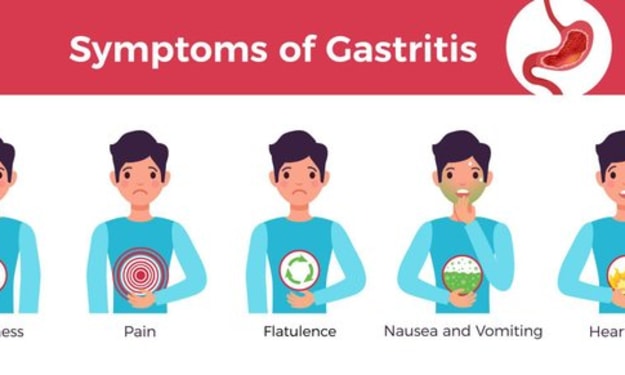
What are the Signs and Symptoms of Gastritis?
Indigestion is not an uncommon issue among most of us, if we take our unhealthy eating habits and lifestyles into account. One of the very common symptoms of the same is stomach ache. But, did you know that a persistent stomach ache may be a symptom of a malady known as gastritis too?
By Vishal Kumar5 years ago in Longevity
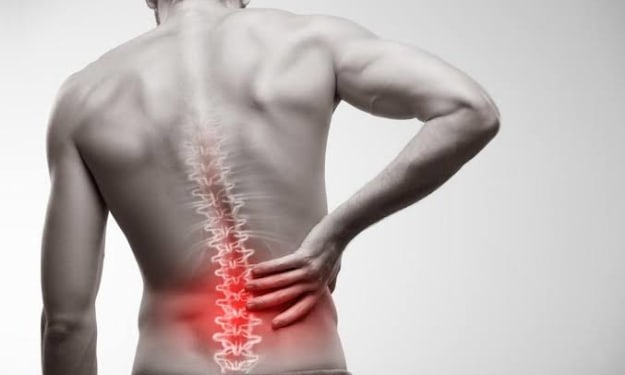
Back Pain
Start writing... What causes back pain?Back pain can be triggered by an accident, heavy lifting, other strenuous activity, age-related changes to the spine or certain medical conditions. These are some of the more common sources of back pain:Sprains and strains. Sprains are caused by overstretching or tearing ligaments, and strains are tears in tendons or muscles.Intervertebral disk degeneration. The normal process of aging causes the usually rubbery disks to lose their cushioning ability.Herniated or ruptured disks. Intervertebral disks become compressed. Herniation is when this compression causes the disks to bulge outward.Radiculopathy, including sciatica. A spinal nerve route is compressed, inflamed or injured. Pressure on the nerve root results in pain, numbness or a tingling sensation that radiates to other areas of the body that are served by that nerve.Spondylosis. Normal wear and tear in the joints, disks and bones causes general degeneration of the spine.Spondylolisthesis. A vertebra of the lower spine slips out of place, pinching the nerves exiting the spinal column.Spinal stenosis. Narrowing of the spinal column puts pressure on the spinal cord and nerves.Skeletal irregularities. Scoliosis, a curvature of the spine, does not usually cause pain until middle age. Lordosis is an abnormally accentuated arch in the lower back.Why should I see a pain management specialist? Pain management specialists work with patients to diagnose pain and treat it safely and effectively with as few side effects as possible. These treatments do not have to involve medications. In fact, pain management is usually more successful when a comprehensive approach is used. Pain management specialists understand the full range of pain relief options, including how to use them in combination to achieve a successful outcome.How is the cause of back pain diagnosed?Your doctor will consider information that includes the following:Patient characteristics. For example, advanced age is linked to arthritis. Obesity puts stress on the back and increases the likelihood of disk degeneration. Weightlifting or participation in other activities could be a factor.Patient history. The physician asks questions to determine if there was an accident or other specific trigger for an injury that is causing the pain. The physician will also ask where and when you feel the pain and how long you have been experiencing it.Results of a physical examination. The examination focuses on the pain’s location. This includes determining whether the pain is axial (confined to the lower back) or radiating (travels to the buttocks, legs and feet).Results of imaging and other tests. Options include X-ray, magnetic resource imaging (MRI), computerized tomography (CT), ultrasound and bone scans.What are the special considerations for sciatica?Sciatica is caused by compression of the sciatic nerve, the large nerve that travels through the buttocks and extends down the back of the leg. Symptoms include pain that travels down this nerve from your back through the buttocks and down one leg, sometimes even to your foot.Sciatica usually stems from compression in the spine. But your doctor should also consider whether it might be caused by a tiny muscle called the piriformis, located in the buttocks near the top of the hip joint. The piriformis is right under the sciatic nerve and can cause similar problems if it spasms. A pain management specialist can diagnose this issue and relieve the muscle tension with an injection.What treatments can provide pain relief?It is best to consider and use multiple treatments for back pain, including promising new approaches such as high-frequency spinal cord stimulation and dorsal root ganglion stimulation. The options below are based on information from ASA pain management specialists, ASA-associated studies, the National Institute of Arthritis and Musculoskeletal and Skin Diseases and the National Institute of Neurological Disorders and Stroke ().Physical therapy. Exercises and stretches can strengthen core muscle groups that support the lower back, improve mobility and flexibility and promote proper posture.Behavior modification. Learning how to move your body properly during daily activities — especially those involving heavy lifting, pushing or pulling — can help relieve and prevent back pain. Adopting healthy habits, such as exercise, relaxation, regular sleep and proper diet, can also help.Complementary approaches. Yoga, acupuncture and massage are among the approaches that have shown some benefit.Spinal manipulation and mobilization. Chiropractors administer these techniques, which have been shown to provide small to moderate short-term benefits, according to NINDS.Epidural spinal injections. A steroidal anti-inflammatory drug is injected into a spinal region called the epidural space. While the relief is short-term, multiple injections can enable you to function well over a long period of time.Nerve block injections. An anesthetic and a steroid are injected into a specific nerve root of the spine.Radiofrequency ablation. A pain medicine specialist inserts a needle into the nerve responsible for the pain and zaps it using an electric current created by radio waves. This short-circuits the pain signals.Transcutaneous electrical nerve stimulation. These treatments send low-voltage electric signals from a small device to the painful area through pads attached to your skin. This may provide short-term relief, whether by interrupting pain signals to the brain or by stimulating the production of endorphins, the body’s natural painkillers.Intrathecal pumps. This implanted pump lets you push a button to deliver local anaesthetics, narcotics and other pain medications to your spinal cord. This can bring relief while avoiding the side effects that often come with taking these drugs by mouth.Low-frequency spinal cord stimulation. A small pacemaker-like device is implanted under the skin to deliver electric pulses to the spinal cord. This produces a sensation often perceived as tingling or buzzing, which masks your perception of pain.High-frequency spinal cord stimulation. Early data are promising on the effectiveness of higher-frequency pulses to provide pain relief without the tingling or buzzing sensation experienced with low-frequency stimulation. Higher-frequency pulses may also provide more effective pain relief.Dorsal root ganglion stimulation. This alternative to spinal cord stimulation disrupts pain signals by specifically targeting the nerves responsible for the pain. In a study presented at the ANESTHESIOLOGY® 2018 annual meeting, researchers reported promising results.Medications. Muscle relaxants, analgesics such as acetaminophen and aspirin, and nonsteroidal anti-inflammatory drugs such as ibuprofen can help. Researchers are exploring the effectiveness of neuropathic drugs such as gabapentin. Opioids usually are not effective for managing chronic back pain; in most cases, their use should be confined to treating severe pain for a few days after an injury, if necessary.
By Zarinabanu Zarinabanu5 years ago in Longevity
Tips for Controlling Gestational Diabetes
Gestational diabetes is a condition that affects about 135,000 pregnant women each year. Controlling gestational diabetes during pregnancy is critical for the health of the mom and the baby. While most women will control their blood glucose levels with diet and exercise, about 15% will need insulin shots. Gestational diabetes sounds like a very scary condition to many, but it is a very controllable condition that will minimally affect your baby.
By Dani McGaw5 years ago in Longevity
Critically discuss the view that the body is becoming a plastic object with respect to different techniques of body transformation, i.e. plastic surgery, gymnastic, body piercing
In the 1990’s, there has been a distinct increase in popular interest in the body and different techniques of body transformation. Various forms and avenues of the media (for example, Newspapers, Magazines, and Television) encourage and document this trend through their use of features on body image — emphasis is placed on a young-looking body that is as attractive as is physically (and, financially) possible. There are many ways of attaining this body image, that go in and out of ‘fashion’ on a regular basis, largely dependent on the fashion industry and the catwalks. The most common method of body transformation is plastic surgery — while tattoos and body piercing have now grown to include a much wider group of people deciding to ‘decorate’ or ‘adorn’ themselves in the latest designs. The industry of weight-loss and keep-fit is now one that has a great deal of influence on a large body of people, it involves millions of pounds (or dollars, the United States of America have experienced a boom as large, if not larger).
By JoJoBonetto5 years ago in Longevity
Things To Consider Before Choosing Hair Transplant Clinic in Jaipur
Hair transplant procedures have been in limelight since more than a decade and has permanently solved the problem of the hair loss sufferers. In the present era, the hair loss prevalence is very high and has become a global issue. Besides the popularity of the hair transplant, the quality of hair transplant is increasing as the technology is advancing.
By Lucifer Ralf5 years ago in Longevity