Fiaz Ahmed
Bio
I am Fiaz Ahmed. I am a passionate writer. I love covering trending topics and breaking news. With a sharp eye for what’s happening around the world, and crafts timely and engaging stories that keep readers informed and updated.
Stories (1146)
Filter by community
People Are Dying, You Have to Help’: Guardiola Decries Wars in Sudan, Ukraine and Palestine. AI-Generated.
Manchester City manager Pep Guardiola has used his global platform to speak out against the ongoing wars in Sudan, Ukraine and Palestine, urging world leaders and ordinary citizens alike to do more to protect civilians and prevent further suffering. Speaking at a press conference ahead of a domestic league fixture, Guardiola departed from football matters to address what he described as a “moral responsibility” to acknowledge human tragedy beyond the pitch. His remarks followed a question about the role of athletes and public figures in responding to international crises. “People are dying every day,” Guardiola said. “Not soldiers only. Families, children, mothers, innocent people. You have to help. You cannot just look away because it’s not in your country.” A Rare Political Intervention Guardiola is known for occasionally addressing social and political issues, but his comments were unusually direct and wide-ranging. Referring to conflicts in three different regions, he stressed that humanitarian suffering should transcend political divisions. “In Sudan, in Ukraine, in Palestine – it doesn’t matter where,” he said. “The pain is the same. A child who loses his home in Gaza feels the same fear as a child who loses his home in Kyiv or Khartoum.” The Spanish coach made clear that his message was not aimed at assigning blame but at emphasizing compassion and action. “I’m not a politician. I’m not a general. I’m a football manager,” he said. “But I’m a human being. And as human beings, we cannot accept that this is normal.” Spotlight on Forgotten Crises Guardiola’s inclusion of Sudan alongside Ukraine and Palestine drew attention to a conflict that has received comparatively limited international coverage. Sudan’s civil war, which erupted in 2023 between rival military factions, has displaced millions and caused widespread famine and disease. Aid agencies estimate that Sudan now faces one of the world’s worst humanitarian disasters, with entire cities cut off from food, clean water and medical care. Guardiola said he was particularly troubled by how quickly global attention shifts from one crisis to another. “Some wars are on television every day. Others are invisible,” he said. “But for the people who live there, it is their whole life.” War and the World of Football Guardiola acknowledged that football exists in a bubble of wealth and entertainment, often disconnected from the realities faced by ordinary people in war zones. However, he argued that this privilege brings responsibility. “We play games, we talk about tactics, about titles, about contracts,” he said. “Meanwhile, there are people who don’t know if they will eat tomorrow. That contrast is very hard to accept.” The manager praised players who have used their platforms to raise funds for humanitarian causes and called on football institutions to do more to support relief efforts. “Football has power,” he said. “Millions listen. If even a small part of that helps save lives, then it is worth speaking.” Mixed Reactions Guardiola’s comments quickly spread across social media and news outlets, drawing praise from some and criticism from others. Supporters applauded him for highlighting humanitarian suffering and showing empathy beyond sport. “More public figures should speak like this,” one fan wrote online. “It’s about humanity, not politics.” Critics, however, accused him of oversimplifying complex conflicts or stepping outside his professional role. Some argued that football managers should avoid political statements altogether. Asked about potential backlash, Guardiola remained calm. “I understand not everyone will agree,” he said. “But silence is also a choice. And I don’t want to choose silence when people are suffering.” The Human Cost of Conflict Guardiola referenced images of destroyed neighborhoods, hospitals under fire and families fleeing their homes. He said such scenes should challenge people everywhere to rethink their priorities. “When you see a mother carrying her child with nothing but a bag, you ask yourself: what kind of world are we building?” he said. “We spend so much energy on hate and weapons. Imagine if we spent that energy on helping.” He also emphasized that compassion should not be selective. “It cannot be only for one country or one people,” he said. “If you cry for Ukraine, you must cry for Palestine. If you cry for Palestine, you must cry for Sudan. Otherwise, it is not justice. It is politics.” A Call for Action While Guardiola did not propose specific policy solutions, he urged governments and international organizations to prioritize humanitarian corridors and ceasefires. He also encouraged individuals to support charities and remain informed. “Helping does not always mean stopping a war,” he said. “Sometimes it means sending food, medicine, shelter. Sometimes it means raising your voice so the world does not forget.” His remarks echo a growing trend of athletes and coaches engaging in global issues, reflecting the influence sports figures now hold beyond stadiums. Beyond Football As Guardiola returned to questions about his team’s next match, his earlier words lingered. For many, the sight of one of football’s most successful managers speaking emotionally about war underscored how deeply global conflicts resonate even in spaces designed for escape and entertainment. “Football is beautiful,” Guardiola said in closing. “But life is more important. And right now, life is being destroyed in too many places.” In an era when sports and politics often collide uneasily, Guardiola’s message was simple and human: suffering anywhere should concern people everywhere. Whether his plea will translate into greater awareness or action remains uncertain, but his voice added to a chorus calling for empathy in a fractured world.
By Fiaz Ahmed 17 days ago in The Swamp
NSW Labor Politicians to Protest Israeli President Isaac Herzog’s Visit in Defiance of Premier. AI-Generated.
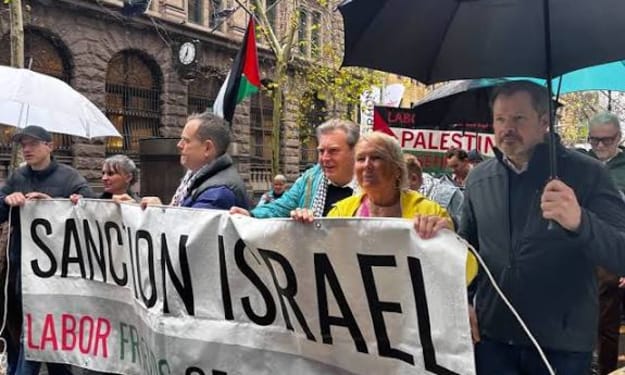
Several New South Wales Labor politicians have confirmed they will take part in protests against the visit of Israeli President Isaac Herzog, openly defying the state’s Labor premier and exposing deep divisions within the party over the war in Gaza and Australia’s diplomatic relationship with Israel.
By Fiaz Ahmed 17 days ago in The Swamp
Russian Attacks on Ukraine Energy Sites ‘Particularly Depraved,’ UK PM Starmer Says. AI-Generated.
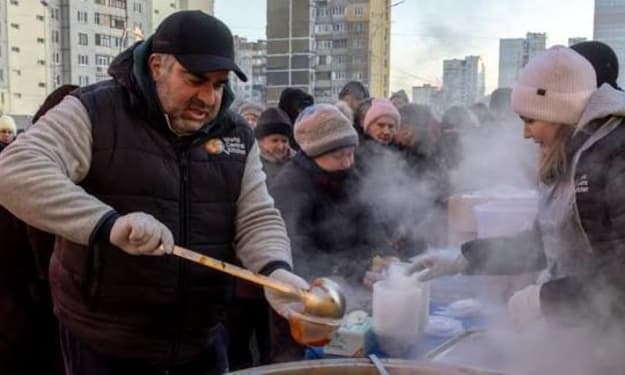
British Prime Minister Keir Starmer has condemned Russia’s latest wave of missile and drone strikes on Ukraine’s energy infrastructure, describing them as “particularly depraved” and accusing Moscow of deliberately targeting civilians during the harsh winter months. His remarks came after a series of overnight attacks damaged power plants and substations across several Ukrainian regions, leaving hundreds of thousands without electricity and heating.
By Fiaz Ahmed 17 days ago in The Swamp
Greenland Declares State of Emergency as Scientists Link Growing Presence of Orcas to Accelerating Ice Melt. AI-Generated.
The government of Greenland has declared a state of emergency in response to an alarming environmental shift in its Arctic waters — a surge in the presence of orcas in areas once locked in sea ice, which scientists say underscores how rapidly the region’s ice is melting and reshaping the ecosystem. The movement of these apex predators into newly open fjords and coastal zones has become both a symbol and a scientific indicator of climate change’s far-reaching impacts. Faculty.world The emergency declaration, announced by local authorities in Nuuk and surrounding coastal regions, is the first of its kind tied to ecological change rather than a single weather event or industrial accident. Officials said the decision reflects concern about cascading effects on wildlife, indigenous subsistence practices, infrastructure safety, and community livelihoods as the Arctic’s age-old balance unravels. Orcas in Greenland: An Unexpected Sign of Change Traditionally, orcas — also known as killer whales — were rare visitors to Greenland’s inner fjords and coastal waters. Thick, multi-year sea ice once blocked open pathways deep into the Arctic, preventing these large marine predators from accessing hunting grounds dominated by seals, narwhals and other endemic species. Faculty.world But satellite data and local observations over the past decade show a stark decline in summer sea-ice extent, with warm ocean water opening up channels that were once permanently frozen. Where ice used to stretch uninterrupted across Greenland’s western fjords into the shoulder months of summer, researchers now see expanses of open water that orcas exploit. Faculty.world Scientists describe these shifts in terms of “climate fingerprints” — specific biological and ecological signals that reflect broader environmental change. Orcas are now becoming one of the clearest indicators of warming seas and retreating ice in the Arctic, researchers say. Faculty.world From Rare Sightings to Regular Visitors In fishing villages along Greenland’s fjords, elders and hunters speak of dramatic changes. A decade ago, spotting a killer whale near shore was an unusual event; now, pods of 20 or more orcas are seen regularly, patrolling open channels formerly clogged with ice. Residents describe pods chasing seals and narwhals, forcing traditional prey into shallower waters where they are more vulnerable. Faculty.world Local councils have begun to receive more reports of orca encounters near settlements and traditional hunting grounds. The presence of orcas is reshaping the behavior of seals and narwhals, altering food availability and hunting success for Inuit and other communities who rely on these species for subsistence and cultural traditions. Faculty.world Officials say the emerging patterns are too consistent and too widespread to ignore. “When the predators show up, it’s a signal that the environment they once kept at bay has fundamentally changed,” one Greenlandic marine ecologist said. “It’s not just about whales — it’s about the whole system being in motion.” Faculty.world Why Orcas Matter to Ice Melt Scientists are careful to clarify that orcas themselves do not cause ice melt. The primary driver remains warming air and ocean temperatures, fueled by human-induced greenhouse gas emissions. The real concern is how the effects of climate change are now feeding into ecological feedback loops that accelerate ice loss. Caberfeidh Bar Orcas, being large and mobile, follow open water. Their movements into former ice-covered areas are symptomatic of warmer seas and rapidly retreating ice. When sea ice thins or breaks into smaller plates, it absorbs more sunlight and melts faster; the open water left behind warms up and further weakens ice edges. Each summer’s melt makes it easier for open water to persist longer into seasons that historically refroze. Faculty.world Marine researchers are also examining how orca activity can amplify local mixing in the water column. As orcas move and hunt in shallow fjords, they churn water that would once have been smothered in ice, interacting with warmer ocean currents and subtly increasing erosion of ice fronts from below. Faculty.world Impact on Communities and Culture For Greenland’s coastal residents, the changes are both ecological and cultural. Hunters who once relied on stable seasonal ice are now navigating unpredictable conditions, with sea ice breaking earlier in the year and forming later. Harsh new realities mean shifts from sleds to small boats and new safety practices to avoid thin ice and open channels where orcas and strong currents converge. Faculty.world Inuit traditions and knowledge — passed down through generations — are being tested as the climate rewrites the rhythms of ice and animal migrations. Elders warn younger generations that the calendar of ice, once reliable for travel and hunting, now fails to match what’s visible outside their front doors. Faculty.world A Broader Climate Message Greenland’s state of emergency is intended to send a clear message: the Arctic’s transformation is not a distant future but a present reality with consequences on ecosystems and human lives. Scientists overseeing climate models say that dramatic ice melting — whether captured by satellite data or measured in growing orca sightings — reflects shifts that will continue unless greenhouse gas emissions are sharply reduced worldwide. Caberfeidh Bar The declaration is both a call for global action and a recognition of local urgency. Greenland’s communities are already adapting, but researchers say the pace of change demands broader international engagement on climate policy and support for Arctic resilience. Conclusion What once seemed like an extraordinary sight — killer whales in the high Arctic — is now a daily reality and a stark indicator of climate change’s reach. Greenland’s emergency declaration does not downplay the seriousness of the crisis; it acknowledges that ecological change is already reshaping food webs, cultural practices, and physical landscapes. The orcas in Greenland’s fjords are not villains, but they are unmistakable markers of a world where ice is no longer the constant it once was. As Greenland navigates the immediate response and the long road ahead, its experience resonates far beyond the Arctic. This state of emergency is a signal flare — one that scientists and communities hope will spur collective action before other ecosystems face similar tipping points.
By Fiaz Ahmed 17 days ago in Longevity
Syria, once home to a large Jewish community, takes steps to return property to Jews. AI-Generated.
For centuries, Syria was home to one of the oldest and most influential Jewish communities in the Middle East. From Damascus to Aleppo, Jewish families played a central role in commerce, culture, and religious scholarship. Today, that community has nearly vanished, reduced to only a handful of elderly residents after decades of emigration driven by war, political repression, and regional conflict. Now, in a surprising development, Syrian authorities are taking cautious steps toward addressing long-standing property claims made by Jews who fled the country decades ago. Officials and community representatives say recent legal and administrative moves may allow former Jewish residents or their descendants to reclaim homes, synagogues, and commercial properties confiscated or abandoned during the turbulent years following Syria’s independence and especially after the Arab-Israeli wars of the mid-20th century. A Community That Once Flourished Before 1948, Syria’s Jewish population numbered more than 30,000. Damascus and Aleppo hosted thriving Jewish quarters, with synagogues that dated back hundreds of years. Jewish merchants were deeply integrated into Syrian society, and many families traced their roots in the region to biblical times. However, after the creation of Israel and subsequent Arab-Israeli wars, conditions deteriorated sharply. Jews faced increasing restrictions, including bans on travel, employment limitations, and property seizures. Many left secretly during the 1970s and 1980s with the help of international organizations. By the early 2000s, only a few dozen Jews remained in the country. Today, that number is believed to be fewer than ten. When families fled, their properties were often taken over by the state or occupied by others. Documentation was lost, and legal ownership became deeply complicated by decades of war and bureaucracy. A Shift in Policy Recent reports indicate that Syrian courts and local authorities have begun reviewing old land registries and inheritance records connected to Jewish-owned property. In some cases, descendants living abroad have been contacted by intermediaries to verify ownership claims. While officials have not announced a sweeping national policy, legal experts say the steps appear to be part of a broader effort by Damascus to show openness and restore confidence among displaced communities. Similar reviews have also been carried out for Christian and Muslim families who lost property during years of conflict. One Syrian lawyer familiar with the process said the initiative reflects both political and economic motives. “The government wants to demonstrate that it can guarantee property rights again,” he said. “There is also interest in attracting foreign investment and rebuilding historic districts, which requires settling ownership disputes.” Symbolic Importance The return of Jewish property carries strong symbolic weight. It touches on sensitive issues of identity, memory, and reconciliation in a country devastated by more than a decade of civil war. For many former Syrian Jews now living in Israel, the United States, and Europe, the possibility of reclaiming family homes is emotional rather than financial. “My grandparents’ house in Aleppo still exists,” said one descendant now living in New York. “We don’t plan to live there, but recognition of our ownership would mean acknowledgment of our history.” Jewish organizations that document Middle Eastern Jewish heritage have cautiously welcomed the move, describing it as a small but meaningful step toward justice. However, they warn that implementation will be complex and slow. Obstacles and Skepticism Despite these developments, serious challenges remain. Property records were damaged or destroyed during the war. Many homes were repurposed for military use or occupied by displaced families. Courts must balance competing claims without igniting new tensions. There is also skepticism about how far the process will go. Critics argue that the initiative could be largely symbolic, benefiting only a limited number of cases while avoiding broader restitution questions. Human rights groups stress that true reconciliation requires transparency and legal guarantees. “Returning property to former Jewish residents would be a powerful gesture,” one regional analyst said. “But it must be done under fair judicial procedures and not selectively.” Another concern is security. Even if ownership is restored, few former Syrian Jews are expected to return permanently due to instability and lingering fears. Part of a Wider Rehabilitation Effort Syria’s move comes as it seeks to re-enter regional diplomacy and rebuild ties with neighboring countries after years of isolation. Restoring minority rights and resolving property disputes helps project an image of stability and reform. The country’s leadership has also encouraged the restoration of historic synagogues and Jewish cemeteries as part of cultural heritage preservation programs. In Damascus, one synagogue has reportedly undergone repairs, and local authorities have worked with remaining community members to protect burial sites. Such actions align with broader efforts to preserve Syria’s diverse religious history, which includes ancient Christian, Jewish, and Muslim traditions. Looking Ahead For descendants of Syria’s Jewish community, the prospect of legal recognition brings mixed emotions: hope, caution, and unresolved grief. While few expect full compensation or physical return, acknowledgment of ownership represents a form of historical justice. The process is still in its early stages and remains vulnerable to political shifts. Yet even limited steps mark a departure from decades of silence on the fate of Jewish property in Syria. If sustained, these efforts could serve as a precedent for addressing other displaced communities’ claims and contribute to a wider conversation about reconciliation in postwar Syria. Conclusion Syria’s Jewish community once formed an integral part of the nation’s social and cultural fabric. The tentative move to return property to Jews who fled decades ago signals a recognition of that history and an attempt to heal old wounds. While legal, political, and security obstacles remain significant, the initiative carries deep symbolic meaning in a country struggling to rebuild not only its cities but also its relationship with its past. Whether these steps will lead to genuine restitution or remain limited gestures depends on how consistently and fairly the policy is applied. For now, it represents a rare moment of reflection in a land long marked by conflict and loss.
By Fiaz Ahmed 17 days ago in The Swamp
Satellite Imagery Shows Where the U.S. Military Is Positioned Near Iran. AI-Generated.
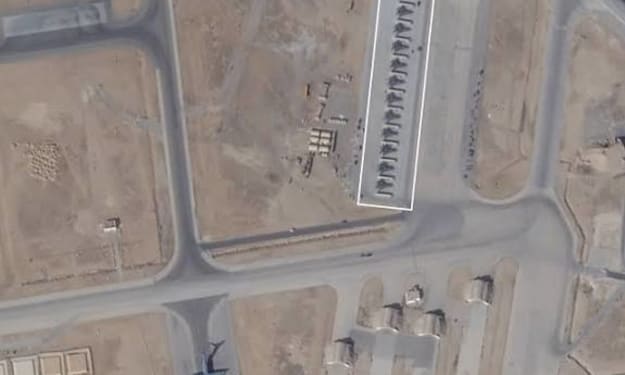
Recent satellite imagery has revealed the scope and scale of the U.S. military’s presence near Iran as tensions between Washington and Tehran remain elevated. The images, analyzed by open-source intelligence platforms and corroborated by defense reporting, show a significant buildup of U.S. forces — both in the air and at sea — across strategic locations in the Middle East. These deployments reflect America’s efforts to project power, deter Iranian escalation, and prepare contingency options amid uncertain diplomatic negotiations.
By Fiaz Ahmed 17 days ago in The Swamp
UN Security Council Condemns Latest Militant Attacks in Pakistan That Killed Dozens. AI-Generated.
The United Nations Security Council has strongly condemned a wave of militant attacks in Pakistan that left dozens of civilians and security personnel dead, calling the violence a threat to regional stability and reaffirming the international community’s commitment to combating terrorism in all its forms. The attacks, which occurred in multiple locations across the country, have intensified concerns about Pakistan’s security situation and the resurgence of militant groups operating in border regions.
By Fiaz Ahmed 17 days ago in The Swamp
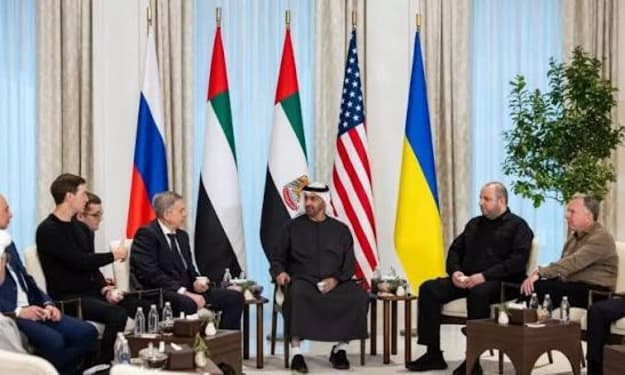
Ukraine–Russia Talks Begin in Abu Dhabi After ‘Massive’ Strikes on Kyiv. AI-Generated.
Negotiations between Ukraine and Russia have begun in Abu Dhabi following one of the heaviest waves of missile and drone attacks on Kyiv in recent weeks, marking a rare moment of diplomacy amid escalating violence. The talks, facilitated by regional and European intermediaries, come as Ukraine assesses the damage from overnight strikes that targeted critical infrastructure and residential areas, underscoring the fragile and contradictory nature of attempts to revive dialogue while the war continues unabated.
By Fiaz Ahmed 17 days ago in The Swamp
Russia Ready to Respond to Any US Weapons Deployment in Greenland: Ryabkov. AI-Generated.
Russia has issued a stark warning that it is prepared to respond with “military and technical compensatory measures” if the United States moves forward with plans to deploy weapons systems — particularly elements of its proposed Golden Dome missile defense architecture — in Greenland, according to comments by Russian Deputy Foreign Minister Sergey Ryabkov. The warning comes at a tense moment in U.S.–Russia relations, just days before the expiration of the New START nuclear arms control treaty, and highlights the complex strategic contest unfolding in the Arctic and broader geopolitical landscape. � Al Jazeera +1 Strategic Significance of Greenland Greenland, an autonomous territory of the Kingdom of Denmark, occupies a pivotal geographic location in the Arctic. Its proximity to the North American and Eurasian landmasses makes it a powerful site for missile defense, early warning systems, and radar infrastructure. For the United States, strengthening its military footprint in the Arctic — including possible deployments of advanced missile defense systems — is seen as part of broader attempts to counter emerging threats from Russia and China. In recent months, U.S. interest in Greenland has intensified. U.S. President Donald Trump has publicly discussed the Golden Dome missile defense concept, a multilayered defensive network intended to enhance protection against ballistic missile threats, with components potentially positioned in high northern latitudes like Greenland. While details remain scant, the idea reflects Washington’s focus on new strategic postures for the Arctic region amid shifting global power balances. � Al Jazeera +1 Moscow’s Warning Ryabkov made his remarks during a press briefing at the Russian Embassy in Beijing, where he emphasized that any movement by the United States to “pump some weapons systems to the region or deploy certain elements of their Golden Dome concept” in Greenland would prompt Moscow to take what he described as “military and technical compensatory measures.” He added that Russian specialists “will be quite ready to take them” without hesitation. � Al Jazeera +1 While Russia has not specified exactly what actions it might take in response, military and technical measures could include redeployments, force augmentations, air or naval adjustments, or enhancements to Russia’s own missile defenses. The precise form those steps would take remains unclear, but the rhetoric signals Moscow’s deep concern about the implications of expanded U.S. weapons deployments near its borders. Interlinked with Nuclear Arms Control Ryabkov’s statements were made against the backdrop of the impending expiration of the New START treaty, the last remaining nuclear arms control agreement between the United States and Russia. Signed in 2010 and extended in 2021, this pact has for years served as a key mechanism limiting both countries’ deployed strategic nuclear warheads and delivery systems while facilitating inspections and transparency. � Al Jazeera +1 With New START scheduled to expire, the formal arms control framework restraining the world’s two largest nuclear arsenals is on the brink of collapse, prompting warnings from global security officials about a more dangerous era of unchecked nuclear competition. Ryabkov has said that despite proposals from Moscow to extend the treaty’s limits for another year, Washington has yet to respond, interpreting the lack of reply as a rejection of further cooperation. � HICGI News Agency A Broader Security Context Moscow’s Greenland warning is part of a broader response to perceived U.S. and NATO shifts in strategic posture. Russia has consistently objected to Western military activities near its borders — from naval deployments in the Arctic to missile defense initiatives in Europe — viewing them as destabilizing and reminiscent of Cold War-era brinkmanship. Russian officials often describe such moves as threats to their national security that necessitate equivalent responses. � TASS For example, Ryabkov has previously warned that deployments of intermediate-range missiles near Russian borders would compel Moscow to take corresponding steps, framing these positions as defensive and reactive rather than offensive. � Anadolu Ajansı Reactions and Regional Implications The idea of weapon deployments in Greenland has drawn a range of reactions internationally. Denmark, which retains sovereignty over the territory, has rejected notions of U.S. acquisition or stationing of forces without its consent, emphasizing Greenland’s autonomy and strategic significance. Other NATO members have also expressed caution about entangling their alliance in Arctic tensions. � HICGI News Agency Meanwhile, analysts caution that Russia’s warnings could be aimed as much at European audiences as American policymakers. By loudly denouncing potential U.S. military moves in the Arctic, Moscow seeks to sow concern among NATO members about escalating costs of security cooperation — a tactic that could influence alliance cohesion. Geopolitical Stakes Beyond the Arctic The warning regarding Greenland is linked to larger geopolitical debates about security, deterrence, and strategic balance. With New START expiring, confidence-building measures between Moscow and Washington have eroded, and issues like missile defense deployment, space-based surveillance, and emerging technologies are increasingly part of the broader strategic rivalry. Experts warn that without renewed arms control frameworks or new agreements, both sides may feel compelled to enhance their capabilities in response to each other’s deployments, creating a cycle of escalation rather than stability. Conclusion Russia’s readiness to respond to any U.S. weapons deployment in Greenland reflects broader tensions between Moscow and Washington over military posture, strategic security, and the future of arms control. With the Arctic gaining fresh strategic importance and the New START treaty expiring, the risk of miscalculation and competitive weapon build-ups is rising. Ryabkov’s warning underscores how geopolitical rivalries are no longer confined to traditional battlefields but extend to strategic geography like Greenland, where great power competition for influence, deterrence, and technological edge is bringing renewed diplomatic and military tensions to the forefront of international security.
By Fiaz Ahmed 17 days ago in The Swamp
Painful Times in My Marriage” – Melinda French Gates Reacts to Ex-Husband’s Name Appearing in Epstein Files. AI-Generated.
Melinda French Gates has spoken publicly about the emotional strain she experienced during her marriage after renewed attention focused on her former husband, Bill Gates, following the release of court documents connected to the late financier Jeffrey Epstein. Her remarks offer a rare personal glimpse into the toll that the controversy took on their relationship and underscore how Epstein’s shadow continues to affect prominent figures years after his death. The documents, which emerged from a long-running legal case involving Epstein’s associates, included references to numerous high-profile individuals. While appearing in the files does not imply wrongdoing, the disclosures reignited public scrutiny of Epstein’s extensive network and past connections. Bill Gates has previously acknowledged meeting Epstein but has consistently said those interactions were a mistake and that he had no involvement in Epstein’s criminal activities. Melinda French Gates, who finalized her divorce from Bill Gates in 2021 after 27 years of marriage, reflected on the period when the Epstein revelations first became public. In a recent interview, she described the time as one of deep personal turmoil. “I had to make decisions for myself and for my values,” she said, characterizing the situation as “painful” and emotionally exhausting. Her comments did not accuse her former husband of criminal conduct but highlighted how the association itself created a crisis of trust within their marriage. A Marriage Under Public Pressure The Gates divorce surprised many observers because of the couple’s long-standing image as partners in both family life and philanthropy. Together, they built one of the world’s most influential charitable organizations, the Bill & Melinda Gates Foundation, and were often seen as symbols of stability and shared purpose. However, reports in 2019 and 2020 revealed that Bill Gates had met Epstein on several occasions years earlier, including at Epstein’s Manhattan residence. Epstein had already been convicted of sex crimes by that time, making the relationship especially controversial. Bill Gates later said he regretted those meetings and described them as a lapse in judgment. For Melinda French Gates, the revelations represented more than a reputational issue. She has said the situation forced her to confront difficult questions about transparency and personal boundaries within her marriage. Friends and associates have suggested that Epstein-related concerns contributed to her decision to seek a divorce, though she has never claimed it was the sole reason. The Epstein Files and Renewed Scrutiny The recent release of Epstein-related court records has once again brought old connections back into the spotlight. These documents stem from lawsuits involving Epstein’s longtime associate Ghislaine Maxwell and others, and they contain testimony and references gathered over many years. Legal experts have cautioned that the appearance of a person’s name in the files does not constitute evidence of misconduct. Many individuals mentioned have denied any wrongdoing, and no new criminal charges have resulted from the disclosures. Still, the publication of the records has fueled intense media attention and public debate. In this environment, Melinda French Gates’ remarks stand out for their emotional honesty rather than legal or political argument. Her focus has been on how the controversy affected her personally and the choices she made as a result. A Voice of Independence Since the divorce, Melinda French Gates has increasingly shaped her own public identity, separate from her former husband’s. She has launched new philanthropic initiatives focused on women’s empowerment, health care access, and gender equality, and she has spoken openly about the importance of aligning personal actions with moral convictions. Her comments about Epstein reflect this shift. Rather than defending or condemning Bill Gates directly, she framed her experience in terms of personal values and self-respect. Observers note that this approach resonates with many who have faced crises of trust in their own relationships, even if the circumstances were far less public. “She’s not making a legal judgment,” said one social commentator. “She’s explaining what it felt like to live through a moment when your partner’s choices affect your entire life.” Bill Gates’ Response Bill Gates has reiterated that he regrets his interactions with Epstein and has sought to distance himself from the scandal. In previous statements, he said that meeting Epstein was a mistake and that he had no business relationship or close personal connection with him. He has not directly responded to Melinda French Gates’ recent remarks, but his representatives have emphasized that he has fully cooperated with any inquiries and that he has never been accused of wrongdoing in connection with Epstein’s crimes. The former couple continues to work within the Gates Foundation, though Melinda French Gates has announced plans to eventually step back from the organization to focus on her own projects. Broader Implications The episode highlights how Epstein’s legacy continues to ripple outward, affecting not only legal cases but also personal relationships and reputations. For public figures, even indirect association can carry lasting consequences. Melinda French Gates’ decision to speak about the emotional impact of the situation reflects a broader cultural shift toward discussing trust, accountability, and personal agency in high-profile relationships. Her words suggest that the cost of controversy is not only measured in headlines or financial terms, but also in private suffering. Conclusion Melinda French Gates’ reaction to the renewed attention surrounding her ex-husband’s name in the Epstein files offers a human dimension to a story often dominated by legal and political angles. By describing the period as one of “painful times” in her marriage, she has drawn attention to the personal toll of public scandals. As investigations into Epstein’s network continue to shape conversations about power and responsibility, her comments serve as a reminder that behind every controversy are individuals forced to navigate difficult emotional and moral terrain. For Melinda French Gates, the experience appears to have marked a turning point—one that ultimately reshaped both her marriage and her future path.
By Fiaz Ahmed 17 days ago in The Swamp
Son of Libya’s Late Dictator Gadhafi Shot Dead by Gunmen, Political Team Says. AI-Generated.
The son of Libya’s former ruler Muammar Gadhafi has been shot dead by unidentified gunmen, according to a statement released by his political team, marking a dramatic and unsettling development in the country’s fragile political landscape. The killing has reignited fears over Libya’s ongoing instability more than a decade after the collapse of the Gadhafi regime.
By Fiaz Ahmed 17 days ago in The Swamp
IOC President Gives Clearest Signal So Far That Russia Could Be at 2028 Olympics. AI-Generated.
The president of the International Olympic Committee (IOC) has delivered the clearest indication yet that Russia may be allowed to return to the Olympic Games in 2028, marking a potential turning point in one of the most politically sensitive debates in modern sports history. The comments suggest a shift away from the strict exclusion imposed after Russia’s invasion of Ukraine and toward a framework that could see Russian athletes competing once again on the world’s biggest sporting stage. Since 2022, Russian and Belarusian athletes have largely been banned from international competitions under IOC guidance, with only limited participation allowed under neutral status in some events. The new remarks signal that the IOC is beginning to consider what long-term reintegration might look like, especially as the 2028 Summer Olympics in Los Angeles draw closer. A Change in Tone from Olympic Leadership The IOC president emphasized that the Olympic movement should remain politically neutral and focused on athletes rather than governments. While stopping short of confirming Russia’s full participation, the statement acknowledged that “athletes should not be punished for the actions of their states,” a phrase that has become central to arguments for Russia’s return. This is the strongest indication yet that the IOC is preparing the groundwork for a policy change. Until now, Olympic leaders had avoided making commitments beyond the Paris 2024 Games, where Russian athletes are expected to compete only as neutrals under strict conditions, without national flags, anthems, or official representation. The latest comments suggest that the IOC may expand this approach or move toward a more formal reintegration process by 2028, depending on geopolitical developments and security conditions. The Background of Russia’s Exclusion Russia’s sporting isolation followed the invasion of Ukraine in February 2022, when the IOC recommended that international federations bar Russian and Belarusian athletes from competition. The decision was unprecedented in scale and reflected concerns about safety, fairness, and the politicization of sport. In 2023 and 2024, some Russian athletes were allowed back into certain competitions as “neutral athletes,” provided they did not publicly support the war or have ties to the military. This compromise was designed to uphold Olympic principles while responding to pressure from Ukraine and its allies. However, the policy has remained controversial. Ukraine has consistently argued that any Russian participation legitimizes aggression, while Russia has accused the IOC of discrimination and hypocrisy. Growing Pressure from International Federations Several international sports federations have quietly begun easing restrictions on Russian athletes, especially in individual sports such as tennis, fencing, and gymnastics. These organizations argue that prolonged exclusion undermines competition and punishes athletes who have no role in political decisions. The IOC president’s remarks appear to reflect this shifting landscape. By signaling openness to Russia’s return in 2028, the IOC aligns itself with federations seeking stability and long-term planning. Los Angeles organizers have also indicated they are preparing for multiple scenarios, including the possibility that Russian athletes will participate in some form. Logistically, this would require security planning and coordination with U.S. authorities, given the political sensitivity of the issue. Political and Ethical Tensions The prospect of Russia’s return to the Olympics raises deep ethical and political questions. Supporters argue that the Olympic Charter promotes peace and inclusion and that excluding an entire nation contradicts those values. They also warn that sport should not become a permanent tool of political punishment. Critics counter that allowing Russia back too soon would undermine international solidarity with Ukraine and weaken the symbolic power of sanctions. They point out that previous Olympic bans, such as those during apartheid-era South Africa, were designed to pressure governments through sporting isolation. Ukraine has already stated it would strongly oppose any move to fully reinstate Russia without significant changes in the war situation. Several European nations are expected to echo this stance, creating the possibility of diplomatic tensions within the Olympic movement. The Role of Neutral Athletes One likely outcome is a continuation of the “neutral athlete” model used in Paris 2024. Under this system, Russian athletes compete without national symbols and under strict eligibility criteria. This approach allows individuals to participate while distancing the Games from state representation. The IOC president’s comments suggest this model could evolve into a longer-term solution rather than a temporary exception. By 2028, the IOC may refine the rules, potentially expanding eligibility while maintaining symbolic neutrality. This compromise, however, may satisfy neither side completely. Russian officials have criticized the neutral status as humiliating, while Ukrainian leaders argue it still provides visibility to athletes from an aggressor state. Implications for the 2028 Games If Russia does participate in the Los Angeles Olympics, it would mark its first appearance since 2021’s Tokyo Games under full national representation. Even a neutral return would be a major development in global sports diplomacy. The decision will likely depend on several factors: the state of the war in Ukraine, international sanctions, pressure from sports federations, and public opinion in host countries. The IOC has made clear that it will continue to monitor geopolitical conditions before making a final determination. Conclusion The IOC president’s latest statement represents the clearest signal yet that Russia could return to the Olympic Games in 2028, ending years of uncertainty over its sporting future. While no final decision has been made, the tone has shifted from exclusion to cautious reintegration. As the Olympic movement navigates the intersection of sport and politics, the debate over Russia’s participation will remain one of the most contentious issues leading up to Los Angeles 2028. Whether framed as a triumph of neutrality or a compromise too far, the decision will shape the legacy of the next Olympic Games—and test the limits of the Olympic ideal in a divided world.
By Fiaz Ahmed 17 days ago in The Swamp