Fiaz Ahmed
Bio
I am Fiaz Ahmed. I am a passionate writer. I love covering trending topics and breaking news. With a sharp eye for what’s happening around the world, and crafts timely and engaging stories that keep readers informed and updated.
Stories (1146)
Filter by community
The US Wants These Critical Minerals, but Militants with American Weapons Stand in the Way. AI-Generated.
The United States is racing to secure access to critical minerals essential for its clean energy transition and national security. Lithium, cobalt, nickel, and rare earth elements are key components in electric vehicle batteries, renewable energy systems, and advanced military technology. Yet in several regions where these resources are found, American strategic goals are colliding with an unexpected obstacle: militant groups armed with U.S.-supplied weapons. This troubling reality highlights a growing contradiction in Washington’s foreign policy—promoting stability and development while confronting armed actors who have gained power through decades of conflict and weapons proliferation. Minerals at the Heart of U.S. Strategy Critical minerals are the backbone of modern industry. From fighter jets to smartphones, these materials are required for everything from microchips to missile guidance systems. The U.S. government has identified over 50 minerals as vital to economic and national security, many of which are currently dominated by Chinese supply chains. To reduce dependence on China, Washington has turned to resource-rich countries in Africa, Latin America, and parts of Asia. Nations such as the Democratic Republic of Congo, Mali, Niger, and Afghanistan possess enormous reserves of lithium, cobalt, and rare earths. These regions are now central to U.S. diplomatic and investment efforts. However, many of these mineral-rich areas are also plagued by instability, insurgency, and weak governance—conditions that allow militant groups to flourish. Militants and the Legacy of American Arms One of the most difficult challenges facing U.S. mineral strategy is the spread of American-made weapons among militant organizations. In Afghanistan, the Taliban seized large stockpiles of U.S.-supplied military equipment following the withdrawal of American forces in 2021. Similar patterns have occurred in parts of Africa where U.S. or allied weapons have ended up in the hands of insurgents through battlefield capture or black-market sales. These weapons have strengthened armed groups that now control or influence territories rich in mineral deposits. In some regions, militants tax mining operations or directly oversee extraction, turning natural resources into a source of revenue for their campaigns. Security analysts warn that this dynamic creates a dangerous cycle: minerals fund militancy, militancy deters foreign investment, and the lack of investment deepens poverty and instability. Strategic Competition with China The U.S. push for critical minerals is also driven by competition with China, which dominates global processing and refining capacity. Beijing has invested heavily in mining infrastructure across Africa and South America, often offering loans and construction projects in exchange for long-term resource access. Washington sees this as a strategic vulnerability. If China controls both extraction and processing, it could potentially disrupt supply chains during times of crisis. This fear has prompted the U.S. to form new partnerships, including the Minerals Security Partnership with allies such as Japan and the European Union. But unlike China, which often works directly with central governments regardless of security risks, U.S. companies face higher political and legal hurdles when operating in conflict zones. Militants armed with advanced weapons make operations even more dangerous. Human Rights and Environmental Risks Another concern is that militant-controlled mining often involves severe human rights abuses. Child labor, unsafe working conditions, and environmental destruction are common in unregulated mining zones. The U.S. government has pledged that its mineral supply chains will meet ethical and environmental standards, making cooperation with such regions more complicated. American officials argue that stable, transparent mining projects can help bring economic growth and weaken extremist groups by offering legitimate jobs. Yet achieving this requires security guarantees that are often impossible in territories dominated by armed factions. “Critical minerals are not just an economic issue—they’re a governance issue,” said one senior policy adviser. “You cannot build secure supply chains in places where the rule of law doesn’t exist.” Regional Examples In the Sahel region of Africa, countries like Mali and Niger have seen rising militant activity alongside growing interest in lithium and uranium mining. Western companies have withdrawn or delayed projects due to safety concerns, leaving space for armed groups to expand their influence. In Afghanistan, vast lithium reserves have drawn international attention, but the Taliban’s control and the presence of U.S.-origin weapons complicate any potential cooperation. Sanctions and diplomatic isolation further limit Washington’s ability to engage directly. Meanwhile, in parts of Latin America, drug cartels armed with military-grade weapons have moved into illegal mining, particularly gold and rare earth extraction, turning minerals into another pillar of criminal economies. A Policy Dilemma for Washington The United States now faces a difficult choice. It can either increase security involvement in mineral-rich regions or accept continued dependence on rival supply chains. Neither option is politically simple. Direct military involvement risks repeating past interventions that produced unintended consequences. But without security support, U.S. companies may refuse to invest in high-risk areas, leaving minerals in the hands of militants or rival powers. Some policymakers argue for a third path: working through regional governments, strengthening local institutions, and funding infrastructure projects tied to transparency and anti-corruption measures. This approach is slower but potentially more sustainable. Conclusion The race for critical minerals has become a defining feature of 21st-century geopolitics. For the United States, the challenge is not only geological but political and moral. Militants armed with American weapons now stand between Washington and the resources it needs for clean energy, technological leadership, and national defense. This contradiction exposes the long-term consequences of foreign conflicts and arms transfers. As the U.S. seeks to secure its future supply chains, it must confront a reality shaped by its past policies. Whether it can balance security, ethics, and strategic necessity will determine its success in the global competition for the minerals that power the modern world. In the end, the struggle for lithium and cobalt may prove as complex as any battlefield—fought not with tanks and planes, but with diplomacy, development, and difficult choices about responsibility and risk.
By Fiaz Ahmed 17 days ago in The Swamp
The Real European Financial Threat to America. AI-Generated.
For decades, the United States has viewed China as its primary financial rival. Yet a quieter and potentially more immediate challenge is emerging from Europe. While often overlooked, Europe’s evolving financial policies, currency strategies, and regulatory ambitions could pose a significant threat to America’s economic influence—particularly to the dominance of the U.S. dollar and the global reach of American financial institutions. This threat is not rooted in military competition or dramatic trade wars. Instead, it lies in Europe’s long-term effort to build an independent financial system capable of rivaling U.S. power in banking, digital payments, and global regulation. Europe’s Push for Financial Sovereignty Since the 2008 global financial crisis and more recently after Russia’s invasion of Ukraine, European leaders have increasingly stressed the need for “strategic autonomy.” This concept includes reducing dependence on U.S. financial infrastructure such as the dollar-based payment system and American-controlled sanctions mechanisms. The European Union has expanded efforts to strengthen the euro as an international currency. Although the dollar still accounts for roughly 60 percent of global foreign exchange reserves, the euro remains the second most widely held currency. European policymakers believe the euro’s role can grow further if supported by deeper capital markets and more unified fiscal policies. One major concern for Washington is Europe’s desire to develop alternative payment systems that reduce reliance on U.S.-dominated networks like SWIFT. While SWIFT is based in Belgium, it operates closely with U.S. regulatory frameworks and has been used as a tool of American sanctions policy. European officials have expressed discomfort with how financial infrastructure can be weaponized geopolitically. Digital Currency and Financial Innovation Another potential challenge comes from Europe’s aggressive move into digital finance. The European Central Bank is developing a digital euro, designed to modernize payments while preserving monetary sovereignty in an era of private cryptocurrencies and foreign digital currencies. If successful, a digital euro could compete with U.S.-based financial technology platforms and reduce Europe’s dependence on dollar-denominated transactions. Over time, this could weaken the dollar’s grip on international trade settlements, especially within Europe’s large internal market and its trading partners in Africa and the Middle East. At the same time, Europe has become a global leader in regulating cryptocurrencies and fintech firms. Its Markets in Crypto-Assets (MiCA) framework establishes strict rules for digital asset companies, which could shape global standards. American firms operating internationally may find themselves constrained by European regulations that influence how digital finance evolves worldwide. Regulatory Power as a Weapon Perhaps the most underestimated European financial threat is regulatory influence. The EU has repeatedly shown its ability to export its rules globally, from data protection laws to environmental standards. Financial regulation is increasingly following the same pattern. European banking and climate finance regulations now require companies to meet stringent disclosure and sustainability requirements. U.S. banks and corporations doing business in Europe must comply, effectively making European policy a de facto global standard. Some American economists warn that this creates a competitive disadvantage for U.S. firms, which must absorb compliance costs that European competitors helped design. Over time, this regulatory leadership could tilt financial markets in Europe’s favor, particularly in areas such as green finance and sustainable investment. The Euro as a Political Tool Unlike China’s yuan, which is tightly controlled by the state, the euro is backed by an open and trusted financial system. This gives it credibility among investors who are uneasy about authoritarian oversight or political interference. Europe has also explored using the euro more aggressively in energy and commodities markets. If oil, gas, and raw materials are increasingly priced in euros instead of dollars, U.S. influence over global financial flows would diminish. Such changes would not happen overnight, but even gradual shifts could weaken America’s ability to impose sanctions or finance large deficits at low cost. Dollar dominance allows the U.S. government to borrow cheaply and project power through financial institutions. Any erosion of that dominance has strategic consequences. Political Stability and Market Trust Europe’s challenge is complicated by its own internal divisions. Disagreements between northern and southern EU states over debt, spending, and fiscal policy have long limited deeper financial integration. However, recent crises—from COVID-19 to the war in Ukraine—have pushed the EU toward closer coordination. Joint borrowing programs and shared recovery funds represent steps toward a more unified financial structure. This strengthens the euro and signals that Europe is willing to act collectively when necessary. From Washington’s perspective, a more cohesive European financial system could rival Wall Street’s role as the world’s central marketplace for capital. London’s departure from the EU after Brexit has also shifted financial power toward cities like Paris and Frankfurt, further consolidating continental influence. Why the Threat Is Subtle but Serious Unlike China’s state-led economic challenge, Europe’s financial rise is rooted in cooperation, regulation, and long-term planning. It does not seek to replace the United States but to free itself from American leverage. That independence, however, could reduce U.S. influence over global markets and international rules. The real threat is not collapse but competition. A stronger euro, European-led financial standards, and digital currency innovation could gradually reshape the architecture of global finance. Conclusion The real European financial threat to America is not an open confrontation but a strategic shift toward autonomy. Through currency policy, regulation, and digital innovation, Europe is building a system designed to reduce reliance on U.S. financial dominance. For the United States, the challenge will be maintaining leadership in an evolving global economy where influence comes not only from markets and military strength, but from who writes the rules of finance. If Washington underestimates Europe’s quiet financial ambitions, it may find that its greatest competition is not across the Pacific, but across the Atlantic.
By Fiaz Ahmed 17 days ago in The Swamp
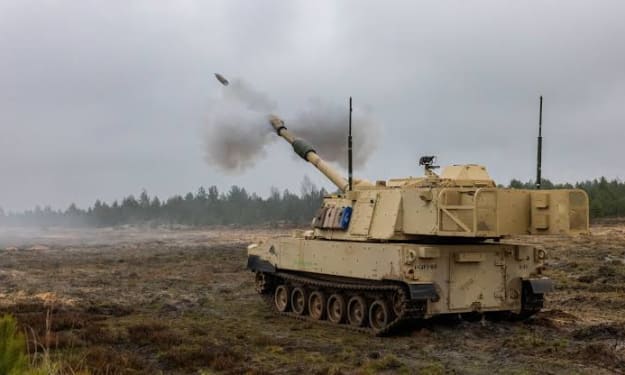
Army Seeks to Award Self-Propelled Howitzer Contract by July, Prototype Request Coming Soon. AI-Generated.
The U.S. Army is moving closer to awarding a long-anticipated contract for a new self-propelled howitzer, aiming to modernize its artillery forces and improve battlefield mobility and firepower. Defense officials say a formal request for prototype systems will be released in the coming weeks, with the service targeting July as the deadline to select a winning contractor. The program is part of the Army’s broader modernization strategy to replace aging artillery platforms and ensure its forces can operate effectively in high-intensity conflicts. Lessons drawn from recent wars, particularly in Ukraine, have underscored the critical role of long-range artillery in shaping the outcome of ground operations. A Push for Modern Artillery Self-propelled howitzers combine heavy firepower with mobility, allowing artillery units to reposition quickly after firing. This “shoot-and-scoot” capability is increasingly important as modern battlefields are saturated with drones, sensors, and counter-battery radar systems that can rapidly locate and target firing positions. Army officials have emphasized that the next-generation howitzer must be faster, more survivable, and capable of integrating with advanced targeting networks. The platform is expected to feature improved automation, enhanced protection for crews, and compatibility with future precision-guided munitions. “This is about ensuring our artillery remains relevant in a contested environment,” said one Army acquisition officer. “We need systems that can move quickly, communicate seamlessly, and deliver accurate fire when it matters most.” Prototype Phase and Industry Competition The upcoming prototype request will invite defense contractors to submit candidate designs that meet the Army’s technical requirements. These prototypes will then undergo testing and evaluation before a final contract is awarded. Major defense firms are expected to compete for the project, including companies with experience producing tracked and wheeled artillery systems. Some may adapt existing platforms, while others could propose entirely new designs tailored to the Army’s needs. Industry analysts say the competition is likely to focus on reliability, ease of maintenance, and the ability to integrate with existing Army vehicles and logistics networks. Cost will also be a key factor, as the Army faces budget constraints while trying to modernize multiple weapon systems simultaneously. Lessons from Global Conflicts Recent conflicts have highlighted both the strengths and vulnerabilities of artillery systems. In Ukraine, self-propelled howitzers have proven vital for striking enemy positions while avoiding counterattacks. However, they have also been targeted by drones and precision weapons, forcing militaries to rethink protection and camouflage strategies. The Army’s new howitzer program reflects these lessons. Officials want a system that can operate in environments where electronic warfare, cyber threats, and satellite surveillance are constant concerns. “Artillery is no longer just about firing shells,” said a defense expert at a Washington-based think tank. “It’s about being part of a networked battlefield where speed and data matter as much as range and firepower.” Technology and Capabilities The new self-propelled howitzer is expected to include digital fire-control systems, automated loading mechanisms, and improved communications equipment. These features would allow crews to receive targeting data in real time and reduce the time required to prepare and fire rounds. Automation could also reduce crew size and physical strain, improving operational efficiency. Some proposed designs may incorporate hybrid or more fuel-efficient engines, addressing logistical challenges associated with long deployments. Additionally, the system is likely to be compatible with extended-range artillery shells and precision-guided munitions, enabling strikes at greater distances with higher accuracy. This aligns with the Army’s push toward long-range precision fires as a central element of its combat doctrine. Budget and Timeline Challenges While the Army aims to award the contract by July, officials acknowledge that timelines could shift depending on testing results and funding availability. Defense procurement programs often face delays due to technical issues, regulatory reviews, or changes in congressional priorities. The cost of the program has not been publicly disclosed, but estimates suggest it could reach several billion dollars over the life of the contract, including production, training, and maintenance. Members of Congress have expressed interest in the program, viewing it as essential to maintaining U.S. military readiness. However, some lawmakers have also called for careful oversight to prevent cost overruns and ensure that taxpayer money is spent efficiently. Strategic Importance The new howitzer is intended to support Army units deployed in Europe and the Indo-Pacific, where potential conflicts would require rapid movement and sustained firepower. In these regions, terrain and infrastructure vary widely, making versatility a crucial design requirement. Military planners believe the platform will strengthen deterrence by demonstrating that U.S. forces can deliver precise and powerful artillery support in any environment. “This system sends a message that the Army is serious about adapting to modern warfare,” said a retired artillery commander. “It’s not just about replacing old equipment—it’s about redefining how artillery operates in the future.” Looking Ahead The prototype request marks a significant step forward in the Army’s effort to modernize its artillery forces. Over the next year, competing designs will be evaluated for performance, survivability, and integration with existing command systems. If the program stays on schedule, production could begin shortly after the contract award, with the first operational units receiving the new howitzers within the next few years. Conclusion As the Army prepares to release its prototype request and move toward a July contract award, the self-propelled howitzer program represents a critical investment in future combat capability. By combining mobility, advanced technology, and increased firepower, the new system aims to ensure that U.S. artillery remains a decisive force on tomorrow’s battlefield. In an era of rapidly evolving threats, the push for a modern self-propelled howitzer reflects a broader effort to adapt military tools to the realities of twenty-first-century warfare—where speed, precision, and survivability are paramount.
By Fiaz Ahmed 17 days ago in The Swamp
Two Arrested Over Attempted Sabotage of German Naval Vessels. AI-Generated.
German authorities have arrested two individuals suspected of attempting to sabotage naval vessels in what officials describe as a serious threat to national security and maritime defense. The arrests come amid heightened concerns across Europe about the protection of critical military and infrastructure assets following a series of suspicious incidents targeting ports, energy facilities, and transportation networks. According to Germany’s federal prosecutor’s office, the suspects were detained after an investigation uncovered plans to damage or interfere with operational readiness at a naval base in northern Germany. While officials have not publicly disclosed the full identities of the individuals, they confirmed that both are being questioned on suspicion of acting on behalf of foreign interests. A Growing Security Concern The case is being handled jointly by Germany’s domestic intelligence service (BfV), federal police, and military counterintelligence. Investigators believe the suspects intended to disrupt key naval operations by targeting equipment and logistical systems used to maintain German warships. Prosecutors stated that the attempted sabotage could have significantly impacted Germany’s ability to meet its NATO obligations, particularly at a time when the alliance has increased its naval presence in the Baltic and North Seas due to tensions with Russia following the war in Ukraine. “This incident shows how vulnerable critical military infrastructure can be,” a senior German security official said. “We are facing new and complex threats that go beyond traditional espionage.” Details of the Alleged Plot While authorities have not revealed technical specifics, sources familiar with the investigation say the suspects attempted to access restricted areas of a naval dockyard and tamper with machinery essential for ship maintenance. The plot was reportedly uncovered after intelligence agencies intercepted communications suggesting coordination with individuals outside Germany. No ships were damaged and no injuries were reported. Officials emphasized that the attempt was stopped before it could pose an immediate danger to personnel or vessels. The suspects are believed to have acted deliberately and with planning, rather than as part of a random or spontaneous act. German media reports suggest the investigation had been ongoing for several weeks before the arrests were made. European Context of Sabotage Fears The arrests come amid a wider European debate over the security of military and industrial infrastructure. Since the outbreak of war in Ukraine, several countries have reported incidents involving suspected sabotage or espionage targeting railways, energy pipelines, data cables, and military facilities. In recent months, NATO officials have warned of a rise in “hybrid warfare,” where hostile actors use covert tactics such as cyberattacks, disinformation campaigns, and physical sabotage to weaken adversaries without direct military confrontation. Germany, as Europe’s largest economy and a major supplier of military aid to Ukraine, has become a focal point for security services seeking to prevent such actions. Defense Minister Boris Pistorius has repeatedly stressed the need to protect armed forces installations from both cyber and physical threats. “We must assume that hostile actors will try to exploit vulnerabilities wherever they find them,” he said in a recent speech. Legal and Political Implications The suspects now face possible charges related to sabotage, espionage, and endangering national security. Under German law, such offenses carry severe penalties, including lengthy prison sentences. Lawmakers across party lines have called for a review of security protocols at naval bases and other sensitive facilities. Members of the Bundestag’s defense committee said the case demonstrates the need for tighter access controls and improved coordination between civilian police and military intelligence services. “This is not just about two individuals,” said one committee member. “It is about ensuring that Germany’s armed forces are protected against modern forms of attack.” The case may also have diplomatic consequences if investigators confirm that the suspects were acting on behalf of a foreign government or intelligence agency. German officials have not yet named any country involved, saying the inquiry is still ongoing. Public Reaction and Media Attention The arrests have drawn significant public attention, particularly in coastal regions where naval bases are major employers and symbols of national defense. Residents expressed concern that their communities could become targets in geopolitical conflicts. Security experts appearing on German television warned that such incidents should not be viewed as isolated events but as part of a broader pattern of unconventional threats facing Europe. At the same time, authorities have urged the public to remain calm, emphasizing that the situation was handled quickly and professionally. “There was no immediate danger to civilians,” police said in a statement. “Our systems worked as intended.” Strengthening Defenses In response to the incident, the German Navy is reportedly reviewing security procedures at its shipyards and ports. Measures under consideration include increased surveillance, more rigorous background checks for contractors, and expanded cooperation with intelligence agencies. NATO officials welcomed Germany’s swift action and reiterated the alliance’s commitment to protecting shared infrastructure. “This is a reminder that security today is multidimensional,” said a NATO spokesperson. “Defending against sabotage is just as important as preparing for conventional military threats.” Conclusion The arrest of two suspects over the attempted sabotage of German naval vessels highlights the evolving nature of modern security challenges. As Europe navigates an era of geopolitical tension, the line between war and covert action has become increasingly blurred. For Germany, the case serves as a warning that protecting military assets now requires constant vigilance against unseen threats. While the immediate danger has passed, the investigation continues, and authorities remain focused on preventing similar attempts in the future. The outcome of this case is likely to shape future policies on military security, intelligence cooperation, and the defense of critical infrastructure—not only in Germany but across Europe as a whole.
By Fiaz Ahmed 17 days ago in The Swamp
Palestine Action Group Plans March Against Isaac Herzog’s Visit Despite Protest Restrictions. AI-Generated.
A pro-Palestinian activist organization has announced plans to stage a large public march opposing the upcoming visit of Israeli President Isaac Herzog, defying new protest restrictions imposed by local authorities. The decision has sparked a heated debate over civil liberties, public safety, and the right to demonstrate during high-profile diplomatic events. The Palestine Action Group said the march is intended to highlight opposition to Israeli policies toward Palestinians and to draw international attention to the ongoing conflict in Gaza and the West Bank. Organizers argue that Herzog’s visit represents political support for actions they view as violations of human rights, and they believe silence would be a form of complicity. Authorities, however, have imposed strict limits on protests near official venues, citing security concerns and the need to maintain public order during a state visit. The standoff has raised questions about how democratic societies balance free expression with national security obligations. Protest Restrictions and Legal Challenges Police and municipal officials introduced restrictions on demonstrations in areas surrounding government buildings and major transport routes where the Israeli president is expected to appear. These measures include designated protest zones, limits on crowd size, and bans on marches close to sensitive locations. Officials say the rules are temporary and necessary. According to a police spokesperson, the presence of a foreign head of state significantly increases security risks, and unrestricted marches could strain emergency services and disrupt daily life. The spokesperson emphasized that protesters still have the right to assemble but must do so within approved guidelines. The Palestine Action Group disputes this position. In a public statement, organizers accused authorities of using security as a pretext to suppress political dissent. They claim the restrictions effectively neutralize the impact of the demonstration by moving it far from public view. Legal observers note that similar disputes have arisen during visits by controversial leaders in the past. Courts often side with police when credible security threats exist, but civil liberties groups argue that such rulings gradually narrow the space for meaningful protest. Motivations Behind the March The Palestine Action Group has a history of organizing demonstrations and direct action campaigns related to the Israeli-Palestinian conflict. Members say Herzog’s visit symbolizes international acceptance of Israeli policies they believe are unjust and violent. “Our goal is to show that many people do not welcome this visit and do not support what is happening in Gaza,” one organizer said. “Marching is a peaceful way to express that message.” The group has urged supporters to remain nonviolent and disciplined, stressing that the protest is intended to be lawful and focused on raising awareness rather than confrontation. Social media posts promoting the march call for banners, chants, and speeches emphasizing human rights and international law. Government and Diplomatic Context President Herzog’s visit is part of a broader diplomatic effort to strengthen ties with allies amid growing international pressure over the humanitarian situation in Gaza. Meetings are expected with senior government officials, and discussions will likely focus on security cooperation, trade, and regional stability. Government leaders have defended hosting Herzog, arguing that diplomatic engagement is essential even during periods of intense conflict. They say cutting off dialogue would weaken influence over Israeli decision-making and harm long-term prospects for peace. At the same time, officials acknowledge the depth of public anger over images emerging from the conflict. Polls suggest significant segments of the population are deeply concerned about civilian casualties and the lack of progress toward a political solution. Public Reaction and Divided Opinion Public reaction to the planned march has been mixed. Supporters see it as a necessary expression of solidarity with Palestinians and a reminder that foreign policy decisions should be subject to scrutiny. They argue that protest is a cornerstone of democracy and should not be sidelined because of diplomatic sensitivities. Critics counter that large demonstrations during a state visit risk escalating tensions and could endanger both participants and the wider public. Some have accused the Palestine Action Group of deliberately provoking authorities to gain media attention. Business groups and transport unions have also voiced concerns about disruption to city life, warning that blocked roads and large crowds could affect workers and emergency services. Security Concerns and Policing Strategy Police have prepared a significant security operation for the visit, including additional officers, surveillance measures, and coordination with intelligence agencies. Authorities say they are determined to prevent clashes between protesters and counter-protesters. In recent years, protests linked to the Middle East conflict have occasionally turned volatile, particularly when emotions run high. Officials insist that clear boundaries are necessary to prevent disorder and protect both demonstrators and visiting dignitaries. Organizers, however, say heavy policing can itself provoke tension. They have urged participants to remain calm and follow instructions, while also vowing to challenge what they view as excessive restrictions through legal channels. Broader Implications The confrontation over this march reflects a wider struggle over how governments manage dissent in an era of global conflict and heightened security fears. Activist groups worry that once protest limits are normalized for one issue, they can easily be expanded to others. Civil rights advocates argue that the right to protest is most important precisely when opinions are unpopular or controversial. They warn that moving demonstrations out of sight weakens democratic accountability. Conclusion As President Isaac Herzog’s visit approaches, the planned march by the Palestine Action Group has become a symbol of the tension between diplomatic protocol and public protest. Authorities emphasize safety and order, while activists insist on their right to be heard. Whether the march proceeds as planned or is curtailed by legal action, the episode highlights how deeply the Israeli-Palestinian conflict resonates far beyond the region itself. It also underscores the fragile balance between security and freedom in democratic societies facing politically charged international events.
By Fiaz Ahmed 17 days ago in The Swamp
Christianity Will Remain Central to Religious Education – Givan. AI-Generated.
Northern Ireland’s Education Minister Paul Givan has reaffirmed that Christianity will continue to play a central role in religious education (RE) in schools, stating that the subject must reflect the region’s cultural heritage while also promoting understanding and respect for other faiths. His remarks come amid renewed debate over whether the curriculum should be modernized to better reflect an increasingly diverse and secular society. Speaking at a recent education forum, Givan defended the existing framework for religious education, which places Christianity at the core of teaching. He argued that the Christian tradition has shaped Northern Ireland’s history, values, and educational institutions and therefore remains essential to pupils’ moral and cultural development. “Christianity is deeply embedded in our school system and our wider society,” Givan said. “It will remain central to religious education, while also ensuring that students learn about other world religions and different belief systems.” A Debate Over Modernization Calls to reform religious education have grown louder in recent years. Critics say the current curriculum is outdated and does not adequately reflect the beliefs of students from non-Christian backgrounds or those who identify as non-religious. Campaigners for reform argue that RE should move toward a broader, more inclusive model that focuses on comparative religion and ethics rather than prioritizing one faith. Some education experts point to demographic changes in Northern Ireland, where immigration and social shifts have created more religious diversity in classrooms. According to recent surveys, the number of people identifying with no religion has steadily increased, especially among younger generations. Despite these changes, Givan insists that Christianity’s central role does not prevent inclusivity. He said the curriculum already includes learning about Judaism, Islam, Hinduism, and other belief systems, alongside lessons on morality and citizenship. “The purpose of religious education is not indoctrination,” he said. “It is about helping young people understand faith, culture, and values in a way that supports mutual respect.” Support From Church Leaders Church representatives welcomed the minister’s comments, saying they provide reassurance that faith-based education will not be sidelined. Leaders from major Christian denominations in Northern Ireland emphasized the role schools play in teaching compassion, responsibility, and service. A spokesperson for one church organization said Christianity provides a strong moral framework that continues to be relevant. “Religious education grounded in Christian teaching encourages kindness, forgiveness, and care for others,” the spokesperson said. “These are values that benefit society as a whole, regardless of individual belief.” Faith-based schools, which make up a significant portion of Northern Ireland’s education system, have long argued that removing Christianity from the center of RE would weaken their identity and mission. Criticism From Secular and Humanist Groups Not everyone agrees with Givan’s stance. Humanist and secular organizations say that giving Christianity a privileged position sends the wrong message in a pluralistic society. They argue that public education should be neutral and reflect a wide range of worldviews equally. A representative from a humanist association said, “Religious education should prepare children for life in a diverse world. That means teaching about many beliefs, including non-religious ones, without placing one above the rest.” Some parents have also expressed concern that their children may feel excluded or pressured if they do not come from Christian families. They call for a curriculum that emphasizes critical thinking and ethical discussion rather than religious doctrine. Balancing Tradition and Diversity The controversy highlights the challenge facing education policymakers: how to balance tradition with social change. Northern Ireland’s education system has historically been shaped by religious divisions, and religious education has often reflected that history. Givan acknowledged the sensitivity of the issue, saying that reforms must be approached carefully. He stressed that any changes should involve consultation with educators, parents, and faith communities. “Religious education should unite rather than divide,” he said. “We want students to appreciate their own heritage while also understanding the beliefs of others.” The Department of Education has indicated that it is reviewing aspects of the RE curriculum to ensure it remains relevant and effective. However, officials have made clear that Christianity will continue to be the foundation of the subject. Wider Implications The debate over religious education goes beyond the classroom. It touches on questions about identity, history, and the role of religion in public life. For some, maintaining Christianity at the heart of RE is a way of preserving cultural continuity. For others, it represents resistance to social change. Education analysts note that similar debates are taking place across the UK and Europe, where governments are grappling with how to teach religion in increasingly multicultural societies. Some countries have moved toward teaching religion as an academic subject, while others retain faith-based models. Student Perspectives Students themselves hold mixed views. Some appreciate learning about Christianity as part of their heritage, while others want more time spent on different religions and ethical issues. One secondary school student said, “I think it’s important to know about Christianity because it’s part of our history, but we should also learn more about other beliefs so we understand each other better.” Teachers report that classrooms are becoming more diverse, making inclusive teaching methods more important than ever. Conclusion Paul Givan’s statement that Christianity will remain central to religious education underscores the ongoing tension between tradition and modern diversity in Northern Ireland’s schools. While supporters see this as a necessary link to cultural heritage and moral values, critics argue for a more balanced and inclusive approach. As the education system continues to evolve, the challenge will be to ensure that religious education reflects both the region’s history and its changing society. Whether future reforms will satisfy all sides remains uncertain, but the debate itself highlights the importance of how faith, identity, and education intersect in shaping the next generation.
By Fiaz Ahmed 17 days ago in Journal
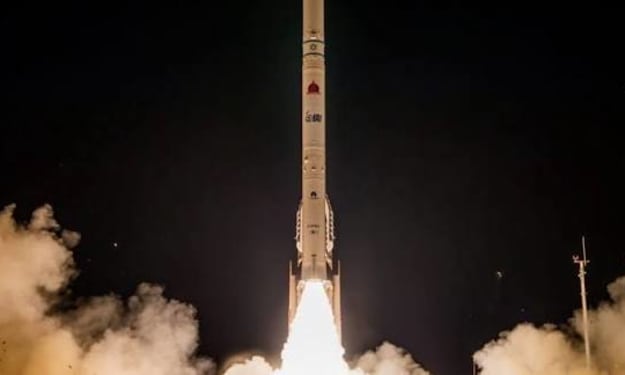
From Gaza to Iran, Israel Readies Space ‘Surprises’ for Next Conflicts – Exclusive. AI-Generated.
Israel is quietly developing cutting-edge space-based capabilities designed to give its armed forces an edge in future conflicts, from potential clashes in Gaza to a possible confrontation with Iran, The Jerusalem Post has reported exclusively. According to Avi Berger, head of the Space Office at Israel’s Defense Ministry’s Directorate of Defense Research & Development (MAFAT), the lessons learned from recent wars have driven Tel Aviv to accelerate innovation in orbit, emphasizing that tomorrow’s conflicts will be shaped as much by what happens in space as on land or at sea. The Jerusalem Post A New Strategic Frontier At Israel’s Space Week conference, Berger underscored that Israel must be prepared to deploy “new surprises” in any future high-stakes confrontation. “We knew right away that we had to build and create new surprises for the next war,” he said, adding that the technology deployed in previous conflicts, including the 12-day confrontation with Iran last year, won’t be sufficient for future needs. The Jerusalem Post The primary driver behind Israel’s push into space is operational necessity. Space assets now form the backbone of the Israel Defense Forces’ (IDF) intelligence-gathering architecture, collecting vast quantities of real-time data that can be rapidly analyzed and acted upon. “A single constellation can cover everything from Gaza to Iran,” Berger said, highlighting how satellites enable round-the-clock monitoring across multiple potential flashpoints. The Jerusalem Post This evolution reflects a broader view in Israel’s defense establishment that space is no longer a purely academic or scientific domain, but a “decisive component” of modern military strategy—especially when confronting adversaries who are dispersed across vast geographic expanses or deeply embedded within hostile territory. The Jerusalem Post Eyes in the Sky: Reconnaissance and Intelligence Israel’s space program has long included a series of indigenous reconnaissance satellites, such as the Ofek family, which have provided optical and radar imagery for decades. These satellites operate in low Earth orbit and are capable of producing high-resolution imagery crucial for military planning. Wikipedia For example, during the Israel-Iran conflict, Israeli satellites reportedly maintained constant surveillance over Iranian territory, delivering detailed imaging that allowed military planners to track ballistic missile activity and assess battle damage in near real time. This capability marked a shift from intermittent snapshot intelligence to continuous tactical oversight—a critical advantage in fast-moving conflict environments. The Jerusalem Post In addition to traditional electro-optical sensors, the incorporation of synthetic-aperture radar (SAR) technology—such as that aboard earlier TecSAR satellites—enables observation through cloud cover and at night, further enhancing Israel’s ability to monitor adversaries regardless of conditions. Wikipedia AI and “Steroid” Data Processing Berger and other Israeli officials have emphasized that advanced computing and artificial intelligence (AI) are integral to extracting operational value from satellite data. With gigabytes of imagery streaming from orbit daily, AI systems help retask satellites in real time, identify emerging threats, and deliver actionable intelligence with unprecedented speed. The Jerusalem Post This “AI on steroids,” as Berger described it, allows commanders to make informed decisions on strike options, battlefield movements, and asset allocation without delays that could cost lives or strategic advantage. Preparing for the Next Big Conflict While Israel’s near-term focus remains on managing ongoing hostilities and tensions with militant groups in Gaza and Hezbollah on its northern border, Tehran looms as the most significant long-term challenge. Iran’s nuclear and ballistic missile programs, allied proxy networks across the Middle East, and growing missile capabilities pose complex strategic dilemmas. The Jerusalem Post Space-based systems designed to provide early warning, target identification, and battle damage assessment could be decisive in a conflict with Iran, where vast distances and hardened subterranean facilities complicate traditional intelligence gathering. Israeli officials have suggested that future space capabilities would allow rapid identification of mobile missile launchers or underground facilities, reducing uncertainty during critical phases of conflict. A Broader Shift in Warfare Israel’s emphasis on space mirrors global trends in military strategy. As competition intensifies among major powers such as the United States, China, and Russia, the space domain has shifted from peaceful exploration to strategic competition. Nations now see orbital assets not only as tools for observation but also as platforms for communication, coordination, and potential defensive countermeasures. The Jerusalem Post The international security landscape in 2025 and 2026 shows how intertwined space security has become with broader geopolitical tensions. A Chatham House analysis noted that space security is part of a deteriorating global order, where space capabilities are as critical as nuclear policy and hybrid warfare in shaping outcomes. Chatham House Commercial and Dual-Use Expansion Beyond strictly military applications, Israel’s space industry is also expanding into commercial and dual-use roles. Innovation in satellite services, space-as-a-service platforms, and partnerships with international space agencies—including NASA—suggest that Israel sees its space capabilities as both a security necessity and an economic opportunity. The Jerusalem Post Joint ventures, such as cooperation agreements with NASA and participation in the Artemis lunar program, signal Israel’s intent to remain at the forefront of space technology and to leverage civilian innovation for strategic ends. The Jerusalem Post Challenges and Risks As space becomes more accessible and militarily significant, Israel faces risks familiar to other space actors. Adversarial satellites, anti-satellite technologies, and the potential for debris from intentional or accidental collisions are all part of the emerging risk landscape. Berger warned that major powers like Russia and China are active in space and could pose threats should they choose to weaponize space capabilities more aggressively. Israel, therefore, sees continued investment and innovation as essential to maintaining its strategic edge and freedom of action in any future conflict. The Jerusalem Post Conclusion From Gaza to Iran, Israel’s preparations in space reflect a fundamental shift in how modern wars are planned and fought. What once was a domain of scientific exploration has become central to military strategy, and Israel is positioning itself to innovate faster and operate smarter in orbit. As conflicts grow more complex and threats expand beyond terrestrial borders, the “surprises” that Israel seeks to develop in space may define the next generation of conflict—not just in the Middle East, but across the globe.
By Fiaz Ahmed 17 days ago in The Swamp
For a New Winter Coat, New York’s Mayor Consulted His Wife. AI-Generated.
When New York City Mayor Eric Adams stepped out this winter wearing a sharply tailored new coat, it was more than just a fashion statement—it was a carefully considered decision shaped by personal advice and public responsibility. Adams recently revealed that he consulted his wife before selecting the coat he would wear through one of the city’s coldest and most politically demanding seasons, highlighting the unusual intersection of personal life, image, and leadership in public office. The mayor’s comment, made during a lighthearted exchange with reporters, quickly drew attention. While seemingly trivial, it offered insight into how public figures increasingly recognize the importance of appearance as part of their communication strategy. For Adams, the coat was not just about warmth; it was about representing New York with confidence, professionalism, and approachability. Image and Leadership in a Media Age In today’s hyper-visible political environment, every detail of a leader’s appearance can become a talking point. Clothing choices are often interpreted as symbols of values, priorities, and connection to ordinary citizens. Adams, a former police captain known for his polished style, has long paid attention to how he presents himself in public. By consulting his wife, he acknowledged a trusted personal perspective rather than relying solely on staff or stylists. “She knows me better than anyone,” Adams reportedly said, adding that he wanted a coat that reflected both practicality and dignity. The result was a classic, dark-colored winter coat suitable for official events, street appearances, and press briefings alike. Political analysts say this reflects a growing awareness among leaders that authenticity matters. Rather than projecting an image crafted only by consultants, Adams appeared to show that family input and personal taste still shape his decisions. A Symbol in a Difficult Winter The new coat also arrived at a time when New York faces serious challenges. Rising housing costs, concerns about public safety, and debates over migrant housing have kept the mayor under intense scrutiny. Winter, traditionally the most demanding season for city services, places additional pressure on leadership. In this context, the coat became symbolic of resilience and steadiness. The mayor has been seen wearing it while visiting shelters, inspecting transit stations, and speaking at outdoor events in freezing temperatures. For many New Yorkers, it signaled that he was physically present and engaged with the city’s struggles. Some supporters praised the decision as relatable. “It’s normal to ask your spouse for advice on clothes,” said one community organizer. “It makes him seem more human.” Public Reaction and Humor Social media quickly reacted to the story, with some users joking that the mayor’s wife deserved a role as New York’s unofficial fashion adviser. Others noted that such moments provide brief relief from the city’s more serious political debates. Not all reactions were positive. Critics argued that attention to clothing distracts from urgent policy matters such as crime, homelessness, and education. They questioned why a mayor’s wardrobe should make headlines at all. Still, communication experts say small personal stories often resonate more deeply than formal speeches. “People connect to leaders through everyday details,” said one political branding consultant. “It creates familiarity and softens authority.” Fashion and Politics: A Long Tradition The relationship between clothing and political image is not new. From Abraham Lincoln’s tall hat to Barack Obama’s rolled-up sleeves, fashion has long been used to send messages of strength, humility, or modernity. In New York, a city known for its style and diversity, the mayor’s appearance carries extra symbolic weight. Adams has previously drawn attention for wearing custom suits and promoting Black-owned designers. His winter coat choice continues that trend of intentional presentation. Though he did not publicly disclose the brand, aides suggested that durability and local craftsmanship were factors in the selection. A Private Decision in a Public Life What makes this episode noteworthy is its simplicity. Rather than a carefully choreographed campaign move, it was a domestic conversation brought into the public eye. It showed that behind the authority of City Hall is a man who still values his partner’s opinion on something as ordinary as a coat. For many observers, this moment offered a reminder that leadership does not erase personal relationships. The mayor’s reliance on his wife’s judgment reflects trust and partnership—qualities that voters often appreciate but rarely see so clearly. Broader Implications While the story itself may appear lighthearted, it underscores a deeper reality of modern politics: image and message are inseparable. Leaders are judged not only by what they do but by how they appear while doing it. A winter coat can become a visual shorthand for preparedness, seriousness, and connection to everyday life. In an era where political trust is fragile, even small gestures of normalcy can matter. Consulting a spouse about clothing is something millions of people do each day. Seeing a mayor do the same can bridge the emotional distance between government and the governed. Conclusion For New York’s mayor, choosing a winter coat was not just a practical necessity but a personal decision shaped by family advice and public role. By turning to his wife, Eric Adams blended private life with political image in a way that resonated widely. Though the city’s challenges remain complex and urgent, this small story reminds the public that leadership is not only about policies and power but also about human moments that reveal character. In the cold streets of New York, one coat—and one conversation—became a symbol of how personal choices still echo in public life.
By Fiaz Ahmed 17 days ago in The Swamp
Musk’s SpaceX and xAI Merge to Make World’s Most Valuable Private Company. AI-Generated.
Elon Musk has announced a landmark merger between two of his most ambitious ventures—SpaceX and xAI—creating what is now considered the world’s most valuable privately held company. The deal brings together SpaceX’s dominance in aerospace and satellite technology with xAI’s rapidly growing artificial intelligence platform, signaling a bold step toward Musk’s long-stated vision of uniting advanced AI with space exploration. The combined entity is valued at an estimated $200 billion or more, based on recent private funding rounds and market comparisons. While both companies will continue to operate under their existing brands, the merger establishes a unified corporate structure aimed at accelerating innovation in artificial intelligence, satellite communications, and deep-space missions. A Strategic Union of Technology Giants SpaceX, founded in 2002, has transformed the global space industry through reusable rockets, commercial satellite launches, and NASA partnerships. Its Starlink satellite constellation already serves millions of users worldwide, providing internet access to remote and underserved regions. xAI, launched in 2023, was created to compete with major AI developers such as OpenAI, Google DeepMind, and Anthropic. Its flagship product, the Grok AI system, has been integrated into Musk’s social media platform X (formerly Twitter), where it provides conversational assistance and data analysis. By merging these two companies, Musk is combining space infrastructure with artificial intelligence capabilities—two technologies that are increasingly intertwined. Industry analysts say the move positions the new company at the intersection of aerospace, communications, and machine intelligence. “This is not just a financial merger,” said one technology analyst. “It’s a strategic convergence of data, computing power, and physical systems in orbit.” Why the Merger Matters One of the primary motivations behind the merger is efficiency. SpaceX generates enormous volumes of data from satellite operations, rocket telemetry, and space missions. xAI’s systems can process and analyze this information in real time, improving navigation, predictive maintenance, and mission planning. Starlink, in particular, stands to benefit. AI-driven optimization could make satellite networks more resilient to outages, cyber threats, and congestion as demand for global internet service continues to grow. Autonomous decision-making systems may eventually allow satellites to adjust their positions and communications routes without human intervention. The merger also strengthens Musk’s broader technological ecosystem, which already includes Tesla, Neuralink, and X. Together, these companies form an interconnected web of transportation, communications, and intelligence platforms. Financial and Market Impact The newly merged company immediately becomes the most valuable private enterprise in the world, surpassing companies like ByteDance and Stripe. Investors see enormous potential in a business that controls launch services, satellite networks, and proprietary AI systems. Private equity firms and venture capital groups have reportedly shown strong interest in participating in future funding rounds. Analysts believe the company could eventually pursue a public offering, though Musk has not indicated any immediate plans to do so. However, the scale of the merger also raises questions about market concentration and corporate influence. Combining aerospace and AI under one corporate umbrella creates a powerful entity with access to sensitive data and strategic technologies. “This is a company with both digital intelligence and physical reach in space,” said a former U.S. regulator. “That brings both opportunity and responsibility.” Regulatory and Political Scrutiny The merger is expected to draw attention from regulators in the United States and abroad. Governments may examine whether the deal gives Musk too much control over critical infrastructure such as satellite communications and AI platforms. SpaceX already plays a major role in U.S. national security through military satellite launches and classified missions. xAI’s advanced machine-learning tools could further enhance SpaceX’s defense-related capabilities, which may trigger national security reviews. In Europe and Asia, regulators are also likely to study the implications for competition and data privacy. Some policymakers have expressed concern about private companies controlling systems that influence global communications and information flows. Vision for the Future Musk has long argued that artificial intelligence and space exploration must develop together. He believes that AI will be essential for navigating Mars missions, managing large-scale space colonies, and operating autonomous spacecraft. In a brief statement, Musk said the merger would “accelerate humanity’s progress toward becoming a multiplanetary civilization while ensuring AI is developed with a deep understanding of reality.” The company’s roadmap reportedly includes: AI-assisted rocket design and testing Autonomous satellite operations Enhanced space-based computing systems Advanced robotics for lunar and Mars missions These projects reflect Musk’s belief that future exploration will depend on machines capable of making complex decisions without constant human oversight. Risks and Challenges Despite its promise, the merger carries risks. Integrating two highly complex organizations could create operational challenges and internal competition for resources. AI development is also under intense ethical and legal scrutiny, especially as governments debate how to regulate powerful algorithms. There are also financial risks. Space exploration remains expensive, and AI research requires massive investment in computing power and energy infrastructure. Critics warn that concentrating so much technological power in one company could limit transparency and accountability. Others question whether Musk’s multiple leadership roles across several companies might stretch management capacity too thin. Conclusion The merger of SpaceX and xAI marks a turning point in the evolution of private technology companies. By combining rockets, satellites, and artificial intelligence, Elon Musk has created a corporate giant that operates across Earth and beyond. Whether this union becomes a catalyst for unprecedented innovation or a source of regulatory conflict will depend on how the company balances ambition with responsibility. What is clear is that the world’s most valuable private company is no longer just building rockets—it is building the intelligence to guide humanity’s next frontier.
By Fiaz Ahmed 17 days ago in Longevity
Seven Books to Read When You Have No Time to Read. AI-Generated.
Modern life rarely leaves room for long, uninterrupted reading sessions. Between work, family, notifications, and daily responsibilities, finding hours to sit with a thick novel can feel impossible. Yet reading remains one of the most rewarding ways to relax, learn, and escape the noise of everyday life. The good news is that not all books demand weeks of commitment. Some are short, fast-paced, and powerful enough to be read in brief moments—during commutes, lunch breaks, or just before sleep. If your schedule is packed but your love for books remains strong, here are seven perfect reads for when time is limited but curiosity is not. 1. “The Old Man and the Sea” by Ernest Hemingway This classic novella is proof that a small book can carry enormous emotional weight. At just over 100 pages, Hemingway’s story of an aging fisherman battling a giant marlin is simple yet deeply symbolic. The language is clear and direct, making it easy to read in short sessions. Despite its brevity, the book explores themes of endurance, pride, and humanity’s relationship with nature. It is a reminder that you do not need a long novel to experience literary greatness. 2. “Animal Farm” by George Orwell Few books manage to be both entertaining and politically sharp in such a compact form. Orwell’s allegory of farm animals overthrowing their human owner is short, gripping, and unforgettable. The story moves quickly, with simple language and strong symbolism that makes it ideal for busy readers. You can read a chapter in minutes and still feel like you’ve engaged with something meaningful and thought-provoking. 3. “We Should All Be Feminists” by Chimamanda Ngozi Adichie Adapted from a popular TED Talk, this slim book packs a powerful message into fewer than 70 pages. Adichie discusses gender, culture, and equality in a personal and accessible way. It is perfect for readers who want insight without long explanations. The conversational tone makes it feel less like homework and more like a thoughtful conversation with a friend. 4. “Of Mice and Men” by John Steinbeck Steinbeck’s short novel about friendship and dreams during the Great Depression is emotionally rich but easy to follow. The characters of George and Lennie stay with readers long after the final page. Its short chapters and clear narrative make it ideal for those who can only read in small bursts. Despite its simplicity, the book deals with loneliness, hope, and tragedy in a powerful way. 5. “The Little Prince” by Antoine de Saint-Exupéry Often seen as a children’s book, The Little Prince is deeply philosophical and touching for adults as well. With short chapters and gentle illustrations, it is easy to read in one or two sittings. The story reflects on love, responsibility, and the loss of childhood wonder. It is a comforting book for readers who want something meaningful but not mentally exhausting. 6. “Letters to a Young Poet” by Rainer Maria Rilke This book is a collection of short letters rather than a continuous story, making it ideal for fragmented reading time. Each letter stands alone and offers wisdom about creativity, self-doubt, and personal growth. You can read one letter in five minutes and still feel enriched. It is perfect for readers who want inspiration without committing to a long narrative. 7. “The Alchemist” by Paulo Coelho Coelho’s famous novel is written in simple language and short chapters, making it highly accessible. The story follows a young shepherd on a journey to find treasure, but its true focus is on purpose, destiny, and listening to one’s heart. Many readers finish this book quickly because of its smooth pacing and motivational tone. It is ideal for moments when you want encouragement rather than complexity. Why Short Books Matter Short books are not lesser books. In many cases, they demand more discipline from the author and offer greater focus for the reader. When time is scarce, these works provide a sense of completion and accomplishment. Finishing a book—even a small one—can restore confidence and reignite the habit of reading. They also suit modern lifestyles. A few pages before bed or during a commute can slowly build into a meaningful reading experience. Instead of waiting for the perfect free weekend, short books allow reading to fit into everyday life. Making Reading Possible Again If you feel too busy to read, the solution is not to quit—it is to adjust expectations. Choose books that match your schedule. Keep one in your bag or on your phone. Replace five minutes of scrolling with five minutes of reading. Over time, these small moments add up. Conclusion Reading does not require endless free time. It requires intention and the right kind of books. These seven titles prove that powerful stories and ideas can be delivered in short, accessible forms. Whether you want inspiration, reflection, or escape, there is always room for a book—even in the busiest life. When time is limited, let these books remind you that literature does not have to be long to be lasting.
By Fiaz Ahmed 17 days ago in Education
Foreign Money, Foreign Flags: How Qatar and Turkey Are Gaining a Foothold in Jerusalem. AI-Generated.
Jerusalem has long been a focal point of religious, political, and strategic competition. In recent years, however, a quieter struggle has been unfolding alongside the city’s visible tensions: the growing influence of foreign powers through money, aid projects, and symbolic presence. Qatar and Turkey, two regional players with ambitions to expand their political and cultural reach, have steadily increased their footprint in East Jerusalem and surrounding areas, raising concern among Israeli officials and reshaping local dynamics. Unlike traditional military or diplomatic intervention, this influence is exercised through funding, charities, construction projects, and public messaging. The result is a form of soft power that blends humanitarian assistance with political signaling. Investment as Influence Qatar has emerged as one of the most significant foreign financial actors in Palestinian territories, including Jerusalem. Through government-backed charities and development funds, Doha has financed housing projects, schools, and social assistance programs aimed at Palestinians living in East Jerusalem. Supporters argue that Qatar’s involvement fills a humanitarian gap left by limited international funding and the city’s complex governance structure. However, critics say the funding also strengthens political networks sympathetic to Hamas and other Islamist movements, increasing Doha’s leverage in one of the most sensitive cities in the world. Turkey’s role has taken a different but complementary path. Ankara has focused heavily on religious and cultural institutions, restoring Ottoman-era buildings and supporting Islamic heritage sites near the Al-Aqsa Mosque compound. Turkish-funded organizations have opened cultural centers, sponsored events, and provided aid packages that carry Turkish flags and imagery. For Turkey’s leadership, this involvement is framed as protection of Islamic holy sites and historical responsibility dating back to the Ottoman Empire. For Israel, it represents a challenge to sovereignty and a visible assertion of foreign influence inside the city. Symbols and Street-Level Presence The growing presence of Qatari and Turkish symbols in East Jerusalem has not gone unnoticed. Posters, banners, and social media campaigns linked to foreign-funded groups increasingly appear during religious holidays and periods of unrest. These symbols carry political meaning. They suggest that foreign powers are not only donors but also stakeholders in Jerusalem’s future. For residents, such displays can offer a sense of external support and solidarity. For Israeli authorities, they raise concerns about radicalization and the politicization of humanitarian aid. Security officials warn that foreign funding can fuel tensions by empowering groups that oppose Israeli control of the city. While not all recipients are politically motivated, the blurred line between charity and ideology has become a major source of controversy. Strategic Motivations Qatar and Turkey’s engagement in Jerusalem reflects broader regional ambitions. Qatar seeks to maintain relevance in Palestinian politics and reinforce its role as a mediator in conflicts involving Gaza and Israel. Its financial involvement strengthens relationships with influential actors and keeps Doha positioned as an indispensable player in regional diplomacy. Turkey, under President Recep Tayyip Erdoğan, has adopted a more assertive posture on issues involving Muslim communities worldwide. Jerusalem holds enormous symbolic value for Turkish domestic politics, where defending Palestinian rights plays well with nationalist and religious audiences. Both countries also see an opportunity created by the relative decline of traditional Arab influence in Jerusalem. With Egypt, Jordan, and Saudi Arabia focused on their own domestic priorities, Qatar and Turkey have stepped into a space once dominated by older regional powers. Israeli Response and Legal Measures Israel has increasingly moved to restrict foreign-funded organizations operating in Jerusalem. Authorities have shut down some Turkish-backed groups, accusing them of acting as political fronts rather than neutral charities. New regulations aim to monitor foreign donations and limit activities deemed to undermine public order. These actions have triggered diplomatic friction. Turkey has accused Israel of suppressing humanitarian work, while Qatar has defended its assistance as purely civilian. The disputes highlight the difficulty of separating genuine aid from geopolitical competition. Israel’s government argues that sovereignty over Jerusalem requires strict control over who operates within the city, especially when funding comes from states with openly critical positions toward Israeli policies. Impact on Local Communities For Palestinians living in East Jerusalem, foreign funding can provide tangible benefits: food assistance, housing repairs, and access to education programs. Many residents view Qatari and Turkish involvement pragmatically, focusing on immediate needs rather than geopolitical implications. Yet reliance on external funding also deepens political divisions. Some community leaders fear that outside influence could weaken local institutions and make neighborhoods dependent on foreign agendas. Others worry that the city could become a battleground for rival regional powers using soft power instead of diplomacy. A New Layer of Conflict Jerusalem’s status has always been shaped by international interests, but the methods are evolving. Instead of embassies and armies, influence now flows through charities, restoration projects, and cultural campaigns. This quiet expansion of foreign presence complicates an already fragile situation. Analysts say this trend reflects a broader Middle Eastern shift toward non-military competition. Countries project power through aid, media, and religion, avoiding direct confrontation while still shaping outcomes on the ground. Conclusion The growing foothold of Qatar and Turkey in Jerusalem demonstrates how foreign money and symbols can reshape political realities without formal agreements or military action. What appears as humanitarian support often carries strategic weight in a city where every gesture is deeply political. As Israel tightens regulations and regional powers continue their outreach, Jerusalem remains a stage for international rivalry played out through schools, mosques, and social programs rather than troops and treaties. The struggle for influence in the holy city is no longer only about borders and sovereignty—it is also about who builds, who pays, and whose flag is seen on the streets.
By Fiaz Ahmed 17 days ago in The Swamp
China Unveils ‘Flying Aircraft Carrier’ in Major Leap for Aerial Warfare Technology. AI-Generated.
China has unveiled what it describes as a “flying aircraft carrier,” a large unmanned aerial vehicle capable of launching and controlling swarms of smaller drones in midair. The project represents a significant advance in military aviation and signals Beijing’s growing ambition to dominate next-generation warfare technologies. Defense analysts say the system could dramatically change how future air battles are fought by extending range, increasing surveillance capability, and overwhelming enemy defenses with coordinated drone attacks. The aircraft, officially presented by China’s state aerospace industry as a high-altitude long-endurance drone platform, is designed to act as a mobile command hub in the sky. Unlike traditional aircraft carriers that operate at sea, this airborne platform can deploy multiple drones directly from the air, allowing operations deep inside contested zones without relying on nearby bases. A New Concept in Air Power The “flying aircraft carrier” is reportedly capable of carrying dozens of small drones inside its fuselage and releasing them during flight. Once deployed, these drones can perform missions such as reconnaissance, electronic warfare, decoy operations, and potentially precision strikes. Chinese engineers say the system allows the mothership drone to remain at high altitude while its smaller drones spread out across a wide area. This reduces the risk to manned aircraft and complicates enemy air defenses, which must track and intercept multiple targets simultaneously. Military experts describe the design as part of a broader shift toward unmanned and networked combat systems. Rather than relying solely on fighter jets or bombers, future conflicts may involve swarms of autonomous or semi-autonomous drones working together under centralized command. Strategic Motivation China’s unveiling of the flying aircraft carrier comes amid intensifying competition with the United States and its allies over air and space superiority. Beijing has invested heavily in hypersonic weapons, stealth aircraft, and artificial intelligence-driven combat systems. The drone carrier concept fits into this strategy of developing asymmetric capabilities that can counter advanced Western militaries. Analysts believe the aircraft could be particularly useful in scenarios involving Taiwan or disputed areas of the South China Sea. By launching drones from high altitude, China could conduct surveillance or electronic interference without placing piloted aircraft directly in harm’s way. The system may also help overcome limitations in range. Smaller drones normally have restricted flight endurance, but being carried close to the operational zone by a larger aircraft extends their reach dramatically. Technological Features According to Chinese aerospace officials, the flying aircraft carrier uses advanced composite materials to remain lightweight while carrying heavy payloads. It reportedly has a long wingspan, allowing it to glide efficiently at high altitudes for extended periods. The aircraft is equipped with artificial intelligence systems to coordinate drone launches, manage flight paths, and process battlefield data in real time. This allows it to act as both a transport platform and a command-and-control center. Some reports suggest the system can integrate with satellite networks and ground stations, enabling remote operators to guide missions while relying on onboard AI for rapid decision-making. This blend of automation and human oversight reflects China’s growing investment in intelligent warfare. Global Reactions and Concerns The announcement has drawn attention from military analysts around the world. Many view it as another step in the rapid militarization of drone technology. Western defense experts warn that swarm-based systems could overwhelm existing missile defense and radar networks. Unlike traditional aircraft, drones are cheaper and easier to replace. A flying aircraft carrier capable of launching dozens at once could saturate enemy defenses and create confusion on the battlefield. Human rights organizations and arms control advocates have also raised concerns about the ethical implications of autonomous weapons. They argue that expanding drone swarms increases the risk of miscalculation and accidental escalation, especially if AI systems are allowed to operate with limited human supervision. Civil and Commercial Implications While the primary focus is military, Chinese engineers have hinted that similar technology could have civilian applications. Aerial drone carriers could be used for disaster response, delivering rescue drones over large areas after earthquakes or floods. They could also support environmental monitoring and long-distance communications. However, experts caution that military development is clearly the driving force behind the project. Any civilian use would likely be secondary and carefully controlled by the state. Part of a Broader Drone Strategy China is already the world’s largest producer and exporter of drones, both civilian and military. Its armed drones are used by several countries for surveillance and counterterrorism operations. The flying aircraft carrier concept builds on this dominance by introducing a new layer of complexity: drones that deploy other drones. This development mirrors similar research in the United States, where the Pentagon has tested systems that launch smaller drones from bombers or cargo planes. The difference is that China appears to be pushing the idea toward operational deployment more aggressively. Implications for Future Warfare The emergence of flying drone carriers suggests a future in which battles are fought increasingly by machines rather than pilots. Such systems reduce risks to human life on the attacking side but raise serious questions about accountability and control. They also blur the line between air and space warfare, as high-altitude drone platforms can remain aloft for long periods, gathering intelligence and directing operations across vast regions. Conclusion China’s unveiling of a flying aircraft carrier marks a significant milestone in the evolution of aerial warfare. By combining a high-altitude drone with a swarm of smaller unmanned aircraft, Beijing is signaling its intent to lead in autonomous military technology. While the system’s full capabilities remain unclear, its potential impact on regional security and global military balance is substantial. As nations race to develop similar technologies, the flying aircraft carrier could become a symbol of a new era in warfare—one defined by artificial intelligence, drone swarms, and battles fought increasingly in the skies without pilots onboard.
By Fiaz Ahmed 18 days ago in The Swamp