Fiaz Ahmed
Bio
I am Fiaz Ahmed. I am a passionate writer. I love covering trending topics and breaking news. With a sharp eye for what’s happening around the world, and crafts timely and engaging stories that keep readers informed and updated.
Stories (1185)
Filter by community
Japan Says It Seized Chinese Vessel Amid Rising Tensions With Beijing. AI-Generated.
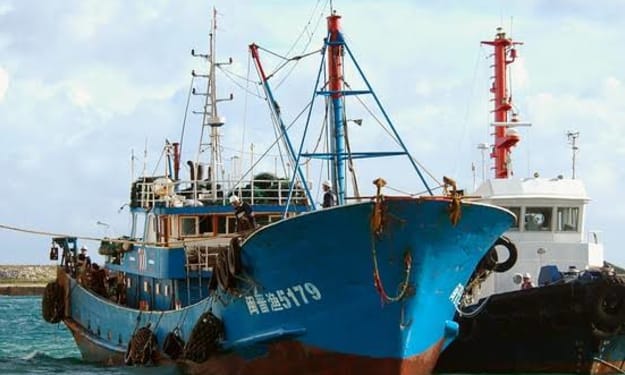
Authorities say the ship entered Japanese territorial waters without permission, prompting diplomatic protests and renewed friction between Japan and China. Japan announced on Thursday that it had seized a Chinese vessel after it allegedly entered restricted waters near one of Japan’s southwestern island chains, a move that has intensified already strained relations with Beijing. The incident comes at a time of heightened regional tension over maritime boundaries and military activity in the East China Sea. According to officials from the Japanese Coast Guard, the Chinese-flagged ship was intercepted after failing to respond to repeated radio warnings. Authorities said the vessel was operating in waters Japan considers part of its territorial sea and appeared to be conducting activities that violated Japanese maritime regulations. The crew was detained for questioning, and the ship was escorted to a nearby port for inspection. In a statement, Japan’s Ministry of Foreign Affairs said the seizure was carried out “in accordance with domestic law” and stressed that the action was not intended to escalate tensions. “Japan will continue to firmly protect its sovereignty while acting calmly and responsibly,” the ministry said. It added that diplomatic channels had been used to inform Chinese authorities about the incident. China reacted sharply, demanding the immediate release of the vessel and its crew. A spokesperson for China’s foreign ministry accused Japan of “provocative actions” and claimed the ship had been operating in what Beijing considers Chinese waters. “Japan’s conduct is a violation of international norms and undermines regional stability,” the spokesperson said, warning of “necessary countermeasures” if the situation is not resolved quickly. The seizure highlights the fragile state of relations between the two Asian powers, which have been locked in disputes over a group of uninhabited islands known in Japan as the Senkaku and in China as the Diaoyu. Although the current incident did not occur directly at the islands, analysts say it reflects the broader contest for influence and control in strategically important sea lanes. Security experts note that confrontations at sea have become more frequent in recent years. Japan has repeatedly reported incursions by Chinese government and fishing vessels near its claimed waters, while China has accused Japan of strengthening its military posture in the region with support from the United States. These competing narratives have fueled mistrust and increased the risk of miscalculation. Local Japanese officials said the seized vessel appeared to be a modified fishing ship equipped with advanced navigation tools, raising questions about its purpose. While authorities stopped short of labeling it a surveillance ship, they confirmed that investigators were examining its equipment and cargo. “We are determining whether this was a simple navigation error or a deliberate violation,” one official said on condition of anonymity. The incident also drew international attention, with the United States urging both sides to avoid actions that could further destabilize the region. A U.S. State Department official said Washington was monitoring the situation closely and encouraged Japan and China to resolve the matter peacefully through dialogue. “Freedom of navigation and adherence to international law are essential to maintaining stability in the Indo-Pacific,” the official added. For Japan, the episode comes amid a broader shift in defense policy. The government has recently announced plans to expand military spending and strengthen coastal surveillance in response to what it describes as growing security challenges from neighboring states. Supporters argue these measures are necessary to deter aggression, while critics warn they could provoke stronger reactions from China and North Korea. In China, state media framed the seizure as part of what it called a pattern of “harassment” by Japan. Commentaries emphasized historical grievances and accused Tokyo of aligning too closely with Western powers. The nationalist tone in Chinese coverage suggests the issue could resonate with domestic audiences, making compromise more politically sensitive for Chinese leaders. Diplomatic efforts were underway late Thursday to de-escalate the situation. Japanese officials said they were in contact with their Chinese counterparts to clarify the circumstances and seek a resolution. Sources familiar with the talks indicated that Japan might consider releasing the vessel once the investigation is complete, provided no serious violations are found. Despite these assurances, analysts caution that incidents like this can quickly spiral into larger crises if handled poorly. “Maritime encounters are inherently risky because they involve armed forces and national pride,” said a regional security analyst in Tokyo. “Even a small misunderstanding can be amplified by political pressure on both sides.” The seizure of the Chinese vessel underscores the delicate balance in East Asian geopolitics, where economic interdependence coexists with deep strategic rivalry. Japan and China are major trading partners, but their relationship remains vulnerable to flare-ups over territory, history, and military posture. As the investigation continues, both governments face a test of diplomacy. Whether the incident becomes another chapter in a long list of confrontations or a moment of restraint will depend on how leaders in Tokyo and Beijing choose to respond in the coming days. For now, the episode serves as a reminder of how quickly tensions can rise in contested waters—and how fragile peace can be in one of the world’s most critical regions.
By Fiaz Ahmed 9 days ago in The Swamp
Trump revokes landmark ruling that greenhouse gases endanger public health. AI-Generated.
Subtitle: The rollback of the Obama-era “endangerment finding” signals a dramatic shift in U.S. climate policy and sets the stage for legal and political battles over the nation’s responsibility to curb emissions.In a move that reshapes the foundation of U.S. climate regulation, Donald Trump has formally revoked the landmark federal ruling that classified greenhouse gases as a threat to public health and welfare. The decision overturns the 2009 “endangerment finding,” which empowered the Environmental Protection Agency to regulate carbon dioxide and other heat-trapping emissions under the Clean Air Act. Administration officials described the action as a correction of what they called regulatory overreach. They argued the original finding relied on “uncertain climate projections” and imposed unnecessary costs on U.S. industries and consumers. The new directive instructs the EPA to withdraw the scientific and legal basis for treating greenhouse gases as pollutants that threaten human health. “This is about restoring balance and protecting American jobs,” a senior official said during the announcement. “We are ensuring that environmental policy does not become a weapon against economic growth.” The endangerment finding, introduced during the Obama administration, was a cornerstone of federal climate policy. It provided the legal justification for limits on emissions from power plants, automobiles, and industrial facilities. By rescinding it, the Trump administration effectively removes the EPA’s authority to regulate greenhouse gases nationwide unless Congress passes new legislation. Environmental groups and public health advocates reacted with alarm. They warned that the decision ignores decades of scientific research linking climate change to rising heat deaths, worsening air quality, stronger storms, and the spread of infectious diseases. Several organizations vowed to challenge the move in court, arguing that the EPA is legally obligated to consider scientific evidence and protect public welfare. “This is not just a policy change—it is a rejection of established science,” said one environmental lawyer involved in preparing litigation. “The courts have already affirmed that greenhouse gases can be regulated when they endanger health. Undoing that will not be easy.” Legal experts expect a protracted battle. The original endangerment finding was upheld by federal courts, and any attempt to withdraw it must survive judicial review. Critics say the administration must provide stronger scientific justification than it has so far presented, or risk having the reversal blocked. Industry groups, however, welcomed the announcement. Energy producers and manufacturing associations have long complained that climate regulations increase operating costs and put U.S. companies at a disadvantage compared with foreign competitors. They argue that market forces and innovation, rather than federal mandates, should drive emissions reductions. Internationally, the decision has drawn sharp criticism from U.S. allies and climate diplomats. Observers say it weakens American credibility in global climate negotiations and could slow momentum toward collective action. Several European officials expressed concern that the U.S. is retreating from commitments to address a problem that scientists describe as accelerating. Public reaction at home has been divided. Supporters of the move see it as consistent with Trump’s campaign promises to dismantle what he called burdensome environmental rules. Opponents view it as a step backward that puts vulnerable communities at greater risk from pollution and extreme weather. The rollback comes amid increasing evidence of climate impacts across the United States, including record-breaking heat waves, more intense wildfires, and rising coastal flooding. Health organizations warn that these trends disproportionately affect the elderly, children, and low-income populations. Whether the revocation ultimately stands will depend on the courts and future administrations. For now, the decision marks one of the most consequential reversals of environmental policy in modern U.S. history—one that reopens a fundamental question: should greenhouse gases be treated as a public health threat, or as an economic variable beyond the reach of federal regulation?
By Fiaz Ahmed 9 days ago in The Swamp
Ex-Pakistan PM Imran Khan left with 15% vision in right eye, court told. AI-Generated.
Medical report submitted to the court reveals lasting damage from the 2022 assassination attempt, renewing debate over prison healthcare and political violence in Pakistan. A Pakistani court has been informed that former prime minister Imran Khan has suffered permanent damage to his right eye and is left with only 15% vision following the assassination attempt that injured him during a political rally in November 2022. The disclosure came during legal proceedings concerning Khan’s medical condition and access to specialized treatment while in custody. According to medical documents presented before the court, doctors concluded that the firearm injury caused irreversible harm to the optic structures of his right eye, significantly reducing his eyesight and raising concerns about long-term complications. Khan, who was shot while traveling in a convoy in Wazirabad, Punjab, had initially undergone emergency surgery and treatment at military and civilian hospitals. At the time, doctors said multiple pellets struck his leg and upper body, but later assessments revealed that one projectile or fragment had caused trauma near the eye area, leading to progressive vision loss. The medical report stated that despite treatment and follow-up care, full recovery of vision in the affected eye is not possible. Physicians warned that prolonged strain, stress, or inadequate medical supervision could worsen his condition and potentially affect his remaining eyesight. Defense lawyers told the court that Khan’s health has deteriorated in prison and that his limited vision now interferes with daily activities, including reading legal documents and attending lengthy hearings. They argued that his condition requires regular monitoring by ophthalmology specialists and access to diagnostic facilities that are not fully available inside detention centers. Government representatives acknowledged the medical findings but maintained that Khan is receiving appropriate healthcare under prison rules. Officials said that arrangements have been made for periodic checkups and that he can be transferred to a hospital if doctors deem it necessary. They rejected claims of negligence, calling them politically motivated. The revelation has revived memories of the 2022 shooting, which shocked the country and intensified political polarization. Khan had accused elements within the state of being involved in the attack, allegations that authorities denied. A suspect was arrested at the scene and investigations were launched, but the case remains a symbol of Pakistan’s volatile political climate. Supporters of Khan’s Pakistan Tehreek-e-Insaf (PTI) party reacted strongly to the court disclosure, calling it proof that he continues to suffer because of political violence. Party leaders demanded that independent medical boards be allowed to examine him and that he be granted medical relief in line with constitutional rights. “This is not just about one man’s eyesight,” a PTI spokesperson said. “It is about the safety and dignity of political leaders and the rule of law in Pakistan.” Human rights groups have also weighed in, urging authorities to ensure transparency regarding Khan’s medical treatment. They noted that prisoners, regardless of political status, are entitled to healthcare consistent with international standards. Legal analysts say the medical evidence could influence ongoing petitions seeking bail or temporary release on health grounds. However, they caution that Pakistani courts traditionally require clear proof that treatment cannot be provided within the prison system before granting such relief. The case also highlights broader concerns over security at political gatherings and the risks faced by public figures in Pakistan. Attacks on politicians have historically altered the country’s political trajectory, and Khan’s injury remains a powerful reminder of those dangers. As proceedings continue, the court is expected to review additional medical evaluations and determine whether special measures are needed to safeguard Khan’s health. For now, the confirmation that he retains only 15% vision in his right eye adds a new and sobering dimension to his legal and political struggles, underscoring the lasting personal cost of violence in Pakistan’s turbulent political arena.
By Fiaz Ahmed 9 days ago in The Swamp
Country Diary: How Much Bad Weather Can One Village Take?. AI-Generated.
For the fourth time this winter, the narrow road into the village is closed by floodwater. The warning sign at the bend where the lane dips toward the river has become a permanent fixture, no longer a signal of exceptional weather but of routine disruption. Residents of this small rural community are beginning to ask a question once framed in frustration but now edged with exhaustion: how much bad weather can one village take? The rain has fallen almost without pause for weeks. Fields that once absorbed winter downpours have become shallow lakes, reflecting low grey skies. Hedges stand with their roots submerged, and the river that runs through the valley no longer looks like a river at all, but a wide brown sheet moving with quiet determination across pasture and footpaths alike. In the village centre, sandbags are stacked like bricks outside cottages whose doorsteps sit only inches above the waterline. Inside, furniture has been raised onto wooden blocks, and electric heaters hum constantly in an effort to chase away damp. Several households have endured flooding twice already this season. One resident says the smell of wet plaster has become “the scent of winter”. Older villagers remember storms and hard winters before, but few recall a year when rain arrived in such relentless succession. What makes this season different is not a single dramatic event, but the cumulative effect of storm after storm. No sooner has the water receded than another system arrives from the Atlantic, pushing rivers back over their banks and undoing weeks of repair work. The local pub, which has long served as a gathering point in times of trouble, now doubles as an informal relief centre. Volunteers brew tea for neighbours who cannot leave their homes and store donated food in the back room. Conversations revolve around weather forecasts and insurance claims, and the phrase “not again” has become a tired refrain. Farmers in the surrounding fields face their own struggle. Livestock have been moved to higher ground, and crops planted in autumn are already rotting beneath standing water. One farmer explains that machinery cannot enter saturated land without sinking, leaving him unable to prepare for spring planting. “We’ve lost time we can’t get back,” he says, scanning fields that resemble marshland more than farmland. Wildlife, too, is responding to the changed landscape. Ducks and geese gather in unusual numbers where meadows once lay dry. Fox tracks weave along the few remaining raised paths. A heron stands motionless in what was once a vegetable garden, waiting for fish displaced from the swollen river. Local authorities have deployed temporary pumps and issued repeated safety warnings, but resources are stretched across the region. Flood defences designed for rare events are now tested several times a year. Engineers speak of climate patterns shifting, of warmer seas feeding heavier rainfall, and of storms becoming slower and more persistent. For villagers, these explanations offer little comfort when facing another night of rain on already soaked ground. The psychological toll is becoming visible. Some residents admit they no longer unpack belongings stored upstairs, knowing they may soon be lifted again. Others speak of sleepless nights listening for the sound of water against their doors. Yet there is resilience here too. When the main road was cut off last week, neighbours organised boat trips to bring medicine to those stranded. Children have turned flooded fields into places of exploration, spotting frogs and floating branches. A handwritten sign near the church reads simply: “We’re still here.” As clouds gather once more over the valley, the question remains unanswered. The village endures, but patience wears thin. Bad weather has always been part of rural life, but this season feels like a test without a clear end point. Each storm leaves behind not just mud and damage, but the quiet worry that the next one is already on its way. For now, the river continues to rise and fall with the rain, and the village waits between floods, counting the days of dry ground like small victories. In the ledger of weather, this winter has written itself deeply into memory — and into the land.
By Fiaz Ahmed 10 days ago in Longevity
Iran Strengthening Defences Near Key Nuclear Site, New Satellite Image Shows. AI-Generated.
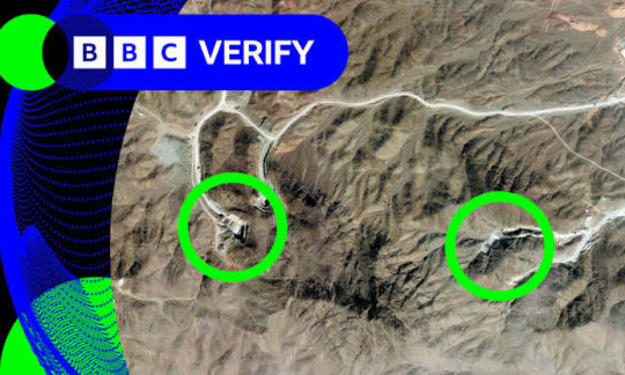
New high-resolution satellite imagery has revealed that Iran is intensifying defensive measures at one of its most sensitive nuclear facilities, a development that experts say reflects Tehran’s growing concern about the possibility of renewed military action against its nuclear infrastructure. Analysts assessing the imagery say the activity signals a concerted push to harden subterranean access points and fortify above-ground structures — moves that could complicate any potential strike planning by foreign powers amid simmering geopolitical tensions. The site at the centre of the imagery is the Isfahan nuclear complex, one of Iran’s major enrichment and conversion facilities. Recent satellite photos, taken earlier this month and analysed by independent watchdog groups, show that entrances to several large underground tunnels and passageways have been buried under earth and debris, making them difficult to detect and access. Additional defensive works — including the construction of new roofs over previously damaged buildings — were also visible around the site, indicating a broader effort to protect infrastructure and restrict the visibility of sensitive components. Satellite Evidence of Defensive Hardening According to imagery reviewed by analysts from the Institute for Science and International Security and other observers, Iran has backfilled both the central and southern tunnels at Isfahan with soil, rendering them “unrecognisable” from above. The northern entrance, while not fully obscured, also showed signs of defensive measures. These changes were marked by the absence of vehicle activity nearby, suggesting that access points were purposefully sealed rather than temporarily closed for maintenance. Experts interpreting the satellite data said the defensive steps likely serve multiple strategic purposes. By burying tunnel entrances and reinforcing buildings, Tehran may be seeking to protect crucial infrastructure from potential aerial strikes or commando raids, shield remnants of its nuclear work from visual surveillance, and slow any adversary’s ability to penetrate the site swiftly in a crisis. One veteran military intelligence analyst described the pattern as part of a broader Iranian doctrine of “passive defence,” in which critical facilities are hardened, concealed or physically obscured to reduce their vulnerability to attack. “Covering and fortifying these entry points makes them far harder targets for precision weapons or a rapid special operations incursion,” the analyst told Reuters, adding that such measures are relatively inexpensive compared to rebuilding after an attack. Context: Conflict and Diplomacy at a Critical Juncture Iran’s reinforcement of its nuclear facilities comes amid ongoing tension with the United States, Israel and other Western powers over Tehran’s nuclear programme and regional influence. Last year’s military confrontations — including airstrikes on Iranian nuclear and military targets by Israel and the United States — fractured diplomacy and heightened fears of further escalation. That conflict, which began with a series of strikes on Iran’s nuclear and missile infrastructure, underscored the vulnerability of above-ground and poorly protected assets to precision attacks. Since then, Tehran has pursued a mix of diplomatic engagements and strategic deterrence measures, even as it resists full resumption of international inspections at key sites. The defensive construction seen in the latest imagery may be interpreted as a precautionary signal that Iran anticipates the possibility of future military actions, particularly if negotiations with global powers over its nuclear programme falter. According to strategic analysts, burying key access points and reinforcing buildings improves survival prospects in the event of air attacks, while complicating foreign intelligence assessments of what remains intact underground. Implications for Regional Stability The defensive moves come at a time of active diplomatic engagement, including offers by Iran to allow broader verification of its nuclear facilities by international inspectors — a position emphasised by President Masoud Pezeshkian in recent remarks. However, Tehran’s insistence on verification without unfettered access has left many questions unresolved. For neighbouring states and Western capitals, the satellite imagery reinforces concerns that Iran is preparing for a dual-track approach: pursuing negotiation when possible, while hardening sites to mitigate the impact of any hostile campaign. Such a posture could make any future military strike considerably more complex, requiring deeper penetration or alternate tactics to neutralise underground infrastructure. The developments highlight a broader reality: in an era of advanced satellite surveillance and hardened underground facilities, the interplay between visible preparedness and strategic ambiguity is likely to shape future confrontation and diplomacy over Iran’s nuclear ambitions. As Tehran continues to adapt, analysts warn that any miscalculation could have far-reaching consequences for regional security and nuclear non-proliferation efforts.
By Fiaz Ahmed 10 days ago in The Swamp
India to Import Crude Oil from Cheapest, Best-Quality Non-Sanctioned Sources. AI-Generated.
India will continue to prioritise importing crude oil from the most cost-effective and highest-quality sources that are not subject to international sanctions, government officials told a parliamentary committee this week — a strategy reflecting New Delhi’s efforts to balance energy security, economic priorities and geopolitical pressures in an increasingly volatile global oil market. The Economic Times In a closed session before the Parliamentary Standing Committee on External Affairs, senior officials from the ministries of External Affairs and Commerce outlined the government’s posture on crude oil procurement, emphasising that Indian oil companies will source crude where it is cheapest and of desirable quality — while taking into account geopolitical conditions and avoiding suppliers under sanctions. The disclosure comes as India — the world’s third-largest oil importer and consumer — navigates divergent pressures from major trading partners, sanctions regimes, and strategic relationships with producing nations in the Middle East, Africa, South America and beyond. The Economic Times A Pragmatic Sourcing Strategy Officials clarified that the policy does not lock India into any single supplier, but rather allows flexibility in procurement so long as the oil meets critical parameters of price competitiveness and quality. This approach will factor in evolving geopolitical conditions, including sanctions imposed by Western countries that affect certain exporters and suppliers, without directly contravening United Nations-mandated restrictions. The Economic Times “India’s overarching priority is energy security — ensuring consistent, reliable and affordable crude oil supplies for our economy,” an official briefing note told MPs, underscoring that the strategy aims to keep energy costs low while respecting global regulatory frameworks. The policy was described as forward-looking and commercially driven, rather than ideologically anchored to particular source countries. Indian refiners, including state-owned and private entities, will be encouraged to pursue competitive tendering and diversify supply portfolios to reduce exposure to potential supply shocks. The Economic Times Russia, Discounts, and Diverse Options For much of the past few years, India has been a major buyer of Russian crude oil, taking advantage of steep discounts following Western sanctions on Moscow after its invasion of Ukraine. At times, Russia accounted for 40-45 % of New Delhi’s crude imports, with Urals crude offered at significant discounts compared with global benchmarks. Outlook India However, recent developments have complicated that dynamic. New U.S. sanctions on Russia’s largest oil producers and export infrastructure have begun to reduce direct imports of Russian crude to India, and major Indian refiners have signalled a reduction in purchases that would arrive after sanctions take effect during 2026. At the same time, some refiners have resumed buying non-sanctioned Russian barrels from alternative sellers and traders, illustrating how the market can adapt when direct sourcing from sanctioned entities becomes untenable. Trade Deals and Geopolitical Balance The discussions before the parliamentary panel also touched on ongoing trade negotiations with the United States and the European Union, including a potential interim agreement with Washington that could have implications for energy trade and tariff arrangements. The Economic Times Officials emphasised that energy import strategy will continue to be aligned with India’s broader foreign policy objectives, which include strengthening economic ties with partners while maintaining sovereign decision-making on energy procurement. The Economic Times Market Realities and Refinery Considerations Indian refiners have already begun adjusting supply plans in response to shifting market conditions. Some are exploring greater purchases from the Middle East and African producers, while others have taken steps to limit future Russian imports tied to sanctioned supply chains. Zonebourse For example, private sector giant Reliance Industries reportedly slashed its intake of Russian crude and prioritised non-sanctioned sources to ensure compliance with global sanctions regimes and maintain access to key export markets, such as the European Union, which implemented bans on products derived from Russian oil. Indian refineries are also recalibrating feedstock mixes based on changing crude price dynamics, quality specifications and logistical efficiencies as global producers adjust output. The Economic Times Looking Ahead With crude oil prices still sensitive to geopolitical developments, supply disruptions and OPEC+ production decisions, India’s multidimensional sourcing strategy aims to protect its economy from undue price volatility while ensuring energy imports remain consistent, cost-effective and free from sanction risks. As the government continues to refine procurement guidelines and navigate international trade landscapes, Indian policymakers assert that these measures will help safeguard the nation’s energy security in an uncertain global energy environment.
By Fiaz Ahmed 10 days ago in The Swamp
Snakes on a Train: How King Cobras Are Spreading Across India Thanks to the World’s Busiest Railway Network. AI-Generated.
A surprising new study suggests that some of India’s most infamous reptiles — king cobras — may be inadvertently using the nation’s vast and busy railway network to travel far beyond their natural habitats, raising fresh questions about wildlife movement, human-animal interactions, and rail infrastructure’s unintended ecological impacts. The research, published in the scientific journal Biotropica, compiled 22 years of king cobra rescue records and verified sightings from 2002 to 2024 across the western Indian state of Goa — a region nestled between coastal plains and the biodiverse Western Ghats. By mapping these records against ecological models of the species’ preferred environment, scientists uncovered an unexpected pattern. Unusual Cobra Occurrences Along Railway Corridors King cobras (Ophiophagus kaalinga), among the world’s longest venomous snakes, are typically associated with dense forests, riverine ecosystems, and undisturbed inland regions. Yet researchers identified five locations near major railway corridors where cobras were spotted in settings far less suitable than their natural forest home. One notable example involved a king cobra being found close to Chandor railway station, sheltering near stored rails and concrete structures — an environment wholly unsuited to a forest-dwelling predator. Others were recorded near tracks at Vasco da Gama, Loliem, Patnem, and Palolem — all locations associated with heavy train traffic rather than lush habitat. Scientists observed that these “outlier” records all occurred within a few hundred metres of railway infrastructure, prompting a novel hypothesis: trains may be acting as inadvertent transport vectors, moving king cobras from their native forests into unsuitable or marginal habitats where survival prospects are uncertain. au.news.yahoo.com Trains as Unintended Ecological Highways India’s railways are the world’s busiest by passenger volume, with freight and goods lines crisscrossing hundreds of kilometres of landscape, including biodiversity hotspots like the Western Ghats. The study proposes that snakes — while not intentionally seeking out train travel — might board freight wagons or find shelter in rail yards while pursuing prey such as rodents or other snakes. Once aboard, a train’s high speed and extensive reach could carry an individual snake dozens of kilometres away from its typical range, depositing it in terrain ill-suited to its ecological needs. This passive movement mechanism — distinct from active dispersal — represents a novel aspect of how human infrastructure can shape wildlife distributions, researchers say. The phenomenon echoes broader concerns in conservation science about linear structures (like roads and railways) fragmenting habitats — but here, the unintended consequence appears to be connecting distant regions instead of dividing them. Trains may serve as a kind of “high-speed conduit,” moving animals across ecological barriers that would otherwise limit their movements. Drivers and Risks Several factors may make railway environments attractive — or at least accessible — to king cobras. Freight yards and rail sidings often host abundant rodents, a staple in cobra diets, while dark crevices and stacks of materials provide shelter. In some instances, cobras may pursue these cues at night and inadvertently end up aboard a passing train. However, arriving in an unfamiliar or unsuitable habitat can be perilous for the snakes. Outside their core ecological range, they face heat stress, limited prey, and increased encounters with humans, potentially heightening conflict and risk. Likewise, train passengers and railway workers may be startled or endangered by unexpected snake encounters, given the king cobra’s potent venom and reputational fearfulness. Researchers note that improved tracking — such as camera traps at rail hubs, genetic studies, and targeted monitoring — could help clarify the scale of this dispersal mechanism and whether it truly represents a significant expansion of the species’ range. At present, the pattern remains a working hypothesis supported by rescue data and spatial analysis. Broader Implications and Future Monitoring This research highlights an under-appreciated dimension of human-wildlife interaction: that infrastructure designed for efficient movement of people and goods can inadvertently influence the distribution of wildlife — in this case, a species both ecologically important and symbolically powerful in India. As climate change, habitat loss, and expanding transport networks continue to reshape ecological landscapes, scientists warn that such unintended consequences may become more common. Understanding the intersection of wildlife behavior and human systems — and the risks and opportunities it presents — could prove crucial for both conservation and public safety.
By Fiaz Ahmed 10 days ago in The Swamp
PIA Privatisation Finalised: A New Chapter for Pakistan’s Flag Carrier. AI-Generated.
The long-awaited privatisation of Pakistan International Airlines (PIA) has officially been completed, marking a watershed moment in the nation’s economic reform agenda and ending decades of state ownership of the loss-making national carrier. In a decisive move that has stirred political debate and industry interest, the Government of Pakistan has signed off on the sale of a controlling stake in PIA to a private consortium led by the Arif Habib Group. The transaction, years in the making, aims to break the cycle of repeated government bailouts and put the carrier on a commercially sustainable footing. Closing the Privatisation Chapter The Ministry of Privatisation has issued a final “speaking order,” effectively rejecting all legal objections raised by workers’ unions and interest groups regarding the sale. Privatisation Secretary Hammad Hashmi stated that the process was completed fully within the law and that challenges — including claims of constitutional violations or undervaluation of assets — held no legal merit. As such, all outstanding petitions were dismissed, formally concluding the legal phase of the privatisation. Under the deal, the consortium acquired 75 % of PIA’s shares in a competitive bidding process that saw strong participation from major business groups. The sale price was reported at 135 billion Pakistani rupees (approximately $482 million), with the government retaining the remaining 25 % stake and an option for the consortium to acquire it later. Officials have said that nearly 92.5 % of the proceeds from the sale will be reinvested directly into the airline’s operations to support fleet modernisation, service improvements and long-term turnaround efforts, with the balance remitted to the national exchequer. Leadership and Vision Prime Minister Shehbaz Sharif welcomed the completion of privatisation as a “historic milestone” for Pakistan, underscoring the government’s commitment to structural reforms and sustainable economic growth. In remarks at the signing ceremony, he congratulated federal ministers, privatisation officials, and security leadership for ensuring a transparent and professional process. “We believe this transaction will not only strengthen PIA’s performance but will also instil confidence in Pakistan’s investment climate,” the prime minister said, noting that participation by seasoned investors reflects optimism in the country’s economic future. Strategic Implications and Reform Goals For decades, PIA has been burdened by financial losses, deepening liabilities, and operational inefficiencies, making its privatisation one of the most complex commercial undertakings in Pakistan’s recent history. Government officials and economic advisers argue that private-sector leadership, combined with fresh capital and industry expertise, is essential to restoring the airline’s competitiveness on domestic and international routes. The sale aligns with broader commitments under Pakistan’s international financing arrangements, including an International Monetary Fund (IMF) programme that seeks to restructure state-owned enterprises and reduce dependence on public subsidies. Profit by Pakistan Today Key stakeholders have emphasised that the privatisation is not just about divestment but transformation. The new owners have committed to expanding PIA’s fleet over the coming years and improving service standards, punctuality, and operational discipline — areas where the airline has historically struggled. Reactions and Future Prospects Business and aviation analysts have broadly welcomed the privatisation, citing the long-overdue need for structural change. They note that private ownership could enable faster decision-making, deeper market engagement, and strategic partnerships that were previously constrained under state control. However, the deal has its critics. Workers’ unions and labour representatives expressed concern about job security and the implications of private ownership for employee rights, even as officials stressed that the sale complied with all legal protections and due process. Field Marshal Asim Munir’s reported involvement in facilitating investor engagement — and the role of large corporate players such as Fauji Fertiliser Company within the winning consortium — underscores the complex interplay of business, military and political interests surrounding the transaction. The Road Ahead With privatisation now finalised, the incoming management faces formidable tasks: revitalising an ageing fleet, modernising operational systems, and restoring confidence among passengers and global airline partners. Success will be measured not just in financial returns, but in PIA’s ability to reclaim market share and reconnect Pakistan’s aviation network with world markets. The airline’s new chapter, once a distant aspiration, is now underway — with stakeholders across the spectrum watching closely.
By Fiaz Ahmed 10 days ago in The Swamp
Snow and Ice Warnings Issued for UK After Relentless Rain. AI-Generated.
After weeks of unrelenting rain and flooding in parts of the United Kingdom, meteorologists have now raised fresh snow and ice warnings as temperatures plunge and a colder air mass moves in — a development that could intensify travel disruption and risk to the public over the coming days. The Met Office has issued a series of yellow snow and ice warnings covering large swathes of Scotland and northern England from Thursday evening until midday Friday — with temperatures expected to fall sharply following the prolonged wet spell that has dominated much of early 2026. The Independent The warnings come as the UK emerges from an unusually soggy period, particularly in northern and western regions, which have seen persistent rainfall that has tested flood defenses and disrupted daily life. While many areas are still dealing with the aftermath of flooding and saturated ground, meteorologists warn that the focus of the weather threat is shifting from rain to wintry conditions, including snow showers, icy surfaces and freezing temperatures. Arctic Air Brings Wintry Conditions According to forecasters, an Arctic air mass is descending over the British Isles, driving temperatures well below average and increasing the likelihood of snow and ice. This sudden change represents a stark contrast to the long period of mild, wet weather that preceded it. In the warning areas, some higher ground — notably at elevations above 300 metres — could see accumulations of snow reaching up to 10cm by Friday, with widespread ice expected on untreated roads and pavements. The Met Office has cautioned that travel conditions could be dangerous, particularly overnight into the morning rush hour when surfaces are most likely to freeze. Sky News “This dip in temperatures will come as something of a shock after the long, mild, wet spell,” a Sky Weather team noted, adding that even areas not under warning should brace for icy patches and potentially hazardous travel. Sky News Public Health Alert Issued Alongside the weather warnings, the UK Health Security Agency (UKHSA) has issued a cold weather health alert for central and northern England from Friday morning through Monday — highlighting increased health risks associated with prolonged cold exposure. This alert reflects concerns about vulnerable groups, particularly older people and those with preexisting health conditions, as colder conditions set in. Sky News Officials have warned that even relatively modest snowfalls and ice can lead to a significant uptick in falls, injuries, and transport delays — adding pressure to emergency services already coping with the effects of recent storms and flooding. The Independent Impact on Transport and Daily Life Transport networks are likely to feel the first impacts of the wintry change. With roads already weakened by weeks of wet weather, forecasts of snow and ice are prompting authorities to pre-treat key routes and rail operators to prepare for possible delays or cancellations. Commuters are being urged to plan ahead, allow extra travel time, and check the latest weather and travel updates before setting out. The Independent In areas such as northern England and Scotland, early warning bulletins mention the potential for ice forming on untreated surfaces, presenting a risk for pedestrians and drivers alike, especially in more remote or elevated locations where temperatures will fall fastest. The Independent Despite the incoming cold, some forecasters suggest that this wintry interlude may be relatively brief, with milder conditions expected to move back in later in the weekend — although uncertainty remains, and snow could return as Atlantic weather systems interact with lingering cold air. The Independent Context: A Wetter Start to 2026 The shift to snow and ice follows an exceptionally wet start to the year for many parts of the UK. Meteorological data shows that some regions have recorded rainfall far above typical levels for February, contributing to high river levels, saturated soil and increased flood risk which, in several counties, has required emergency response and community resilience measures. The Independent Farmers and agricultural communities have also reported impacts from the prolonged wet conditions — ranging from waterlogged fields to challenges in managing livestock — underscoring the wide-ranging effects of the unusually persistent rainfall. As the UK transitions from rain to snow and cold, public authorities are urging residents to stay updated with official advice, take appropriate precautions and be prepared for the evolving weather hazards in the days ahead.
By Fiaz Ahmed 10 days ago in Longevity
US Navy on the Hunt for Strike Drones That Can Launch from Any Warship. AI-Generated.
The U.S. Navy is quietly accelerating its search for a new generation of strike drones capable of launching from virtually any warship, a move aimed at transforming every vessel in the fleet into a potential offensive platform amid rising tensions in the Pacific and beyond. Senior defense officials say the initiative reflects lessons learned from recent conflicts, particularly the widespread use of low-cost, long-range drones in Ukraine and the Middle East. The Navy now wants small, lethal unmanned systems that can be fired from standard ship-based launchers and strike targets hundreds of kilometers away without putting pilots or high-value aircraft at risk. The concept, described by Navy planners as “distributed strike,” would allow destroyers, frigates, amphibious ships, and even support vessels to deploy armed drones from their existing Vertical Launch System (VLS) cells or modular deck launchers. Instead of relying solely on carrier-based aircraft or expensive cruise missiles, commanders could unleash swarms of autonomous or semi-autonomous drones to overwhelm enemy air defenses. From Defense to Offense For years, ship-launched drones were primarily used for surveillance and reconnaissance. Systems such as the ScanEagle and MQ-8 Fire Scout provided real-time intelligence but carried no weapons. That is now changing. According to Navy officials familiar with the program, the service is seeking a strike-capable unmanned aerial vehicle that can be: launched from multiple ship classes, operated with minimal crew training, and produced at a fraction of the cost of conventional missiles. “These drones are not meant to replace cruise missiles or fighter jets,” one naval officer said privately. “They are meant to supplement them — and in some scenarios, to be used in large numbers where attrition is expected.” The Navy’s interest is tied closely to its broader push toward unmanned and autonomous warfare under the Pentagon’s “Replicator” initiative, which aims to deploy thousands of expendable drones within two years to counter China’s growing military power. A Response to China’s Anti-Access Strategy The urgency behind the project stems largely from China’s expanding missile forces and air defenses in the Western Pacific. Beijing’s strategy of denying access to U.S. forces — often called anti-access/area denial (A2/AD) — relies on targeting aircraft carriers and major bases. Strike drones launched from dispersed ships would complicate that strategy. “Instead of one aircraft carrier projecting power, you could have dozens of ships each capable of launching multiple strike drones,” said a U.S. defense analyst. “It creates a much more survivable and unpredictable threat.” Unlike traditional aircraft, these drones could be programmed for one-way missions, similar to loitering munitions. They could fly low to avoid radar, identify targets using onboard sensors, and strike with precision explosives. Technical Challenges Designing a drone that can be launched from “any warship” presents major engineering hurdles. The system must fit inside standard launch tubes or compact canisters, withstand saltwater environments, and integrate with existing combat systems such as Aegis radar and shipboard command networks. Industry sources say the Navy is testing several prototypes, including tube-launched drones that unfold their wings after launch and use jet or propeller propulsion. Some models are designed to carry small warheads, while others focus on electronic warfare, jamming enemy radars before follow-on missile strikes. Another key challenge is command and control. The Navy wants drones that can operate in contested environments where GPS and communications may be disrupted. This means greater autonomy and onboard decision-making — a shift that raises both technical and ethical questions. Cost and Speed Matter One of the driving forces behind the program is cost. A Tomahawk cruise missile can cost over $1 million per unit. In contrast, the Navy hopes its strike drones can be produced for tens or hundreds of thousands of dollars each. That price difference enables mass deployment. “If you can launch 50 drones for the cost of a few missiles, you change the economics of naval warfare,” said a former Pentagon acquisition official. A New Era of Naval Power The push for ship-launched strike drones signals a deeper transformation in how the Navy views combat at sea. Rather than relying on a small number of highly expensive platforms, future operations may depend on networks of manned ships and unmanned weapons working together. While still in development, officials say operational testing could begin within the next few years. If successful, the program would mark the first time in U.S. naval history that almost every warship could serve as a drone strike platform. As one senior officer summarized, “The future fleet won’t just sail. It will launch clouds of unmanned weapons. And that changes everything.”
By Fiaz Ahmed 10 days ago in The Swamp
Europe Gets Rare LNG Cargo from China Amid Gas Crunch. AI-Generated.
Europe has received a rare shipment of liquefied natural gas (LNG) from China as the continent continues to grapple with tight gas supplies and volatile energy markets, highlighting a quiet but significant shift in global gas trade flows driven by geopolitical pressure and economic pragmatism. According to shipping data and industry sources, the LNG cargo originated from a Chinese buyer that chose to resell or divert its contracted supply to European terminals rather than consume it domestically. Such transactions are unusual, as China is typically one of the world’s largest LNG importers, competing directly with Europe for supplies from major exporters such as Qatar, Australia, and the United States. The delivery comes at a time when European gas storage levels remain under strain following consecutive winters of heavy withdrawals and continued uncertainty over pipeline supplies from Russia. While Europe has dramatically reduced its dependence on Russian gas since 2022, the replacement strategy has made the region far more reliant on LNG imports — and therefore vulnerable to shifts in global demand. A Rare Reversal of Roles Historically, LNG flows have moved from producers to Asia first, where buyers were willing to pay premium prices. China, Japan, and South Korea dominated the LNG market for years, leaving Europe dependent on pipelines from Russia and Norway. That pattern began to change after Russia’s invasion of Ukraine, when Europe scrambled to secure LNG cargoes at almost any price. Asian buyers, including China, found themselves in a new position: able to profit from reselling gas originally meant for their own markets. Energy analysts say China’s decision to divert a cargo to Europe reflects a combination of weaker domestic gas demand and favorable market pricing in Europe. “China’s industrial consumption has slowed compared with previous years, and at the same time European buyers are paying a premium to secure supply,” said one senior LNG trader familiar with the transaction. “It makes commercial sense for Chinese firms to resell some of their contracted volumes.” Strategic Implications for Europe For Europe, the arrival of LNG from China carries symbolic as well as practical importance. It demonstrates that the global gas market is now fully interconnected, with cargoes moving wherever prices are highest and political risks are lowest. European officials have worked to diversify supply through long-term contracts with the United States, Qatar, and African producers. However, short-term spot cargoes remain essential during periods of peak demand or unexpected cold spells. “This is a reminder that Europe’s energy security now depends on global LNG dynamics, not just regional pipeline politics,” said an energy policy adviser in Brussels. “Even a country like China can become an indirect supplier when market conditions allow.” The cargo also underscores Europe’s success in outbidding Asian markets at times, reversing a decades-long imbalance in energy trade power. China’s Quiet Flexibility China’s state-owned energy companies have become major players in LNG trading over the past decade. While originally focused on securing supply for domestic use, they increasingly act as portfolio traders, buying LNG under long-term contracts and selling it on the open market when demand at home is lower. During previous energy crises, Chinese firms resold several LNG cargoes to Europe, generating substantial profits. This latest shipment follows that pattern, reflecting Beijing’s willingness to use its energy assets flexibly rather than hoard supplies. At the same time, China continues to expand pipeline gas imports from Russia and Central Asia, reducing pressure on LNG consumption at home and freeing up cargoes for resale. Market Pressures Remain Despite the symbolic boost, one cargo will do little to solve Europe’s broader gas crunch. Storage levels remain below historical averages in some countries, and weather uncertainty continues to drive price swings. Industry experts warn that Europe could face renewed competition from Asia if Chinese and Japanese demand rebounds sharply during extreme cold or economic recovery. “If China’s economy accelerates or if there is a harsh winter in Northeast Asia, those LNG flows could quickly reverse again,” said a senior analyst at a global energy consultancy. “Europe is not out of danger yet.” The situation also exposes the fragility of Europe’s energy transition. While renewable power capacity is expanding rapidly, gas remains essential for electricity generation and heating, especially when wind and solar output falls. A New Energy Reality The rare LNG shipment from China to Europe illustrates how the gas market has entered a new era defined by flexibility, competition, and geopolitics. Instead of long, predictable routes from producer to consumer, cargoes now chase price signals across oceans. For Europe, the cargo is both a relief and a warning: relief that alternative supplies are still available, and a warning that energy security now depends on complex global trade relationships rather than fixed pipelines. As one European energy official put it privately, “Today China is selling us gas. Tomorrow, we may be bidding against China for the same cargo. That is the new normal.”
By Fiaz Ahmed 10 days ago in The Swamp